





RESEARCH
【Publication】Inhibition of Mincle signaling by chemically synthesized disaccharide-type 6- O-acylated steryl β-glucosides (βASGs) and their analogues derived from plants
September 1, 2026
Credits: WPI-Bio2Q
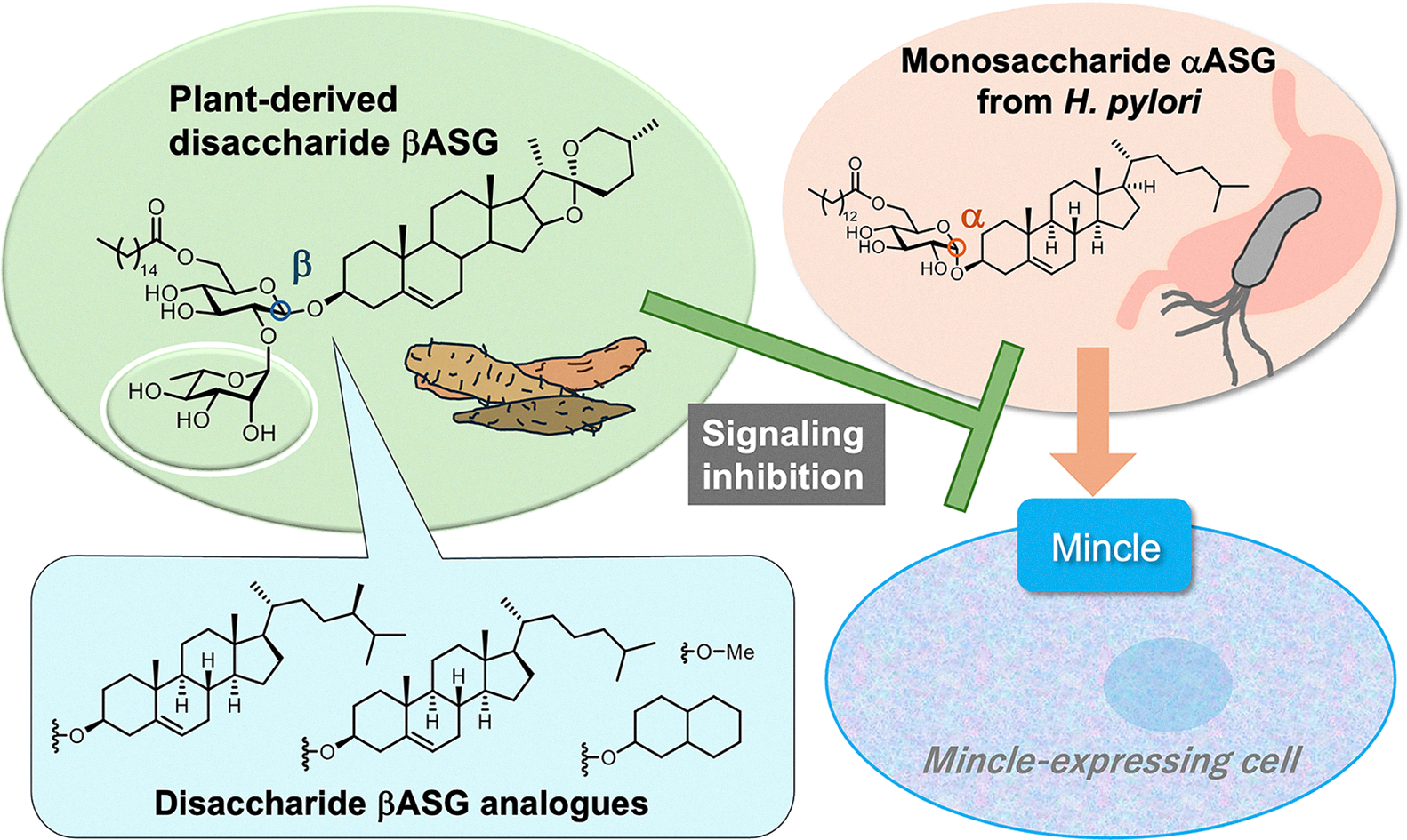
Visual Abstract
Credits: Yoshida et al., 2026
Co-authored by researchers at Bio2Q and published in Chemical Communications, this study discovered plant-derived compounds that suppress excessive inflammatory responses in the body. The researchers artificially synthesized components found in yams and investigated their effects on the immune mechanism. The results revealed that altering the structure of these compounds can inhibit the triggers of inflammation, contributing to the development of new therapeutics.
| Title | Inhibition of Mincle signaling by chemically synthesized disaccharide-type 6- O-acylated steryl β-glucosides (βASGs) and their analogues derived from plants |
|---|---|
| Authors | Kenji Yoshida 1, Takanori Matsumaru 1, Sho Yamasaki 2 3 4 5, Yukari Fujimoto 1 6 |
| Short Description |
This study, co-authored by a research team that including researchers from Bio2Q and Keio University, identifies plant-derived glycolipids that can inhibit signaling through Mincle, an immune receptor involved in inflammatory responses. While many previously identified Mincle ligands activate the receptor, relatively little is known about molecules that inhibit its signaling. Here, these researchers chemically synthesized a plant-derived disaccharide βASG found in yellow yam along with a series of related analogues and investigated their effects on Mincle activity. They found that several disaccharide βASGs strongly inhibited Mincle signaling while showing little ability to activate the receptor themselves. These compounds also suppressed signaling triggered by a glycolipid derived from Helicobacter pylori, which is associated with inflammatory responses in the stomach. By comparing different molecular structures, the researchers showed that the disaccharide framework together with sterol and fatty acid components plays an important role in determining inhibitory activity. These findings reveal how structural changes to glycolipids can switch their effects on Mincle from activation to inhibition and provide a foundation for developing new molecules that regulate Mincle mediated immune responses. |
| DOI | 10.1039/d6cc02089e |
| Journal | Chemical Communications |
| Vol/Num/Page |
62(59):14786-14789.
|
| Publication Date | July 30, 2026 |
Affiliations
1 Department of Chemistry, Faculty of Science and Technology, Keio University, Yokohama, 223-8522, Japan.
2 Department of Molecular Immunology, Research Institute for Microbial Diseases, The University of Osaka, Suita 565-0871, Japan.
3 Laboratory of Molecular Immunology, Immunology Frontier Research Center (WPI-IFReC), The University of Osaka, Suita 565-0871, Japan.
4 Division of Molecular Design, Medical Institute of Bioregulation, Kyushu University, Fukuoka 812-8582, Japan.
5 Division of Molecular Immunology, Medical Mycology Research Center, Chiba University, Chiba 260-8673, Japan.
6 Human Biology Microbiome Quantum Research Center (Bio2Q), Keio University, Tokyo 160-8582, Japan.
SHARE




More Bio2Q News
【Publication】Microbiome-dependent phytosterol sulfates production and tissue dis...
Researchers from Bio2Q and Keio University have demonstrated that gut bacteria convert dietary plant sterols into compounds known as phytosterol sulfates. These metabolites can accumulate in multiple organs, their levels increasing with age. These findings reveal a previously unknown connection between gut microbial activity and the distribution of dietary compounds in the body, providing new insi...
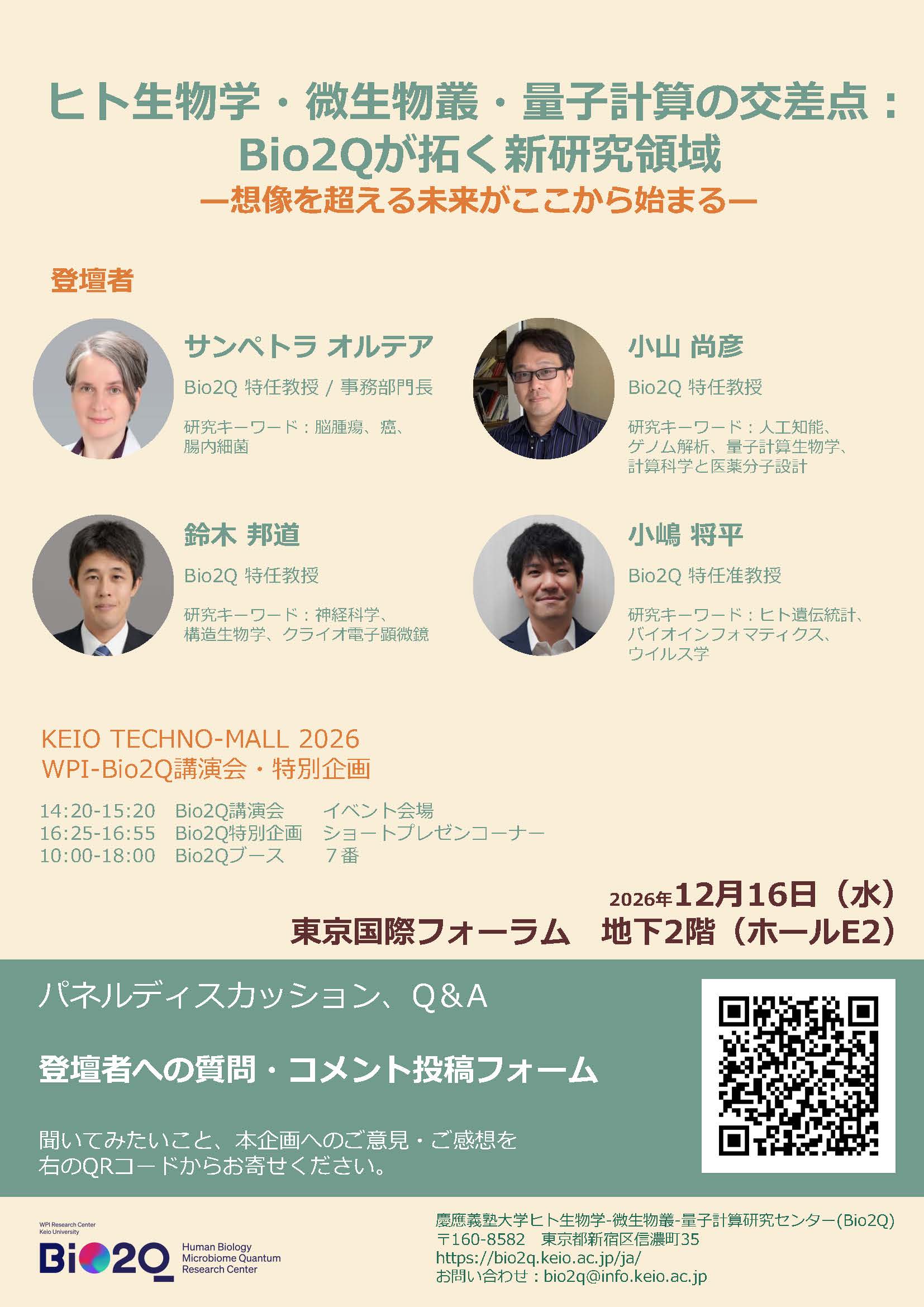
[Event] WPI-Bio2Q to Exhibit at KEIO TECHNO-MALL 2026
Keio University Human Biology-Microbiome-Quantum Research Center (Bio2Q) will exhibit at KEIO TECHNO-MALL 2026 (The 27th Keio Science and Technology Exhibition) on Wednesday, December 16, 2026. Through this exhibition, Bio2Q strives to serve as a hub connecting our center with society and sparking diverse collaborative opportunities. We are offering three key programs—a Lecture, a Special Event...
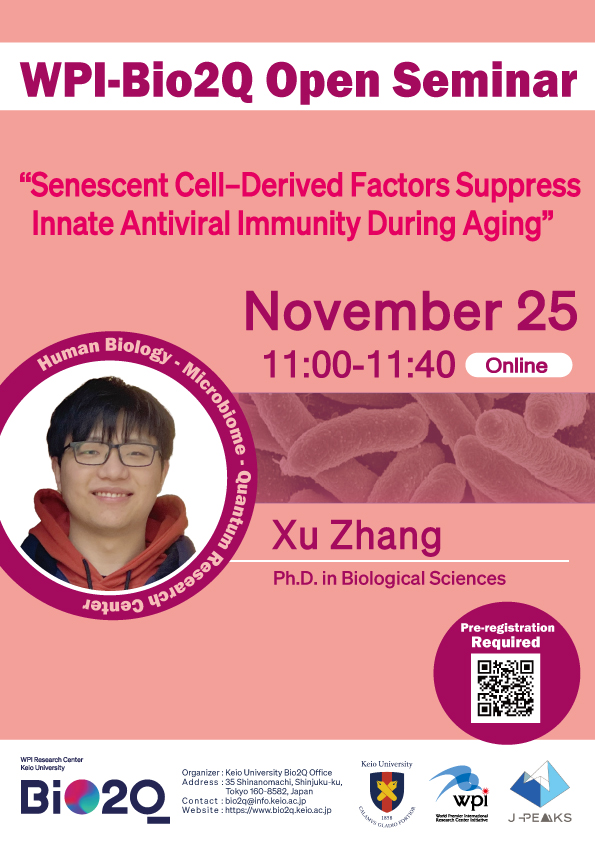
【Nov. 25 Seminar】 WPI-Bio2Q Open Seminar: Xu Zhang, PhD(for Keio Members)
Keio University Human Biology-Microbiome-Quantum Research Center (WPI-Bio2Q) will hold a seminar as follows. This event is only for faculty, students, and staff of Keio University. Date and Time Wednesday, November 25, 2026, 11:00-11:40 Format Zoom (Online only) Title Senescent Cell–Derived Factors Suppress Innate Antiviral Immunity During Aging Speaker Xu Zha...
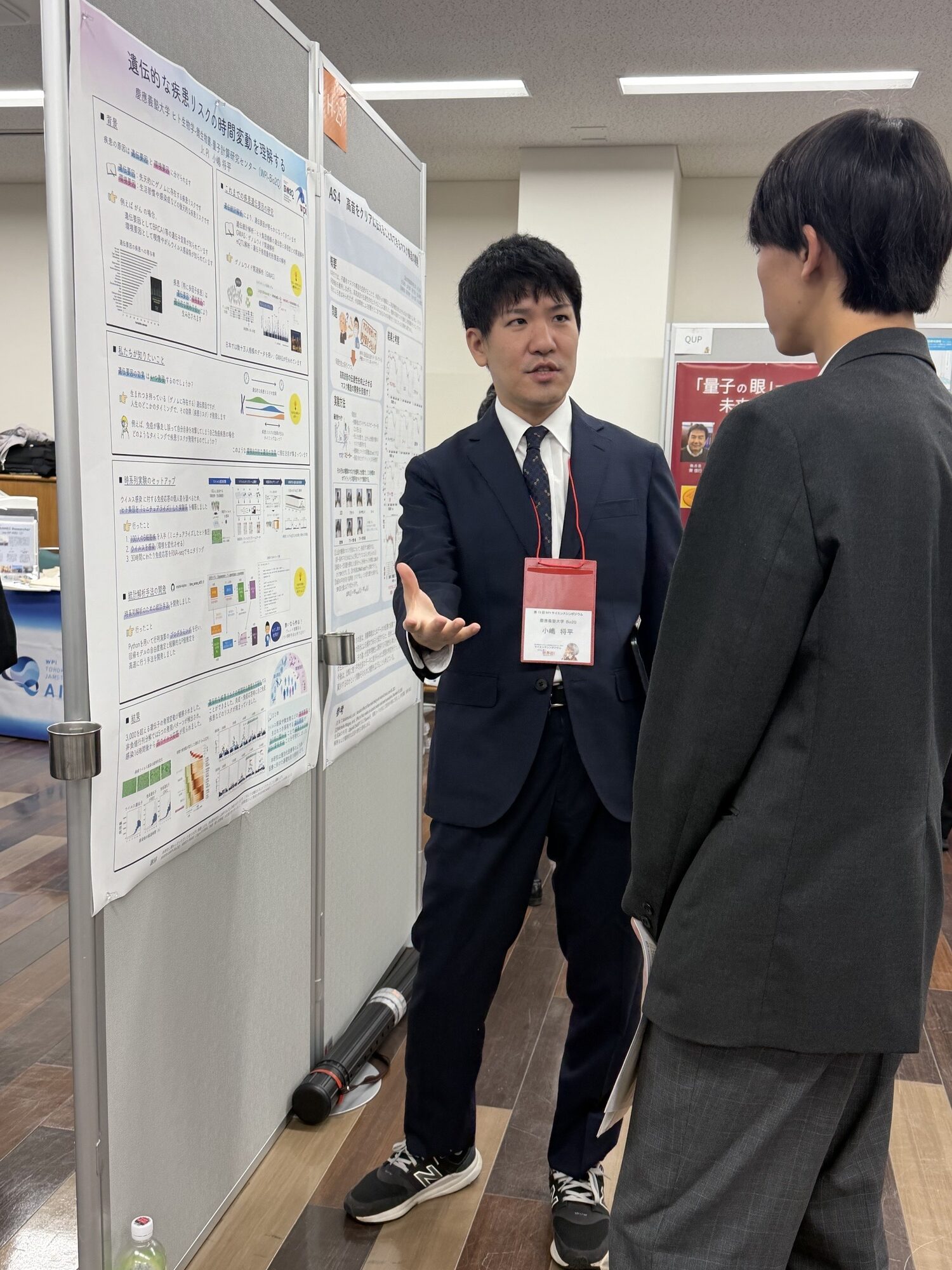
【Event Report】Bio2Q Participates in the 15th WPI Science Symposium, Engaging wit...
On Saturday, November 14, 2026, the 15th WPI Science Symposium, themed “World Premieres Born from Me! ~Science I Want to Share with Someone~,” was held at the Osaka University Convention Center in Suita, Osaka, hosted by the Osaka University Premium Research Institute for Human Metaverse Medicine (WPI-PRIMe). The event featured a special lecture by Prof. Shimon Sakaguchi (Distinguished University ...

WPI-Bio2Q now recruiting administrative staff– Deadline: January 11, 2027
WPI-Bio2Q Administrative Office is currently hiring administrative staff. We look forward to receiving applications from candidates with English proficiency who can support international researchers and anticipate to work at Bio2Q Administrative Office. Application Deadline: January 11, 2027 For more details, please refer to the application information at the link below, Application Info...
