





RESEARCH
【Publication】Mixed-class J-domain protein scaffolds promote expanded aggregate handling and multivalent Hsp70 engagement during functional disaggregase assembly
August 31, 2026
Credits: WPI-Bio2Q
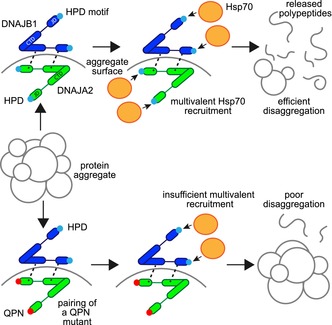
Visual abstract
Credits: Szlachcic and Nillegoda, 2026
Co-authored by researchers at Bio2Q and published in FEBS Letters, this study elucidates a new degradation mechanism by which human cells remove harmful protein aggregates. The researchers discovered that when multiple auxiliary proteins work together to recruit the main degradase, the degradation capacity and the range of waste types that can be processed are significantly increased. These findings contribute to a deeper understanding of the cell’s quality control system.
| Title | Mixed-class J-domain protein scaffolds promote expanded aggregate handling and multivalent Hsp70 engagement during functional disaggregase assembly |
|---|---|
| Authors | Anna Szlachcic 1 2, Nadinath B Nillegoda 2 3 |
| Short Description |
This study, co-authored by researchers from Bio2Q, the University of Wroclaw, and Heidelberg University, reveals how human cells assemble powerful protein disaggregation machinery to remove potentially harmful protein aggregates. In human cells, this process relies on Hsp70 chaperones working together with J-domain proteins (JDPs), including the class A protein DNAJA2 and class B protein DNAJB1, which form mixed-class assemblies that enhance protein disaggregation. Here, the researchers investigated how these assemblies achieve their increased activity and found that both JDP partners must actively recruit Hsp70 for efficient disaggregation. Using biochemical assays with mutant JDPs, they showed that formation of the mixed-class scaffold alone is not sufficient, and that disrupting Hsp70 recruitment by either DNAJA2 or DNAJB1 eliminates the synergistic increase in disaggregation. The researchers also found that DNAJA2 and DNAJB1 preferentially process different types of protein aggregates, while their combined assembly expands the range of aggregates that can be effectively handled. Together, these findings reveal that mixed-class JDP scaffolds enhance protein quality control through two complementary functions, broadening aggregate recognition and enabling multivalent recruitment of Hsp70, and provide new mechanistic insight into how human cells maintain protein homeostasis. |
| DOI | 10.1002/1873-3468.70399 |
| Journal | FEBS Letters |
| Vol/Num/Page |
600(14):2028-2037
|
| Publication Date | June, 2026 |
Affiliations
1 Department of Protein Engineering, Faculty of Biotechnology, University of Wroclaw, Poland.
2 Center for Molecular Biology of the University of Heidelberg (ZMBH), German Cancer Research Center (DKFZ), DKFZ-ZMBH Alliance, Germany.
3 Human Biology-Microbiome-Quantum Research Center (WPI-Bio2Q), Keio University, Tokyo, Japan.
SHARE




More Bio2Q News
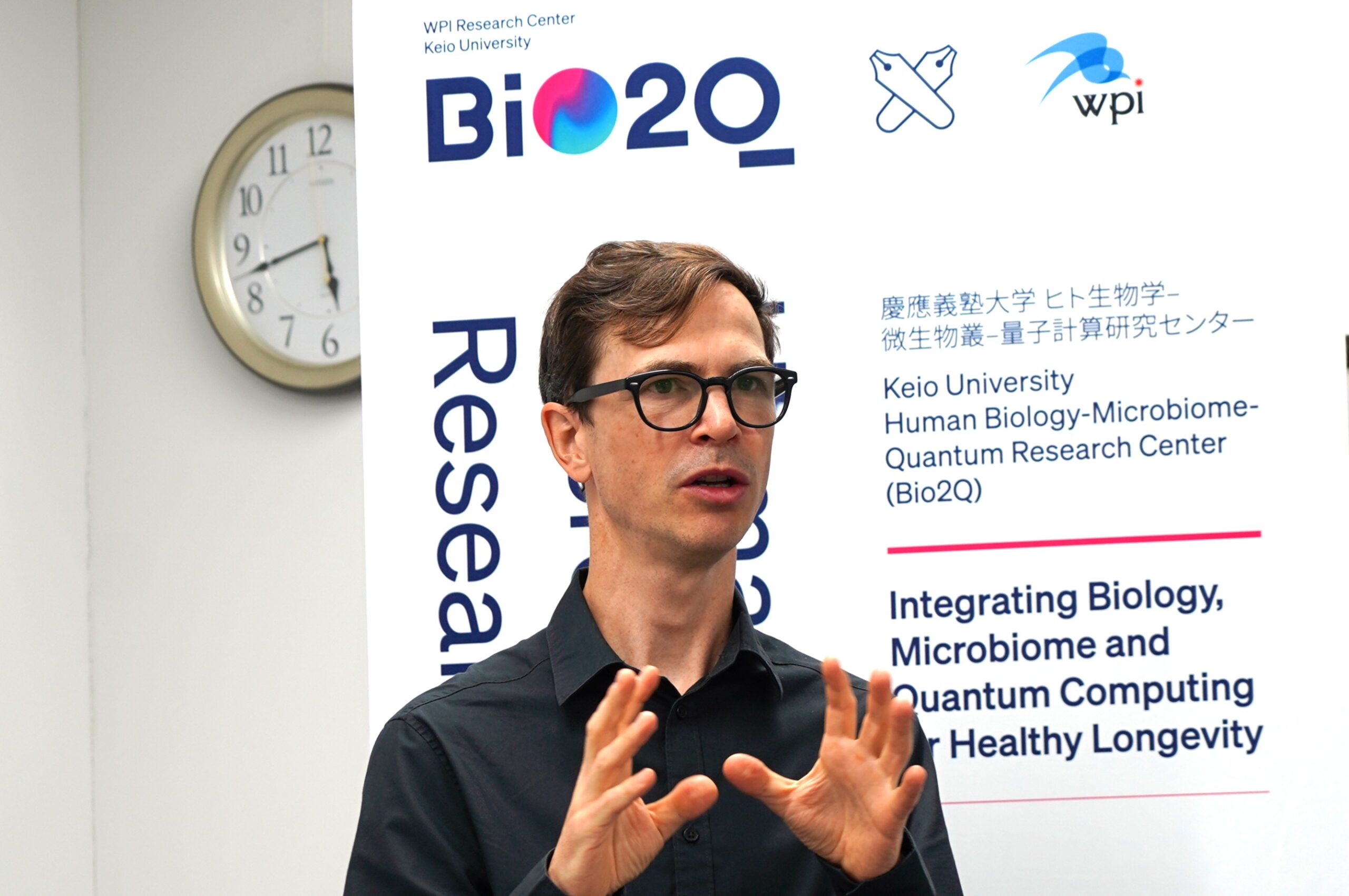
【Seminar Report】WPI-Bio2Q Open Seminar: Nicolas Manel, PhD
Keio University Human Biology-Microbiome-Quantum Research Center (WPI-Bio2Q) held a seminar as follows. Date:17:00 -18:00, September 14, ...
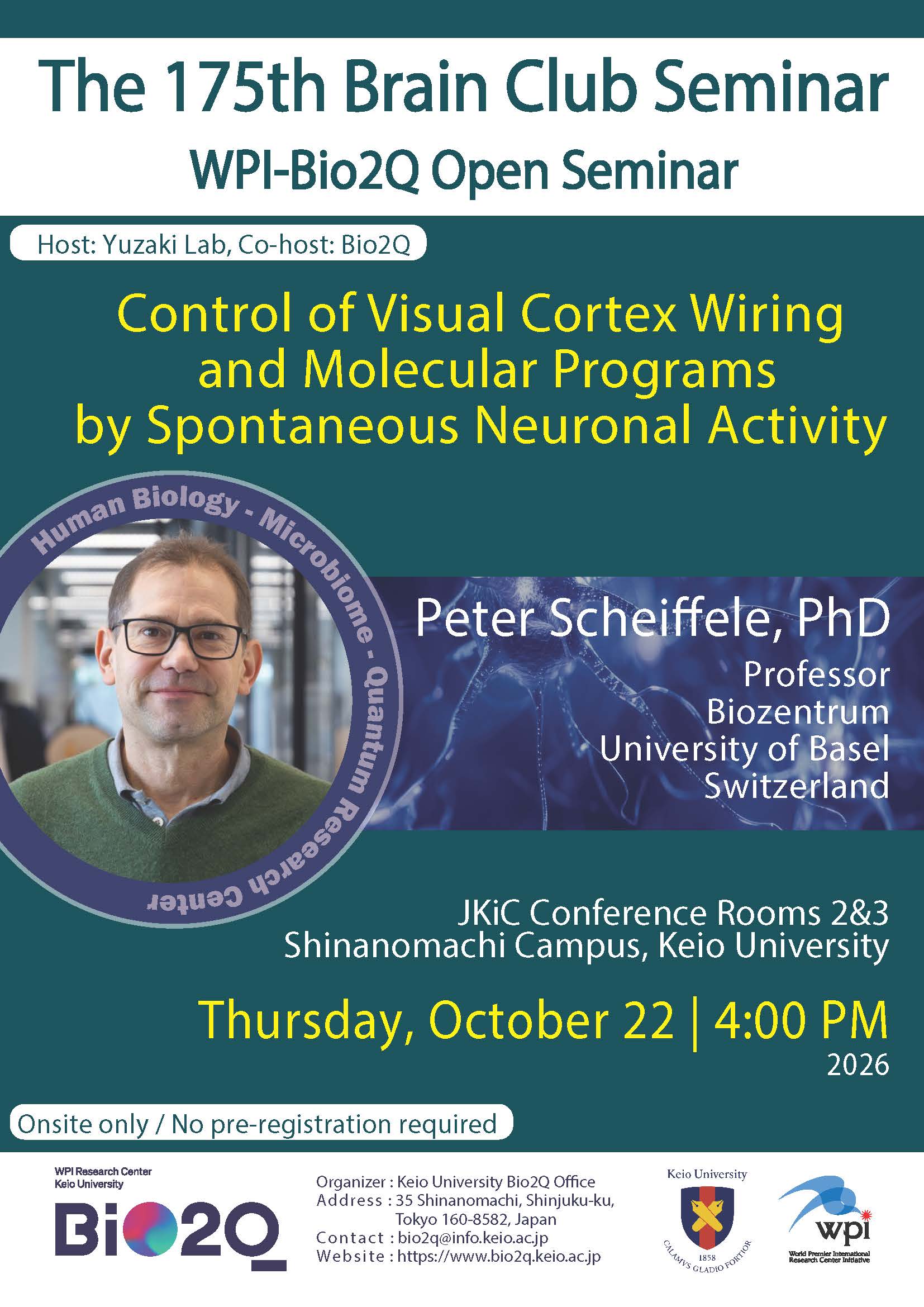
【10/22 Seminar】The 175th Brain Club Seminar (WPI-Bio2Q Open Seminar)
Keio University Human Biology-Microbiome-Quantum Research Center (WPI-Bio2Q) will hold a seminar as follows. This is an event for faculty, ...

【9/16 Seminar】 WPI-Bio2Q Open Seminar: Yue Yin(for Keio Members)
Keio University Human Biology-Microbiome-Quantum Research Center (WPI-Bio2Q) will hold a seminar as follows. This event is only for faculty...
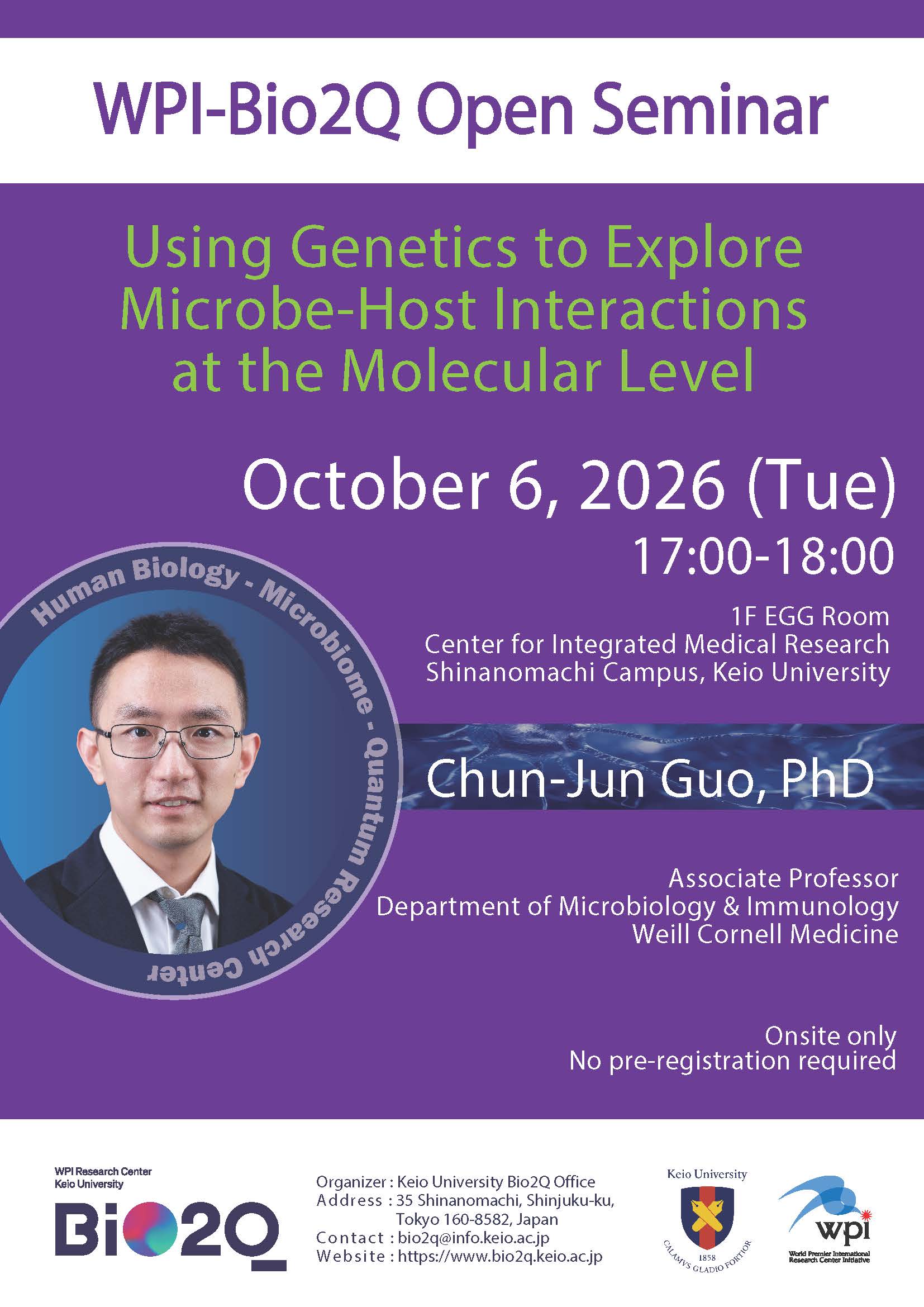
【10/6 Seminar】Bio2Q Open Seminar: Chun-Jun Guo, PhD
Keio University Human Biology-Microbiome-Quantum Research Center (WPI-Bio2Q) will hold a seminar as follows. This is an event for faculty, ...
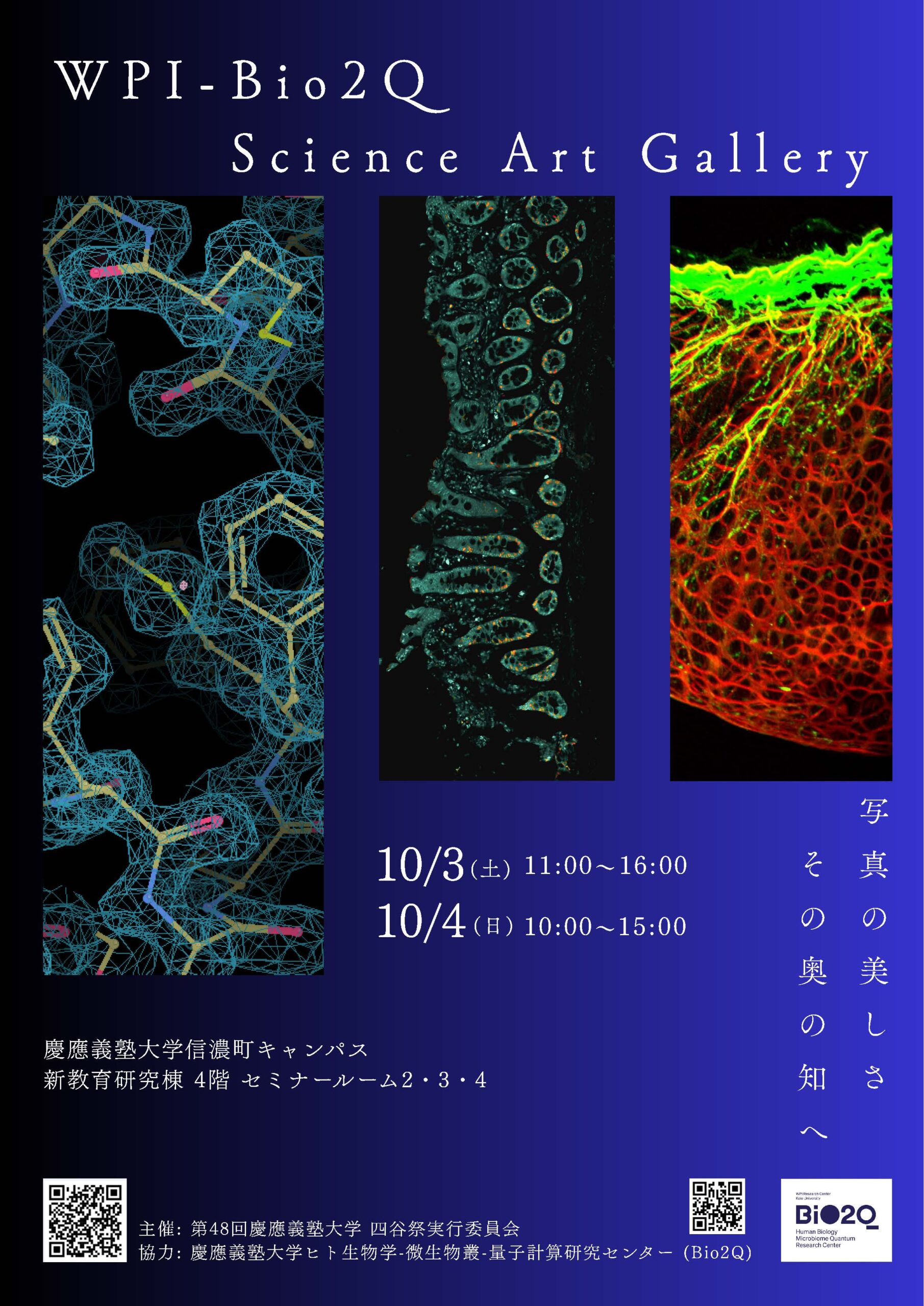
【10/3-10/4 Yotsuya Festival】 WPI-Bio2Q Science Art Gallery
The 48th Yotsuya Festival will be held on October 3 (Sat) and 4 (Sun), 2026, at Keio University's Shinanomachi Campus. In collaboration with...
