





RESEARCH
【Publication】Frustration-enhanced quantum annealing correction models with additional inter-replica interactions
October 26, 2026
Researchers from Bio2Q and Keio University have demonstrated that introducing additional interactions between copies of a quantum optimization problem can improve the performance of quantum annealers. By exploiting a phenomenon known as frustration, their approach enables more reliable identification of optimal solutions, even with short computation times and challenging energy conditions. These findings offer a promising strategy for improving the performance of near-term quantum computing technologies.
| Title | Frustration-enhanced quantum annealing correction models with additional inter-replica interactions |
|---|---|
| Authors | Tomohiro Hattori 1 and Shu Tanaka 1,2,3,4,* |
| Short Description | Finding the best solution among a vast number of possibilities is a major challenge in many areas of science, including biology, where researchers must often analyze complex networks and interactions. Quantum annealing is a computing approach that uses principles of quantum physics to search for optimal solutions to these types of problems.
Researchers from Bio2Q and Keio University have demonstrated how introducing additional interactions between quantum systems can improve the ability of quantum annealers to solve complex optimization problems. However, the performance of quantum annealers is often limited by hardware noise, computational errors, and small energy gaps that make it difficult to reach the correct solution. To address these challenges, these researchers investigated quantum annealing correction methods that use multiple interconnected copies of a problem to improve solution accuracy. By introducing carefully designed interactions between these copies, including competing interactions that create a phenomenon known as frustration, they demonstrated that quantum annealers can identify optimal solutions even under conditions where conventional approaches struggle. Experiments on a real quantum annealer showed that these methods can achieve high success rates with shorter computation times by exploiting transitions between quantum states that are typically considered undesirable. These findings provide new insights into how quantum interactions can be used to overcome computational bottlenecks and establish a promising approach for improving the reliability and practical performance of near-term quantum computing technologies. |
| DOI | 10.1038/s42003-026-10947-w |
| Journal | Phys. Rev. |
| Vol/Num/Page |
A 114, 022470
|
| Publication Date | August 31, 2026 |
Affiliations
1 Graduate School of Science and Technology, Keio University, 3-14-1 Hiyoshi, Kohoku-ku, Yokohama-shi, Kanagawa 223-8522, Japan
2 Department of Applied Physics and Physico-Informatics, Keio University, 3-14-1 Hiyoshi, Kohoku-ku, Yokohama-shi, Kanagawa 223-8522, Japan
3 Keio University Sustainable Quantum Artificial Intelligence Center (KSQAIC), Keio University, Tokyo 108-8345, Japan
4 Human Biology-Microbiome-Quantum Research Center (WPI-Bio2Q), Keio University, Tokyo 108-8345, Japan
SHARE


More Bio2Q News

WPI-Bio2Q now recruiting administrative staff– Deadline: January 11, 2027
WPI-Bio2Q Administrative Office is currently hiring administrative staff. We look forward to receiving applications from candidates with English proficiency who can support international researchers and anticipate to work at Bio2Q Administrative Office. Application Deadline: January 11, 2027 For more details, please refer to the application information at the link below, Application Info...
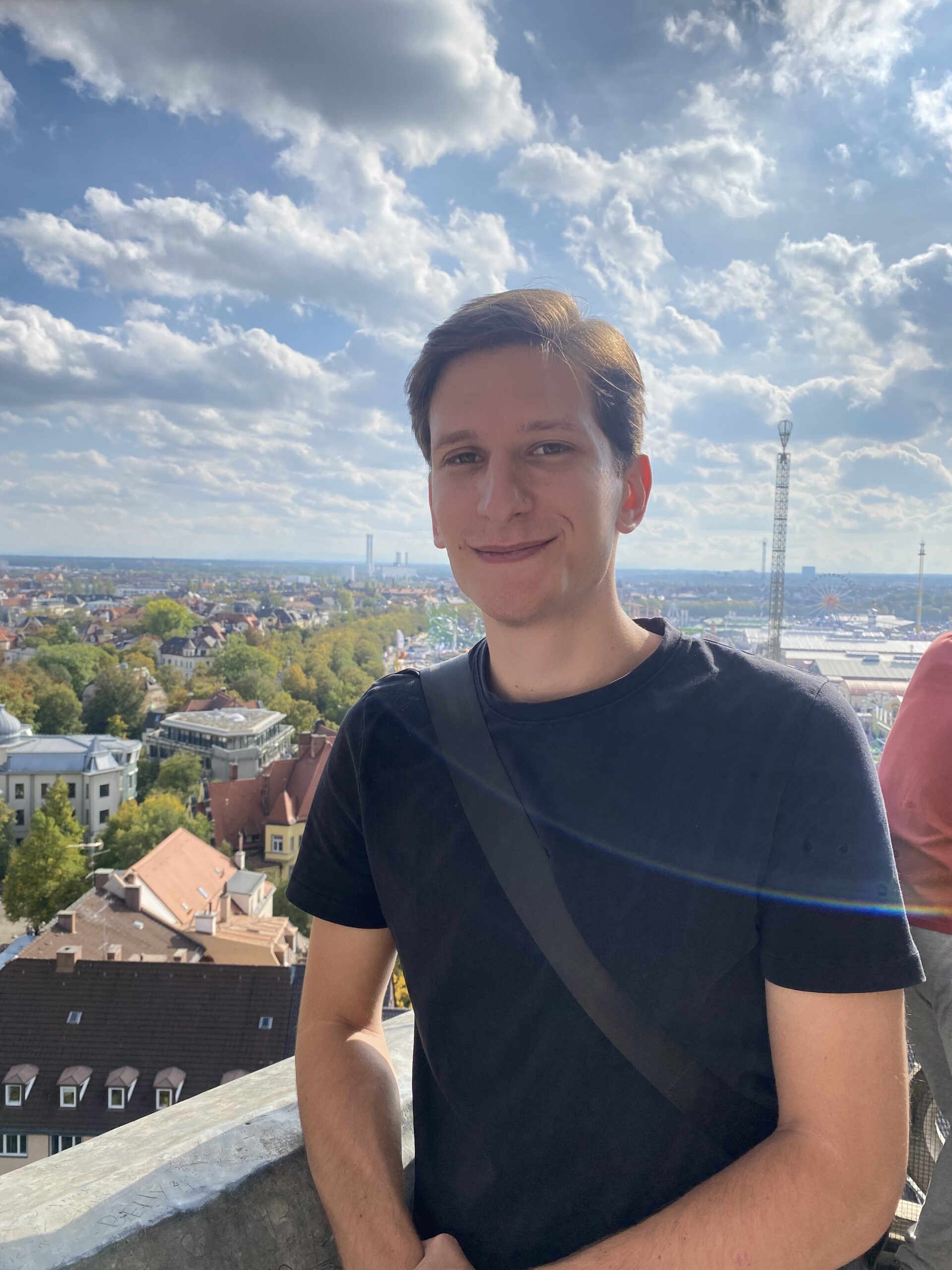
New Long-Term Internship Student-Mr. Kevin Deesy
Introducing a new Long-Term Internship Student of Bio2Q We are delighted to welcome Mr. Kevin Deesy as a new Long-Term Research Internship Student of Bio2Q. "Hello Bio2Q team, My name is Kevin Deesy, and I’m currently completing my Master’s in Sustainable Food at the Technical University of Munich (TUM), specializing in molecular biotechnology and microbiology. My research so far has take...

New Member - Dr. Augustinas Silale
Introducing new member of Bio2Q We are excited to welcome Dr. Augustinas Silale as a Jr. PI at Bio-2 Core of Bio2Q. "Hello, Bio2Q community! My name is Augustinas (August) Silale. I am from Lithuania. I am delighted to join Bio2Q as a Jr. PI. I read Natural Sciences at the University of Cambridge. My BA project was on fragment-based drug discovery in Prof Sir Tom Blundell’s group, where ...
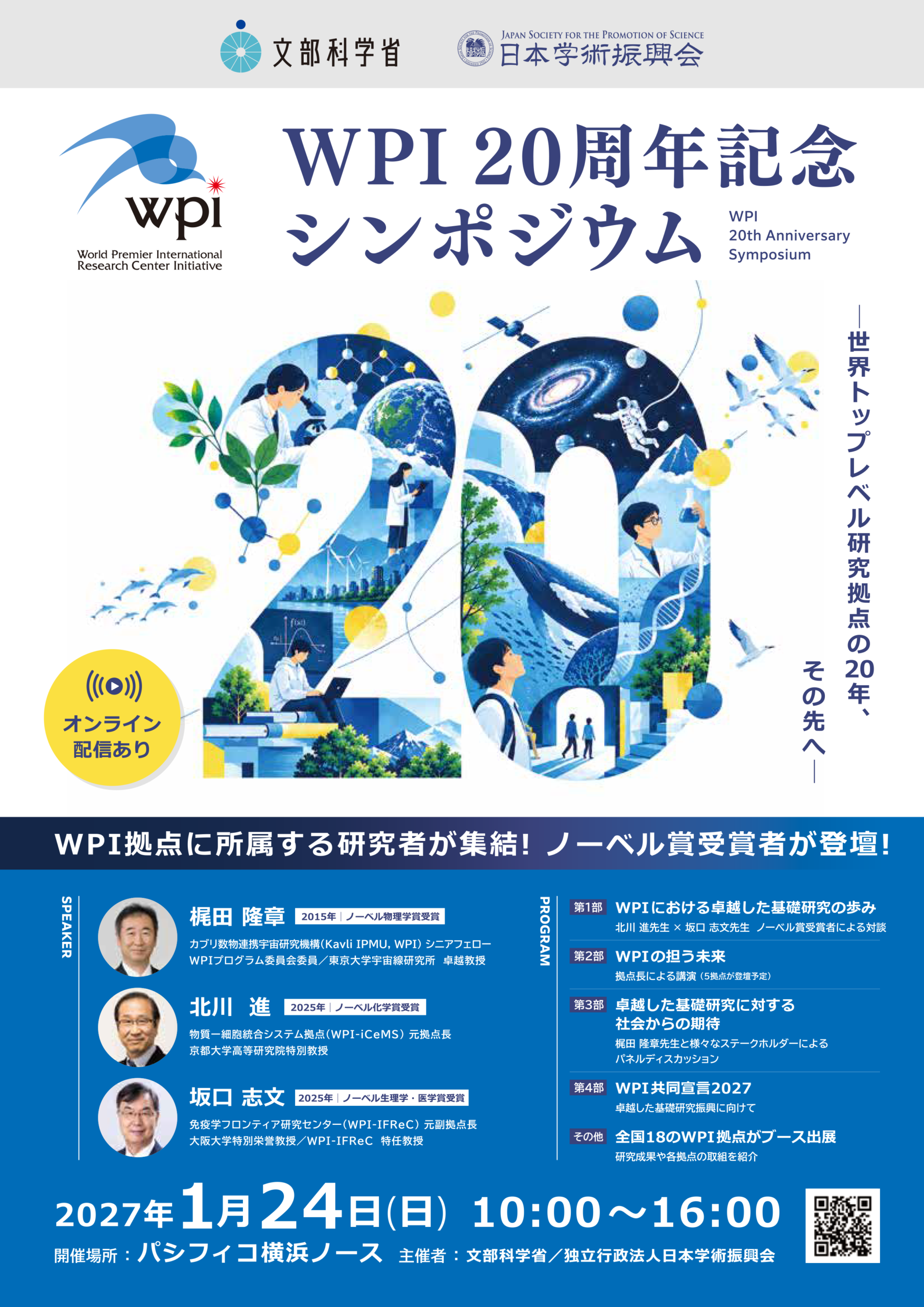
WPI 20th Anniversary Symposium "20 Years of World Premier International Research...
On Sunday, January 24, 2027, the "WPI 20th Anniversary Symposium" will be held at Pacifico Yokohama North with online streaming available, hosted by the Ministry of Education, Culture, Sports, Science and Technology (MEXT) and the Japan Society for the Promotion of Science (JSPS).Marking two decades of the World Premier International Research Center Initiative (WPI), this landmark symposium brings...
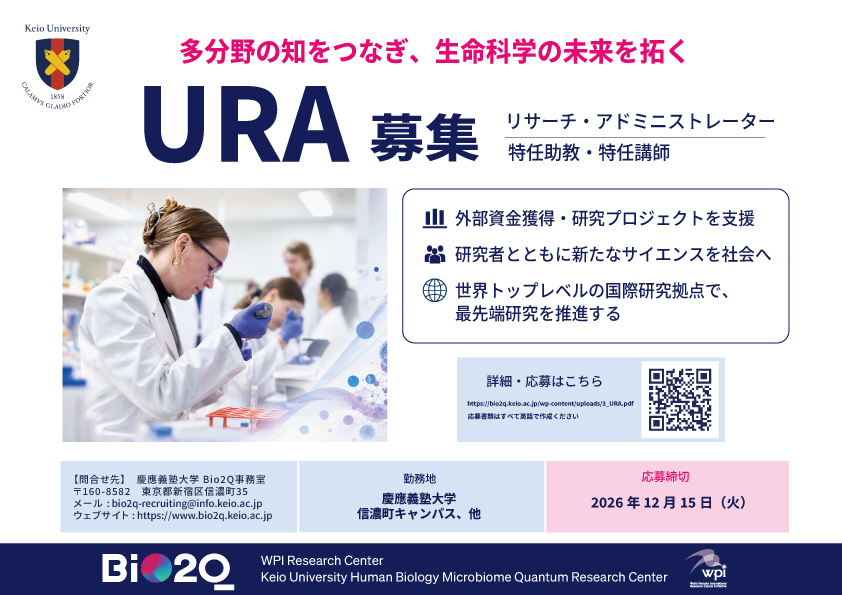
Open Call: Research Administrator (URA)
Bio2Q is seeking a Research Administrator (URA) (Project Instructor or Project Assistant Professor) to promote Bio2Q-related research through their own ideas and initiative. For further details, please refer to the link below. We look forward to receiving your application. Application Information → https://bio2q.keio.ac.jp/wp-content/uploads/3_URA.pdf
