





RESEARCH
【Publication】Quantum algorithm for metabolic network analysis
August 3, 2026
New paper
Credits: WPI-Bio2Q
Authored by Bio2Q researchers and published in Machine Learning with Applications, this study demonstrates a novel quantum algorithm designed to accelerate large-scale metabolic network analysis. The researchers applied Quantum Interior Point Methods (QIPM) and Quantum Singular Value Transformation (QSVT) to Flux Balance Analysis (FBA), establishing an efficient method for solving complex metabolic optimization problems that are challenging for classical computers. Demonstrating convergence to precise biological optima through simulations, these findings highlight the potential of quantum computing as a powerful foundation for analyzing complex metabolic pathways and driving large-scale biological optimization.
| Title | Quantum algorithm for metabolic network analysis |
|---|---|
| Authors | Ashish Joshi1,2, Takahiko Koyama1,2 |
| Short Description |
This study, co-authored by researchers from Bio2Q and Keio University, presents the first quantum algorithm specifically designed for metabolic network analysis, introducing a quantum computing framework for flux balance analysis (FBA) to model cellular metabolism. FBA is widely used to predict how metabolic pathways allocate reaction fluxes to maximize biological objectives such as biomass production or energy generation. However, extending these analyses to increasingly large, dynamic, or multi-species metabolic networks becomes exceedingly computationally complex because solving the underlying optimization problem requires repeated large-scale matrix inversions. To address this bottleneck, these researchers developed a quantum interior point method (QIPM) that reformulates the FBA optimization problem for execution on a fault-tolerant quantum computer using quantum singular value transformation (QSVT), a quantum algorithm for efficiently solving linear systems. Recognizing that QSVT performance is strongly limited by the condition number of the optimization matrices, they introduced a novel null-space projection and adaptive regularization strategy that dramatically improves numerical stability by reducing the condition number before quantum matrix inversion. The framework was validated through numerical simulations of the glycolysis and tricarboxylic acid (TCA) cycle metabolic network, where the quantum algorithm accurately converged to the classical optimal solution, while successfully reproducing biologically meaningful flux distributions. Although current quantum hardware is not yet capable of providing practical speedups for these problems, this study establishes the first quantum algorithm tailored to metabolic pathway analysis and provides a scalable foundation for future applications to genome-scale metabolism, dynamic flux balance analysis, microbiome modeling, and other complex biological systems that may eventually exceed the capabilities of classical computational methods. |
| DOI | 10.1016/j.mlwa.2026.100913 |
| Journal | Machine Learning with Applications |
| Vol/Num/Page | Volume 24 |
| Publication Date | 8 May 2026 |
Affiliations
- Human Biology-Microbiome-Quantum Research Center (WPI-Bio2Q), Keio University, Tokyo, Japan
- Keio University Sustainable Quantum Artificial Intelligence Center (KSQAIC), Keio University, Tokyo, Japan
SHARE




More Bio2Q News
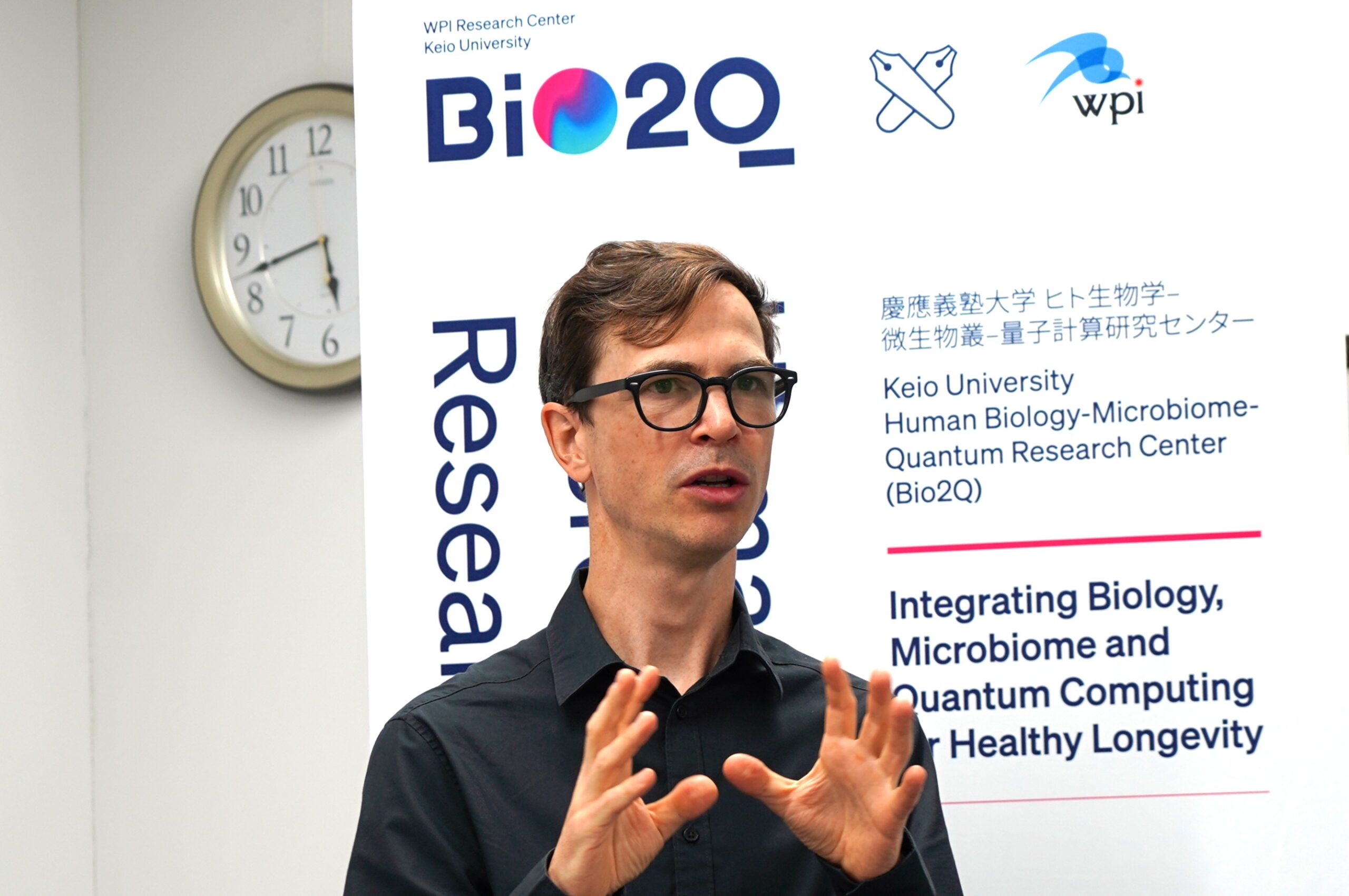
【Seminar Report】WPI-Bio2Q Open Seminar: Nicolas Manel, PhD
Keio University Human Biology-Microbiome-Quantum Research Center (WPI-Bio2Q) held a seminar as follows. Date:17:00 -18:00, September 14, ...
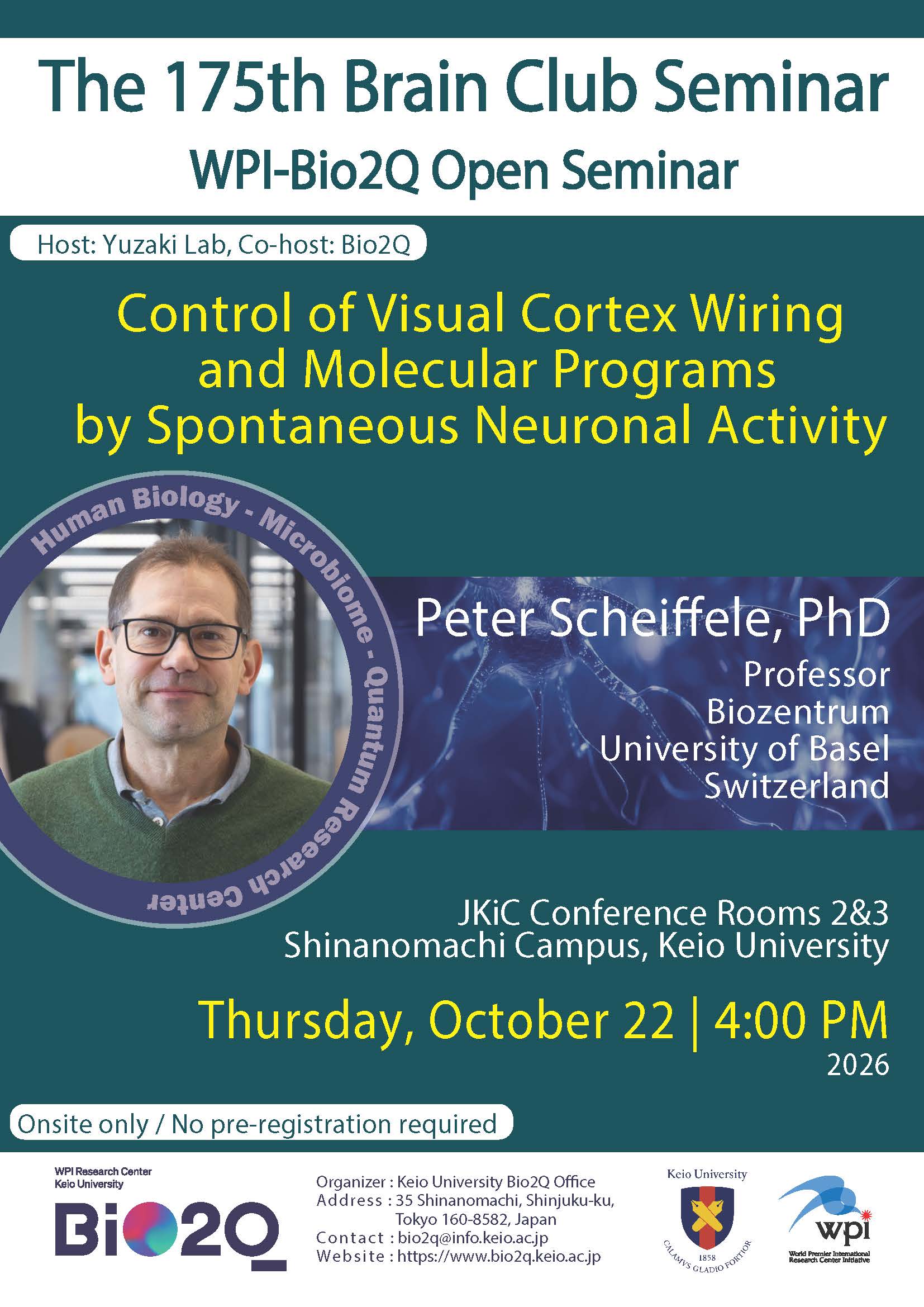
【10/22 Seminar】The 175th Brain Club Seminar (WPI-Bio2Q Open Seminar)
Keio University Human Biology-Microbiome-Quantum Research Center (WPI-Bio2Q) will hold a seminar as follows. This is an event for faculty, ...

【9/16 Seminar】 WPI-Bio2Q Open Seminar: Yue Yin(for Keio Members)
Keio University Human Biology-Microbiome-Quantum Research Center (WPI-Bio2Q) will hold a seminar as follows. This event is only for faculty...
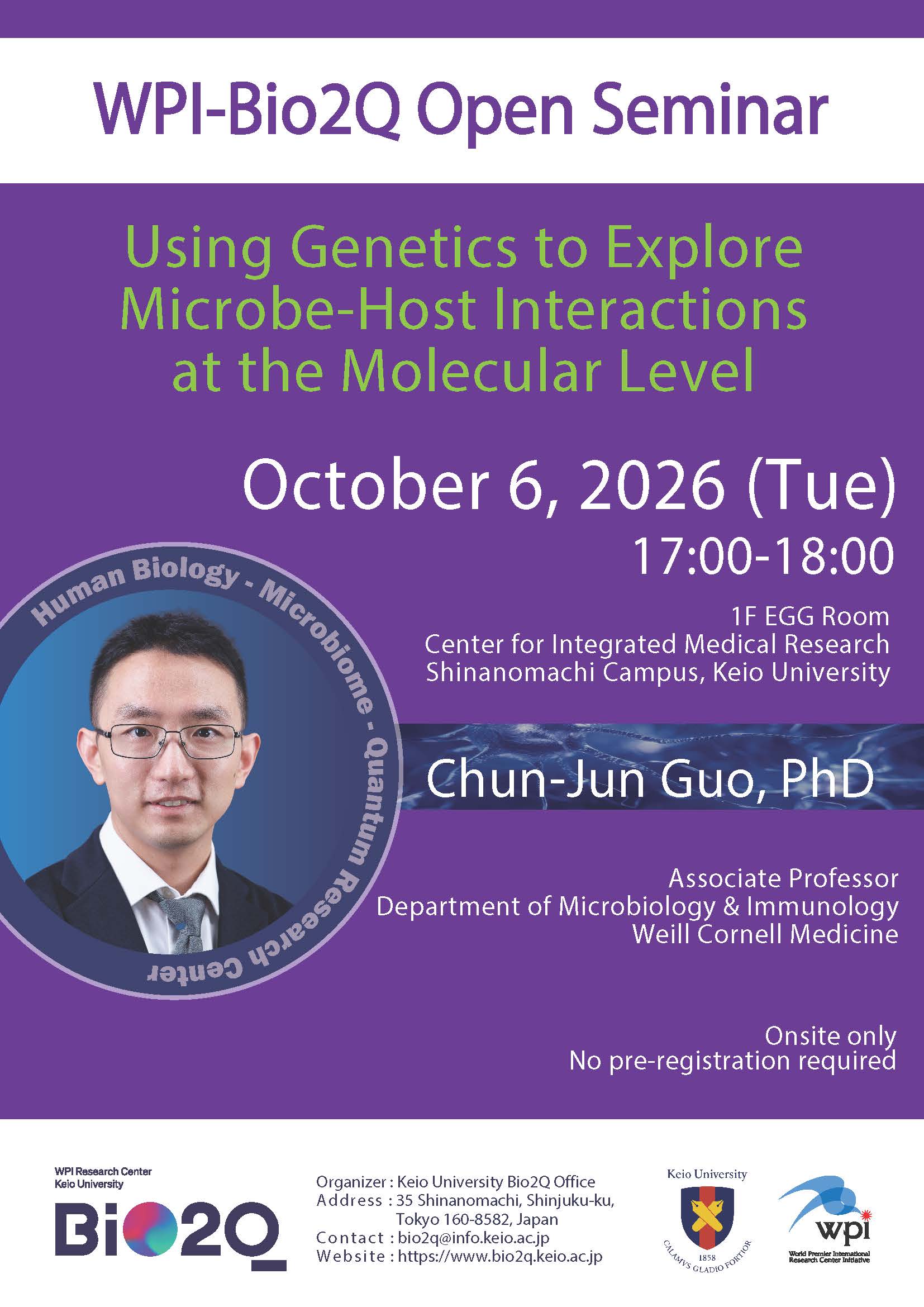
【10/6 Seminar】Bio2Q Open Seminar: Chun-Jun Guo, PhD
Keio University Human Biology-Microbiome-Quantum Research Center (WPI-Bio2Q) will hold a seminar as follows. This is an event for faculty, ...
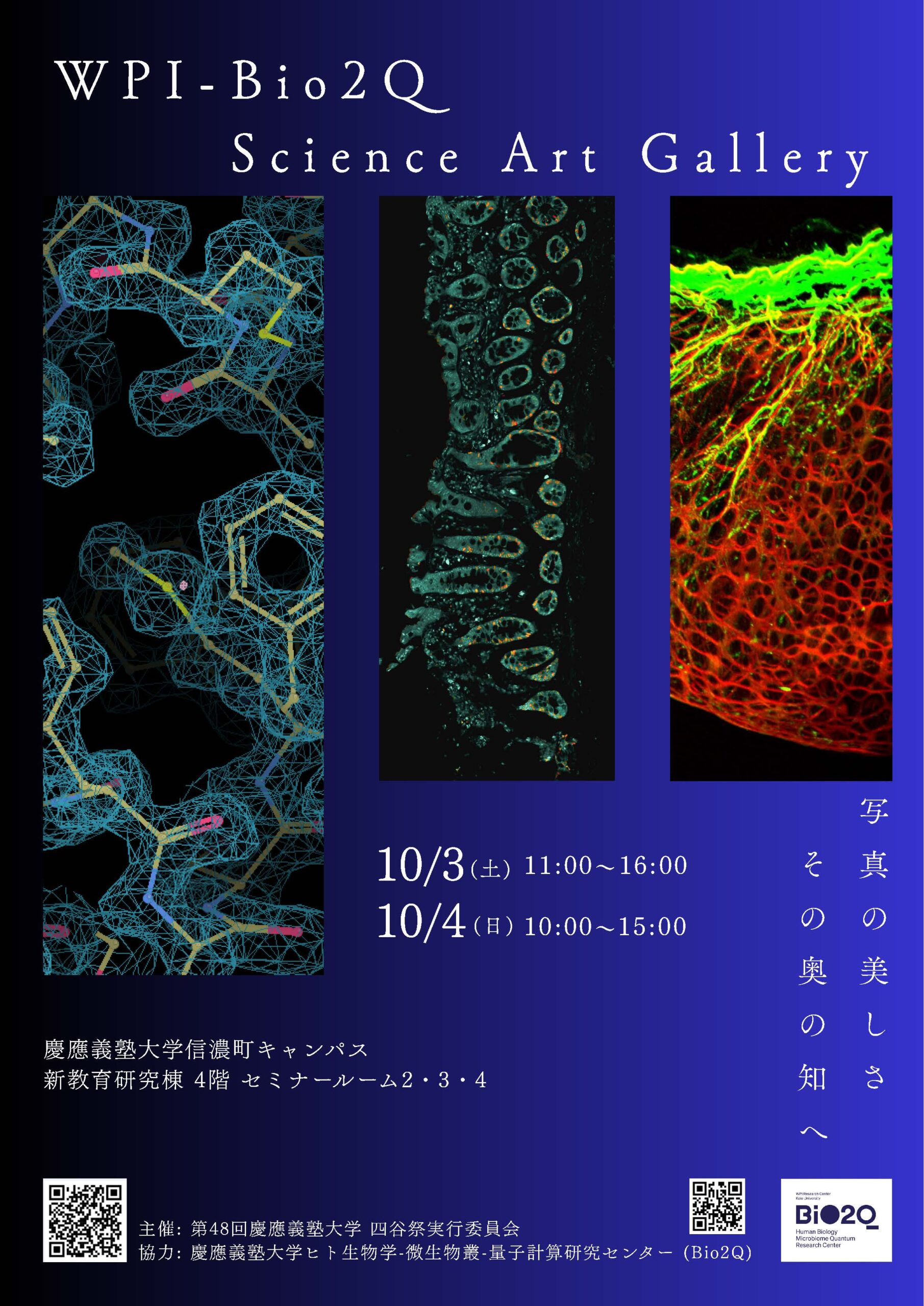
【10/3-10/4 Yotsuya Festival】 WPI-Bio2Q Science Art Gallery
The 48th Yotsuya Festival will be held on October 3 (Sat) and 4 (Sun), 2026, at Keio University's Shinanomachi Campus. In collaboration with...
