





RESEARCH
【Publication】Accurate, sensitive, and efficient chromatin accessibility quantification at target loci using UNIChro-seq
August 31, 2026
Credits: WPI-Bio2Q
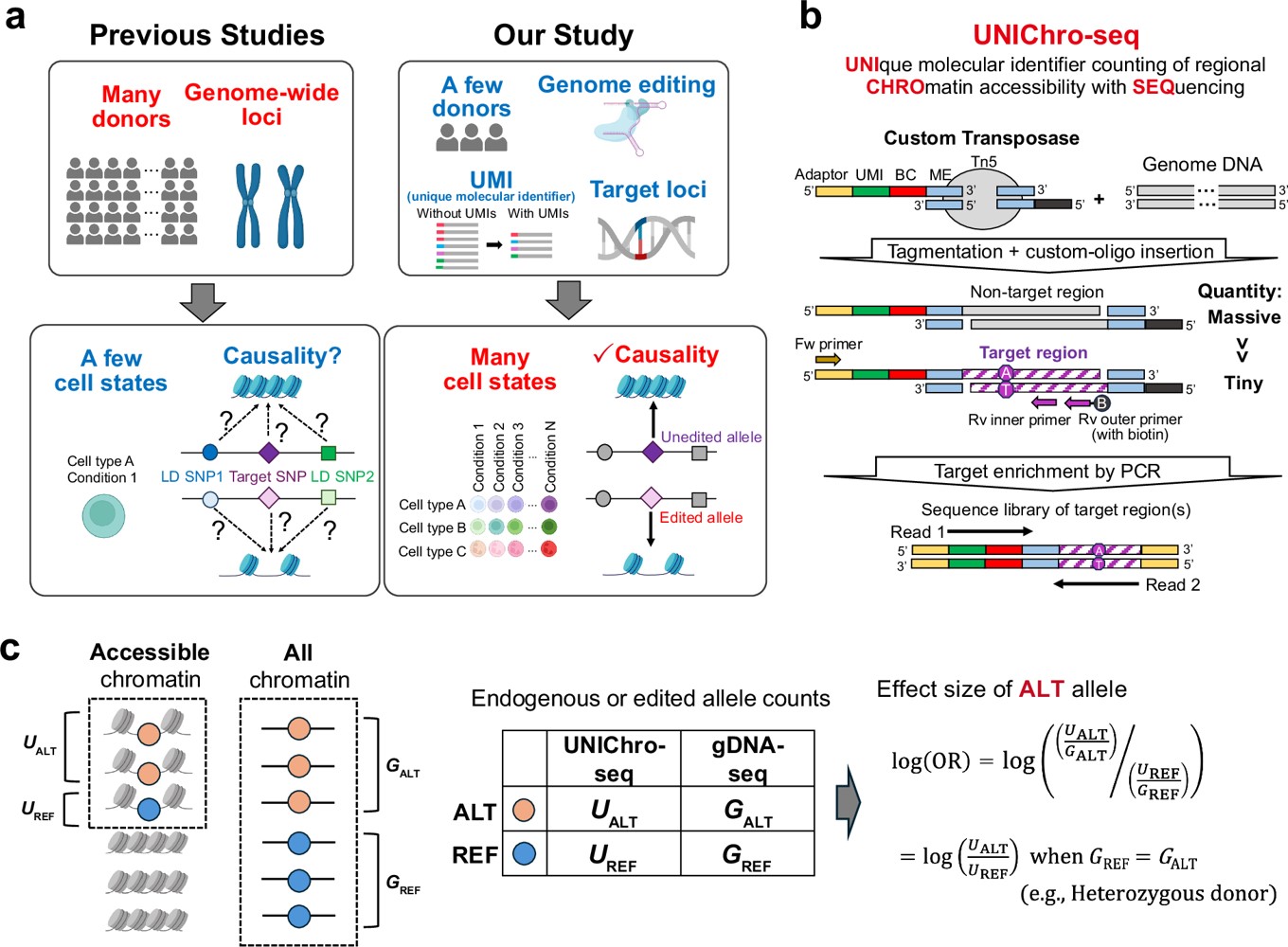
Fig. 1: Overview of our study design and UNIChro-seq.
Credits: Kono et al., 2026
Co-authored by researchers at Bio2Q and published in Nature Communications, this study developed a new analytical technology to accurately and efficiently examine how disease-related genetic variations function within the body. The researchers established a high-precision measurement method capable of capturing subtle changes, applying it to the data analysis of genes involved in immune diseases and to verifying the impacts of gene editing. As a result, the method enables detailed elucidation of the effects of disease-related genes, contributing to clarifying the causes of intractable diseases and advancing drug discovery research.
| Title | Accurate, sensitive, and efficient chromatin accessibility quantification at target loci using UNIChro-seq |
|---|---|
| Authors | Michihiro Kono # 1 2, Hiroaki Hatano # 1 2, Kenichiro Asahara 2, Masahiro Nakano 2, Reza Bagherzadeh 1 2, Tsugumi Kawashima 2, Takahiro Arakawa 2, Miho Sato 2, Hajime Inokuchi 1 2, Takahiro Nishino 1 2, Takahiro Itamiya 2 3 4, Haruka Takahashi 1 2, Bunki Natsumoto 2, Akari Suzuki 5, Kazuhiko Yamamoto 5, Kazuyoshi Ishigaki 6 7 8 |
| Short Description |
This study, co-authored by researchers from Bio2Q, Keio University, and RIKEN, introduces UNIChro-seq, a new method for accurately and efficiently measuring how disease-associated genetic variants affect chromatin accessibility at specific genomic regions. Although genome-wide association studies have identified many variants associated with complex diseases, determining their molecular functions remains challenging as conventional approaches often require large numbers of donors and may lack the sensitivity to detect subtle or cell state specific effects. Here, these researchers developed a method called UNIChro-seq, which uses unique molecular identifiers, and targeted amplification, to digitally count accessible chromatin molecules and precisely quantify allele-specific effects. Applying the method to autoimmune disease risk variants across multiple immune cell types and conditions, they demonstrated its ability to detect both baseline and dynamic effects on chromatin accessibility using relatively few donors. By combining UNIChro-seq with genome editing, this research team also identified a previously underappreciated bias caused by the editing process itself and showed that bi-directional genome editing can distinguish this bias from genuine causal effects. Finally, functional analysis of a rheumatoid arthritis-associated variant at the LEF1 locus linked altered chromatin accessibility to LEF1 dysregulation in CD4+ T cells. Together, this work establishes UNIChro-seq as a sensitive and scalable platform for investigating how disease-associated genetic variants influence gene regulation and contribute to complex disease. |
| DOI | 10.1038/s41467-026-75767-2 |
| Journal | Nature Communications |
| Vol/Num/Page |
17(1):8807
|
| Publication Date | July 20, 2026 |
Affiliations
1 Department of Microbiology and Immunology, Keio University School of Medicine, Tokyo, Japan.
2 Laboratory for Human Immunogenetics, RIKEN Center for Integrative Medical Sciences, Yokohama, Japan.
3 Department of Functional Genomics and Immunological Diseases, Graduate School of Medicine, The University of Tokyo, Tokyo, Japan.
4 Department of Allergy and Rheumatology, Graduate School of Medicine, The University of Tokyo, Tokyo, Japan.
5 Laboratory for Autoimmune Diseases, RIKEN Center for Integrative Medical Sciences, Yokohama, Japan.
6 Department of Microbiology and Immunology, Keio University School of Medicine, Tokyo, Japan.
7 Laboratory for Human Immunogenetics, RIKEN Center for Integrative Medical Sciences, Yokohama, Japan.
8 Keio University Human Biology-Microbiome-Quantum Research Center (WPI-Bio2Q), Tokyo, Japan.
SHARE




More Bio2Q News
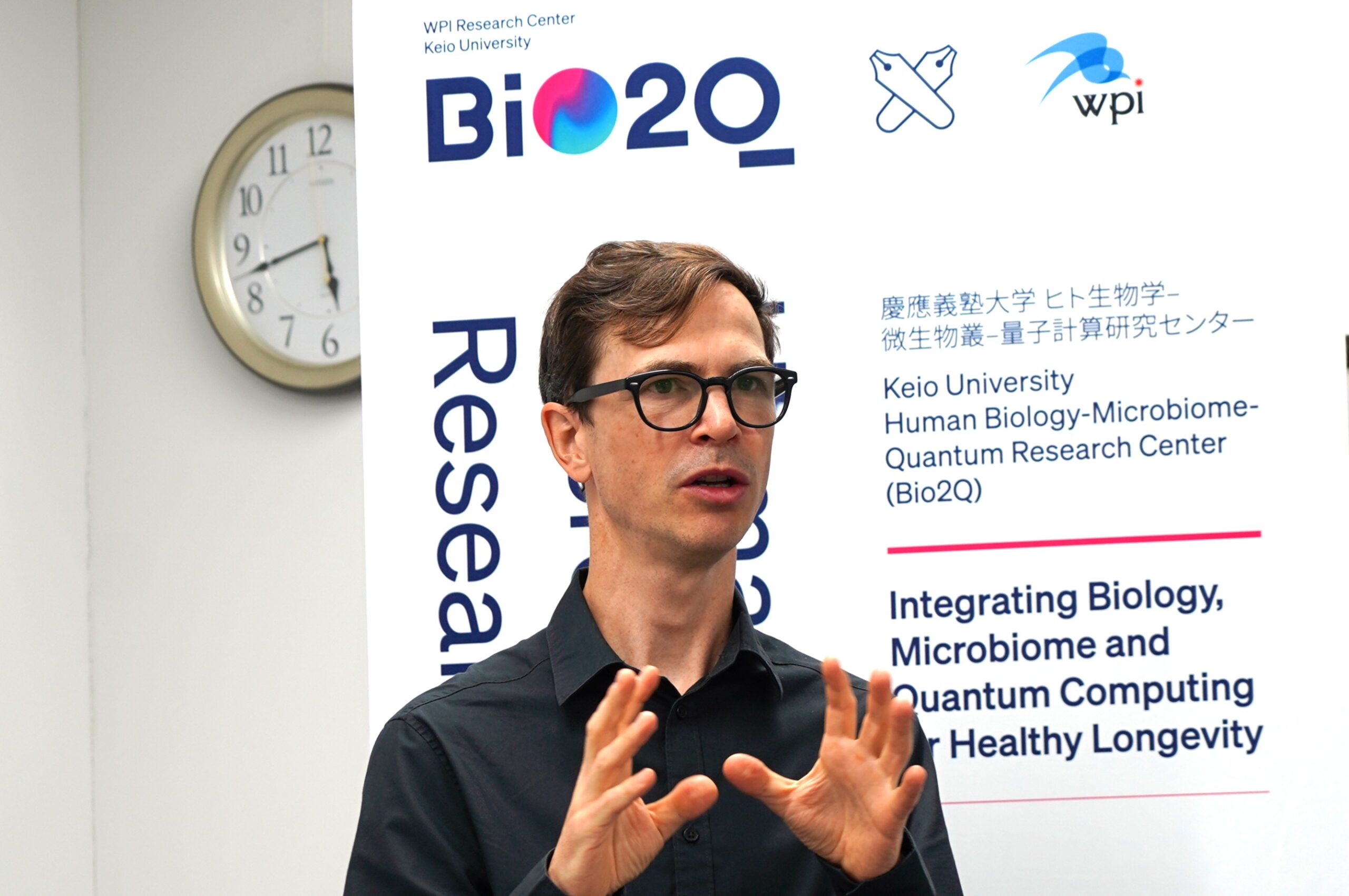
【Seminar Report】WPI-Bio2Q Open Seminar: Nicolas Manel, PhD
Keio University Human Biology-Microbiome-Quantum Research Center (WPI-Bio2Q) held a seminar as follows. Date:17:00 -18:00, September 14, ...
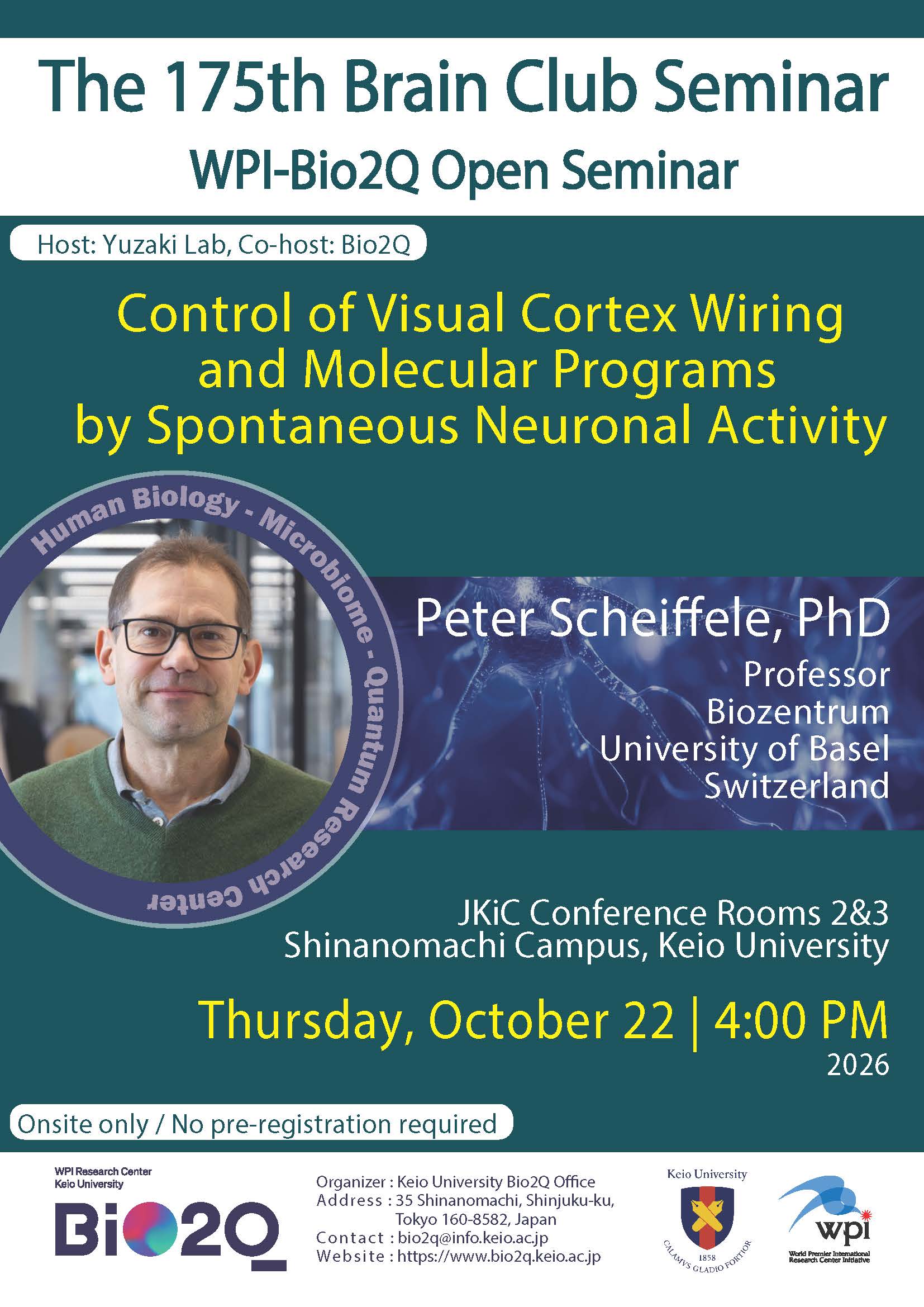
【10/22 Seminar】The 175th Brain Club Seminar (WPI-Bio2Q Open Seminar)
Keio University Human Biology-Microbiome-Quantum Research Center (WPI-Bio2Q) will hold a seminar as follows. This is an event for faculty, ...

【9/16 Seminar】 WPI-Bio2Q Open Seminar: Yue Yin(for Keio Members)
Keio University Human Biology-Microbiome-Quantum Research Center (WPI-Bio2Q) will hold a seminar as follows. This event is only for faculty...
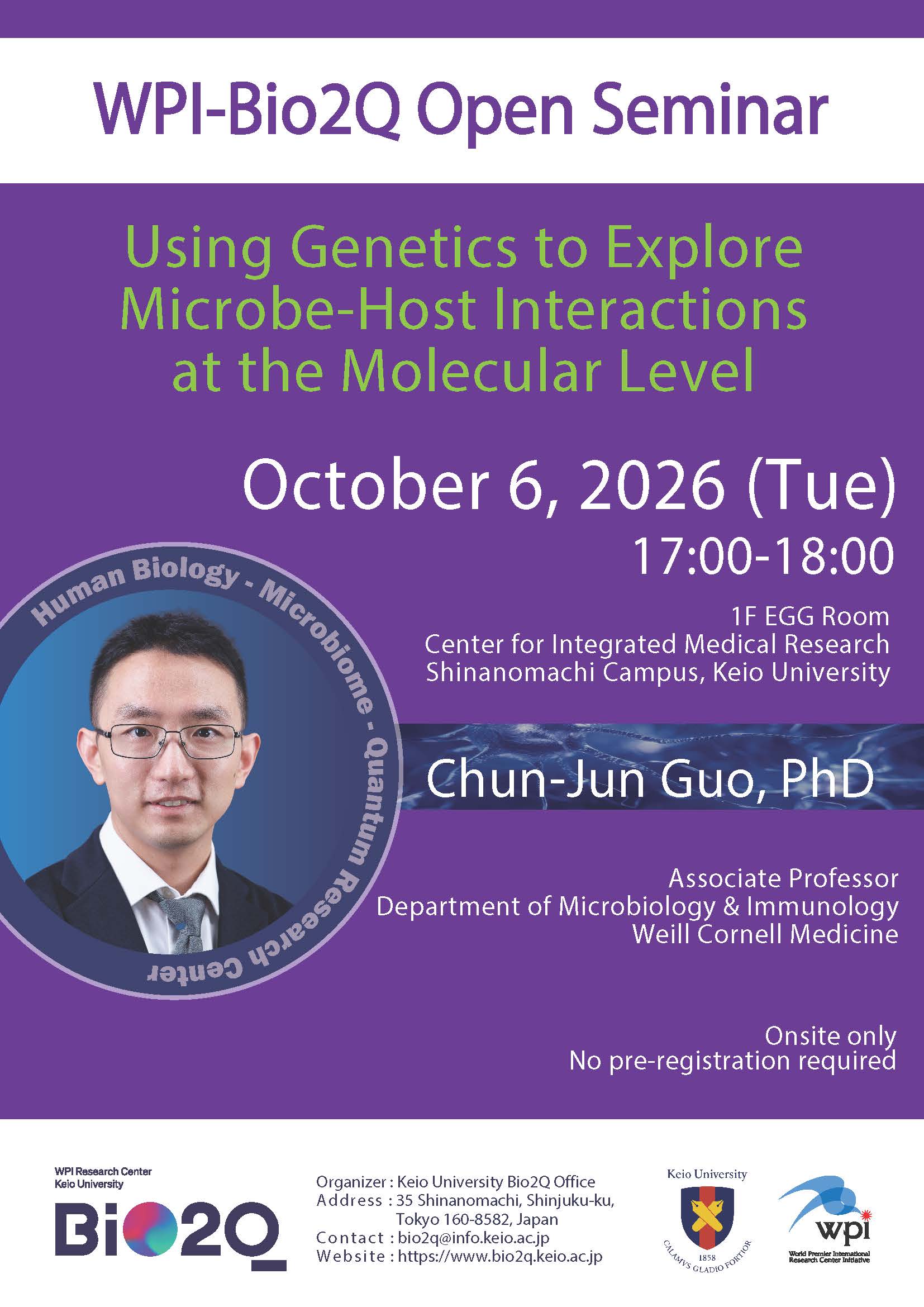
【10/6 Seminar】Bio2Q Open Seminar: Chun-Jun Guo, PhD
Keio University Human Biology-Microbiome-Quantum Research Center (WPI-Bio2Q) will hold a seminar as follows. This is an event for faculty, ...
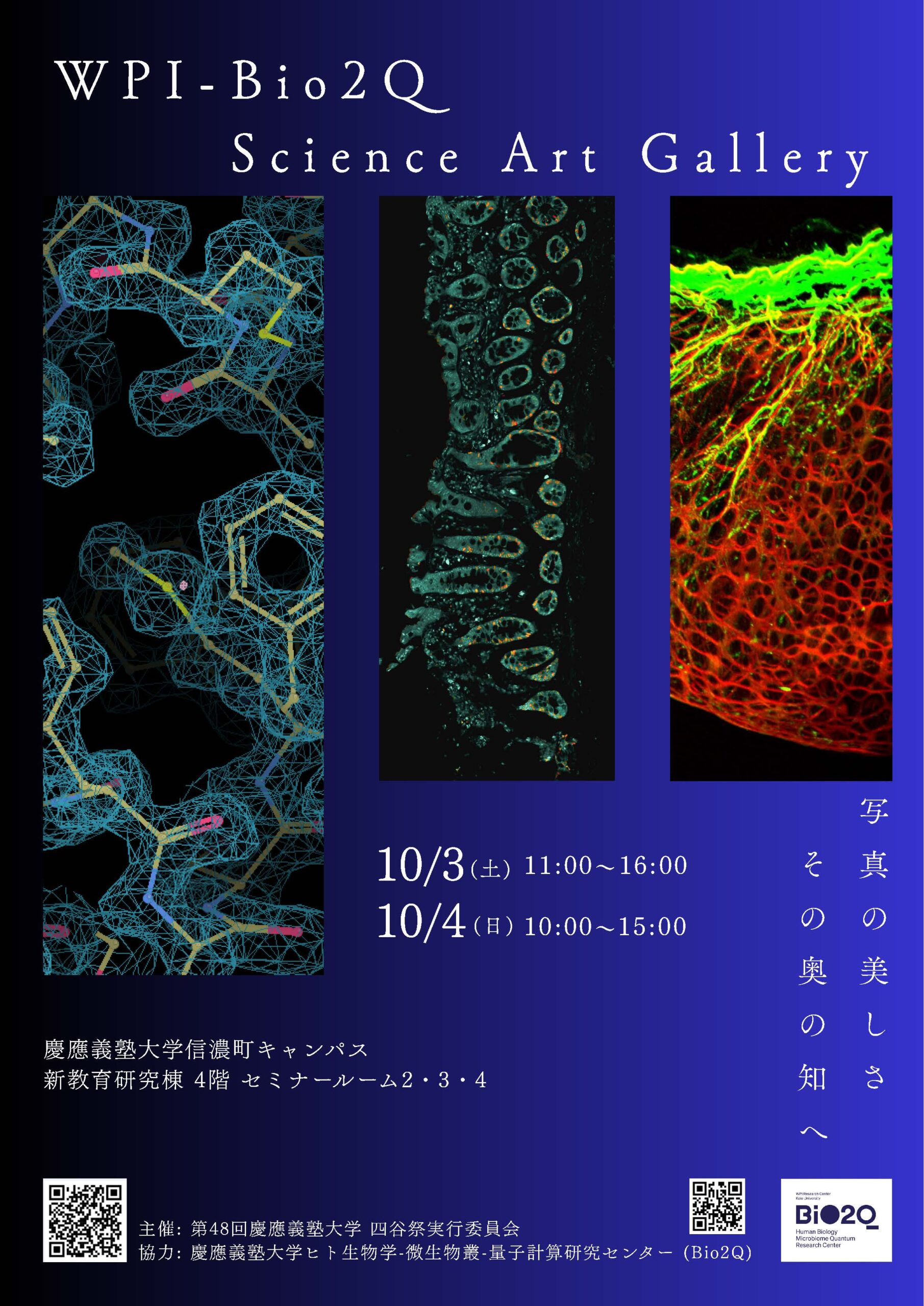
【10/3-10/4 Yotsuya Festival】 WPI-Bio2Q Science Art Gallery
The 48th Yotsuya Festival will be held on October 3 (Sat) and 4 (Sun), 2026, at Keio University's Shinanomachi Campus. In collaboration with...
