





RESEARCH
[Publication] Microbiota-mediated Induction of Beige Adipocytes in Response to Dietary Cues
March 5, 2026
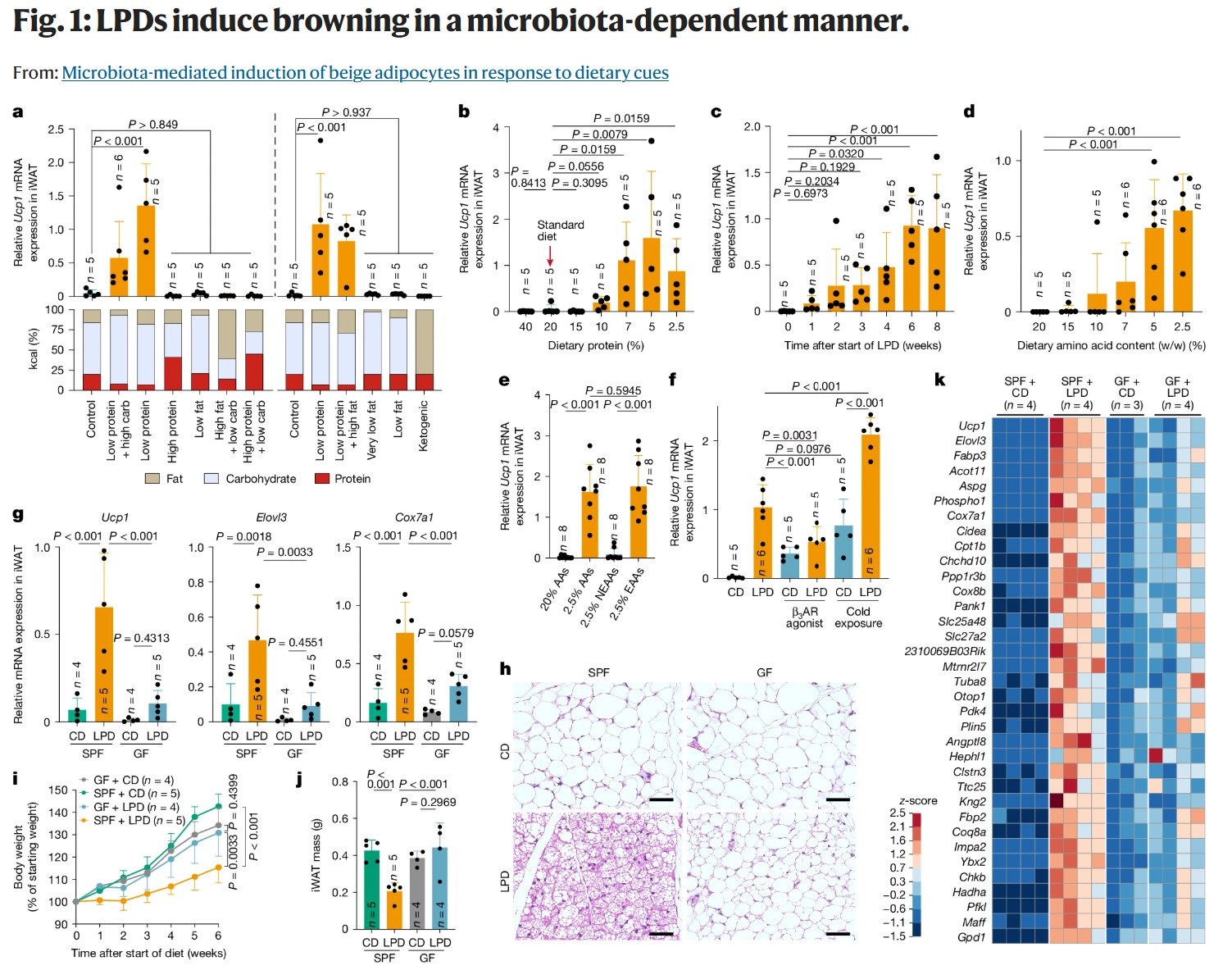
Fig. 1: LPDs induce browning in a microbiota-dependent manner.
Credits: 10.1038/s41586-026-10205-3
A research group led by Bio2Q Center Director Professor Kenya Honda has revealed how a low-protein diet induces energy-burning beige adipocytes via gut microbiota. The team identified four specific bacterial strains from humans that promote the “browning” of white adipose tissue. The study uncovered two key mechanisms: bile acid metabolism activating FXR and bacteria-derived ammonia triggering hepatic FGF21 expression. This evolutionary strategy for metabolic adaptation offers promising insights into treating obesity and type 2 diabetes through microbiome-based therapies. These groundbreaking findings were published in the journal Nature on March 4, 2026.
| Title | Microbiota-mediated induction of beige adipocytes in response to dietary cues |
|---|---|
| Authors | Takeshi Tanoue, Manabu Nagayama, Ayumi J.A. Roochana, Samuel Zimmerman, Orr Ashenberg, Tanvi Jain, Ryo Igarashi, Satoshi Sasajima, Kozue Takeshita, Nicola Hetherington, Nobuyuki Okahashi, Masahiro Ueda, Morichika Konishi, Yoshiaki Nakayama, Aki Minoda, Ashwin N. Skelly, Yasuhiko Minokoshi, Nicholas Pucci, Daniel R. Mende, Makoto Arita, Hironori Yamamoto, Shunji Watanabe, Kouichi Miura, Scott Behie, Wataru Suda, Toshiro Sato, Koji Atarashi, Mami Matsushita, Shingo Kajimura, Damian R. Plichta, Masayuki Saito, Ramnik J. Xavier, Kenya Honda |
| DOI | 10.1038/s41586-026-10205-3 |
| Journal | Nature |
| Vol/Num/Page | ISSN 1476-4687 (online) |
| Publication Date | 2026 March 4. |
Affiliations:
Department of Microbiology and Immunology, Keio University School of Medicine, Tokyo, Japan
Takeshi Tanoue, Manabu Nagayama, Ayumi J. A. Roochana, Satoshi Sasajima, Kozue Takeshita, Ashwin N. Skelly, Koji Atarashi & Kenya Honda
RIKEN Center for Integrative Medical Sciences, Yokohama, JapanTakeshi Tanoue, Manabu Nagayama, Nicola Hetherington, Nobuyuki Okahashi, Masahiro Ueda, Aki Minoda, Makoto Arita, Wataru Suda, Koji Atarashi & Kenya Honda
City of Hope National Medical Center, Duarte, CA, USA
Takeshi Tanoue, Koji Atarashi & Kenya Honda
Division of Gastroenterology, Department of Medicine, Jichi Medical University, Tochigi, Japan
Manabu Nagayama, Hironori Yamamoto, Shunji Watanabe & Kouichi Miura
Infectious Disease and Microbiome Program, Broad Institute of MIT and Harvard, Cambridge, MA, USA
Samuel Zimmerman, Damian R. Plichta & Ramnik J. Xavier
Klarman Cell Observatory, Broad Institute of MIT and Harvard, Cambridge, MA, USA
Orr Ashenberg, Tanvi Jain & Ramnik J. Xavier
Department of Integrated Medicine and Biochemistry, Keio University School of Medicine, Tokyo, Japan
Ryo Igarashi & Toshiro Sato
Department of Human Biology, Radboud Institute for Molecular Life Sciences, Faculty of Science, University of Radboud, Nijmegen, The Netherlands
Nicola Hetherington & Aki Minoda
JSR-Keio University Medical and Chemical Innovation Center, Keio University School of Medicine, Tokyo, Japan
Masahiro Ueda
Laboratory of Microbial Chemistry, Kobe Pharmaceutical University, Kobe, Japan
Morichika Konishi & Yoshiaki Nakayama
Division of Endocrinology and Metabolism, National Institute for Physiological Sciences, Okazaki, Japan
Yasuhiko Minokoshi
Department of Medical Microbiology, Amsterdam UMC, University of Amsterdam, Amsterdam, The Netherlands
Nicholas Pucci & Daniel R. Mende
Human Biology Microbiome Quantum Research Center (WPI-Bio2Q), Keio University, Tokyo, Japan
Daniel R. Mende, Makoto Arita, Scott W. Behie, Toshiro Sato & Koji Atarashi
Division of Physiological Chemistry and Metabolism, Graduate School of Pharmaceutical Sciences, Keio University, Tokyo, Japan
Makoto Arita & Kenya Honda
Department of Nutrition, School of Nursing and Nutrition, Tenshi College, Sapporo, Japan
Mami Matsushita
Division of Endocrinology, Diabetes and Metabolism, Beth Israel Deaconess Medical Center and Harvard Medical School, Boston, MA, USA
Shingo Kajimura
SHARE


More Bio2Q News
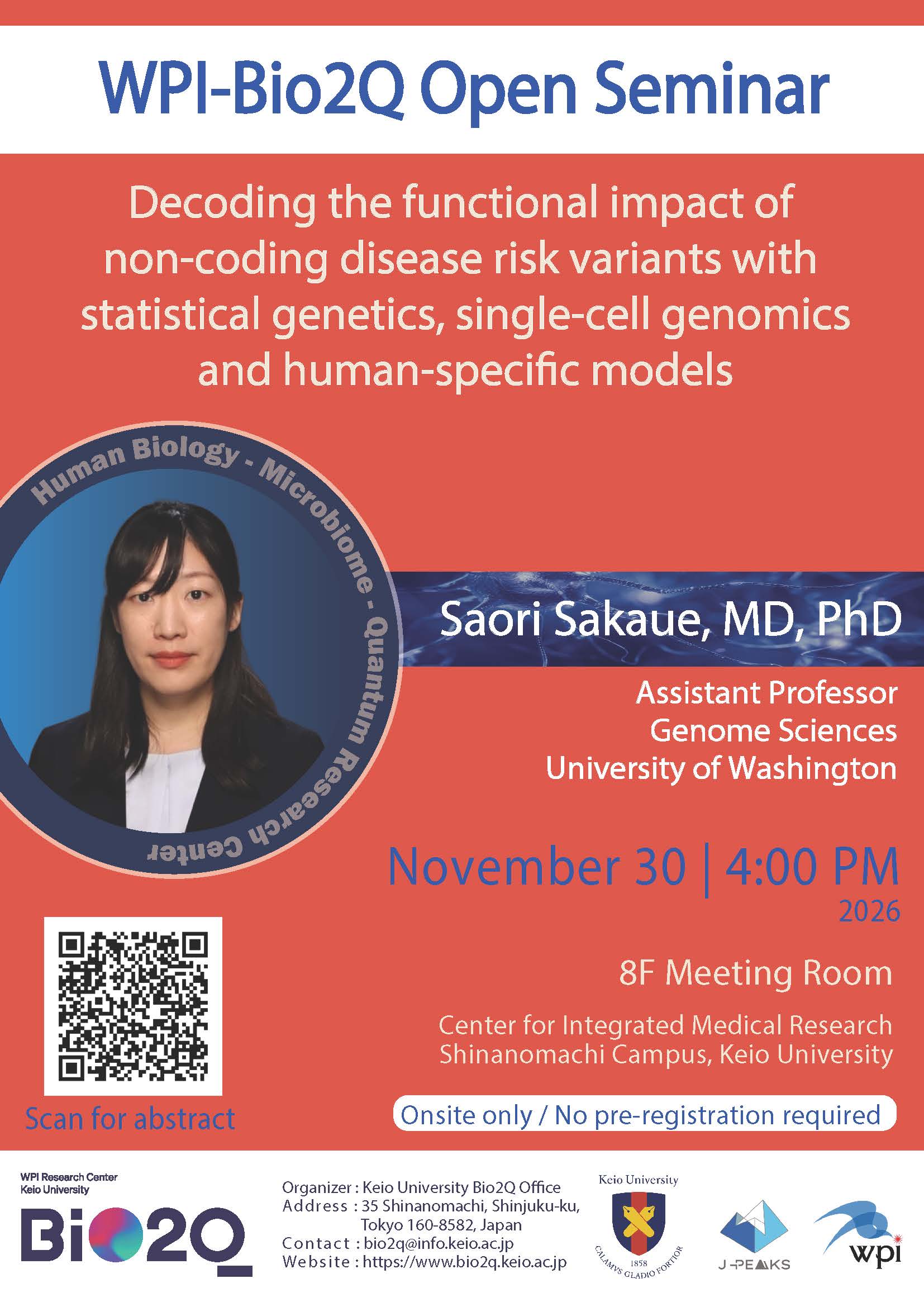
【11/30 Seminar】WPI-Bio2Q Open Seminar: Saori Sakaue, MD, PhD
Keio University Human Biology-Microbiome-Quantum Research Center (WPI-Bio2Q) will hold a seminar as follows. This is an event for faculty, students, and staff of Keio University. We sincerely look forward to your participation. Date 16:00~17:00, November 30, 2026 Venue 8F Meeting Room Center for Integrated Medical Research Shinanomachi Campus, Keio University Title Decodin...
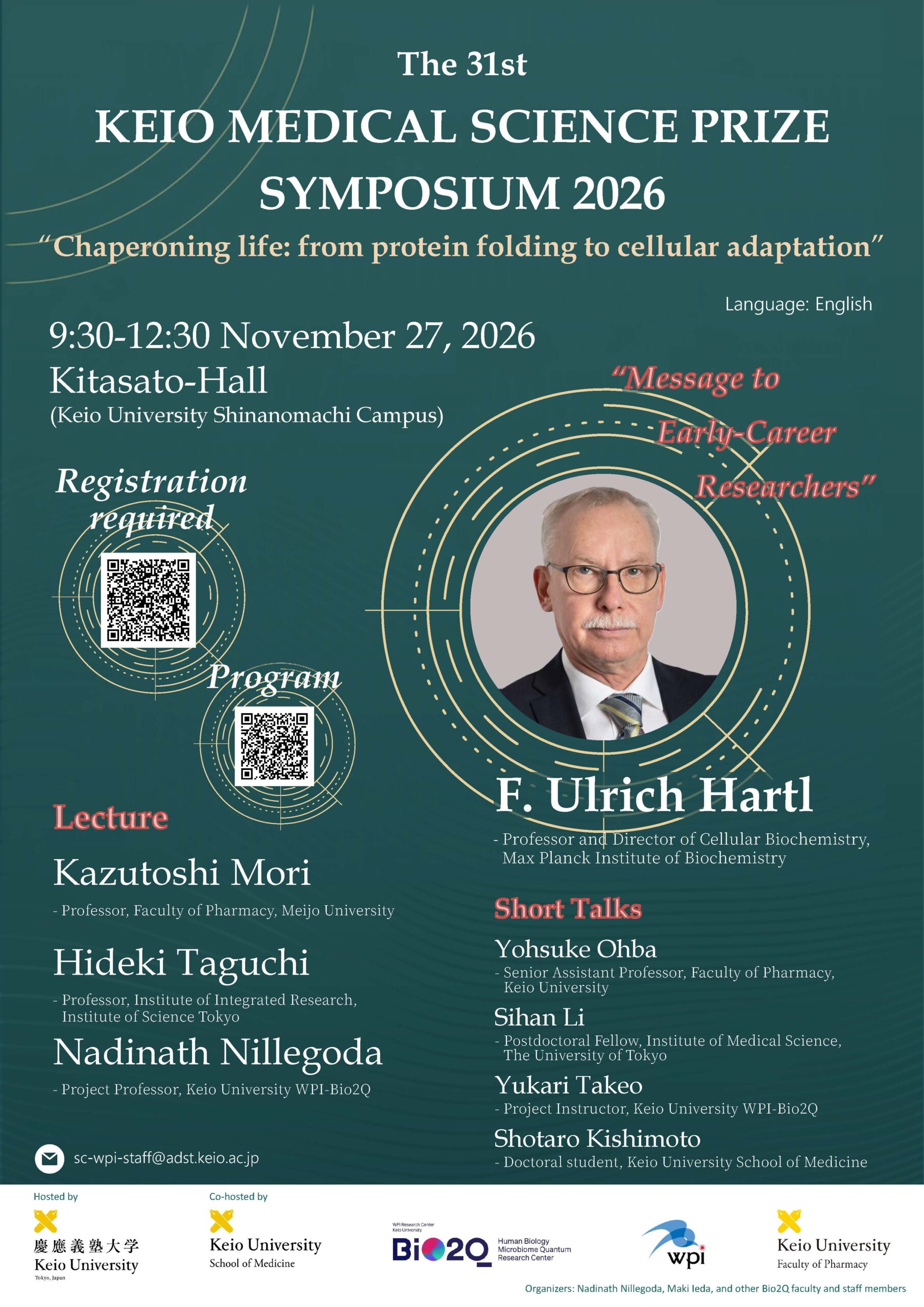
The 31st Keio Medical Science Prize Symposium 2026: "Chaperoning life: from prot...
In celebration of the 31st Keio Medical Science Prize, we are pleased to announce a commemorative symposium featuring the laureate, Dr. F. Ulrich Hartl, alongside distinguished researchers from Japan and abroad. Your active participation is highly encouraged! For details regarding the Prize announcement, please visit the Keio University Medical Science Fund website. Event Details Date & T...

WPI-Bio2Q Newsletter “Bio2Q Connect” Vol.2, Issue 19 Published
WPI-Bio2Q has published the latest issue of its newsletter, “Bio2Q Connect,” today on September 29, 2026. Highlights of this issue include: Introduction to Bio2Q Research: Accessible overviews of research fields and topics, introduced by our researchers Welcome On Board: Introducing Jungho Sohn, who joined us in October Science Art Gallery: Featuring works from the WPI-Bio2Q Science Art G...
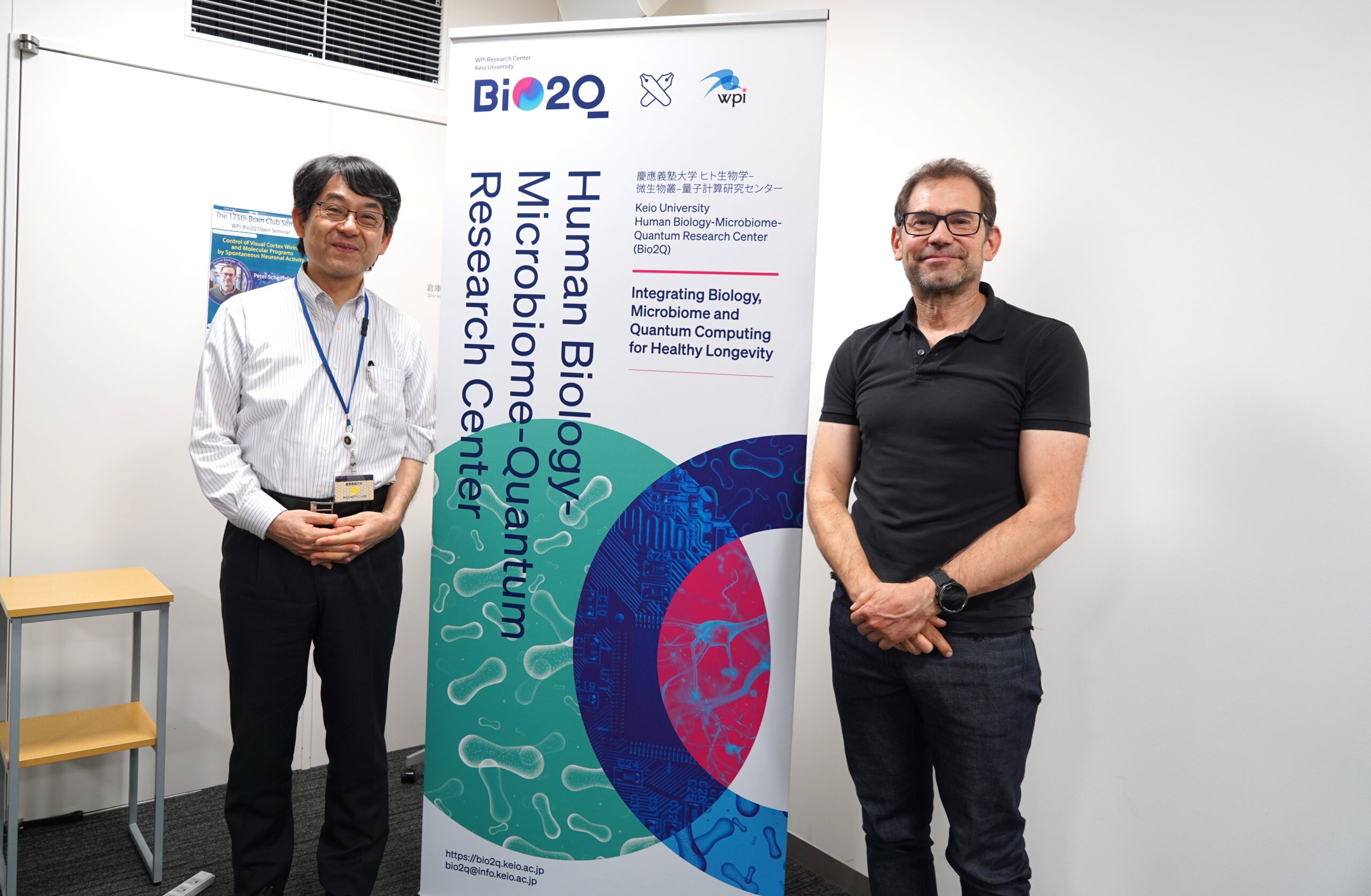
【Seminar Report】The 175th Brain Club Seminar (WPI-Bio2Q Open Seminar)
Keio University Human Biology-Microbiome-Quantum Research Center (WPI-Bio2Q) held a seminar as follows. Date:16:00 -17:00, October 22, 2026 Venue:JKiC 1F, Seminar Room, Shinanomachi Campus, Keio University Speaker:Peter Scheiffele, PhD Professor, Biozentrum, University of Basel, Switzerland Title: Control of Visual Cortex Wiring and Molecular Programs by Spontaneous Neuronal Activi...
【Publication】Frustration-enhanced quantum annealing correction models with addit...
Researchers from Bio2Q and Keio University have demonstrated that introducing additional interactions between copies of a quantum optimization problem can improve the performance of quantum annealers. By exploiting a phenomenon known as frustration, their approach enables more reliable identification of optimal solutions, even with short computation times and challenging energy conditions. These f...
