





ANNOUNCEMENT
[Publication] SMASH Imaging: A Serial Matrix-Assisted Laser Desorption/Ionization Mass Spectrometry Strategy for High-Resolution Imaging Facilitates Dual-Polarity and MS2 Spatial Lipidomics on a Single Tissue Section
May 28, 2026
Credits: WPI-Bio2Q
Co-authored by researchers from Bio2Q, and published in the journal Analytical Chemistry, this study introduces SMASH imaging, a serial MALDI mass spectrometry imaging platform that enables dual-polarity and MS2 spatial lipidomics on a single tissue section. These researchers demonstrate that repeated high-resolution imaging of the same tissue pixels can be achieved through optimized ion mobility, matrix application, and laser conditions, enabling the visualization and structural characterization of hundreds of lipid species at 5 μm spatial resolution. These findings establish SMASH imaging as a powerful multimodal platform for spatial lipidomics, improving molecular annotation accuracy and enabling integrated high-resolution mapping of tissue lipid organization.
| Title | SMASH Imaging: A Serial Matrix-Assisted Laser Desorption/Ionization Mass Spectrometry Strategy for High-Resolution Imaging Facilitates Dual-Polarity and MS2 Spatial Lipidomics on a Single Tissue Section |
|---|---|
| Authors | Haruki Uchino¹, Hiroshi Tsugawa¹,²,³,⁴, Makoto Arita¹,⁴,⁵,⁶ |
| Short Description | This study, co-authored by investigators from Bio2Q, and published in Analytical Chemistry, presents SMASH imaging, a new approach for multimodal spatial lipidomics that enables repeated MALDI mass spectrometry imaging analyses on a single tissue section. The work addresses a major limitation in conventional MALDI-MSI workflows, where separate tissue sections are typically required for positive-ion, negative-ion, and MS/MS analyses because each MALDI acquisition partially destroys the sampled tissue region, making repeated analyses of the same pixels difficult or impossible. By optimizing the imaging workflow, these researchers showed that repeated MALDI-MSI could be repeatedly performed on the same tissue pixels while maintaining high spatial resolution and reproducible data quality.
Applying SMASH imaging to mouse brain tissue, the authors generated multimodal spatial lipidomic datasets that annotated more than 400 lipid species at 30 μm resolution and enabled repeated imaging at spatial resolutions down to 5 μm. This platform further integrated MS2 acquisition using parallel accumulation-serial fragmentation (prm-PASEF), enabling structural characterization of lipid species directly within tissue sections. Combined dual-polarity imaging, MS/MS analysis, and spatial correlation approaches revealed highly resolved regional distributions of sphingolipids, glycolipids, and phospholipids across anatomically distinct regions of the brain. The authors further validated the biological accuracy of SMASH imaging through comparison with LC-MS/MS datasets generated from laser-microdissected brain regions, demonstrating strong concordance between orthogonal analytical approaches. Together, these findings establish SMASH imaging as an advanced spatial lipidomics platform that combines high spatial resolution, dual-polarity acquisition, and MS2-level molecular characterization within a single tissue section, enabling the integrated high-resolution mapping of tissue lipid organization and improving the study of spatial molecular architecture in complex biological systems. |
| DOI | 10.1021/acs.analchem.5c03738 |
| Journal | Analytical Chemistry |
| Vol/Num/Page | 2026, 98(13), 9540–9554 |
| Publication Date | March 26, 2026 |
Affiliations
- Laboratory for Metabolomics, RIKEN Center for Integrative Medical Sciences, 1-7-22 Suehiro-cho, Tsurumi-ku, Yokohama, Kanagawa 230-0045, Japan
- Department of Biotechnology and Life Science, Tokyo University of Agriculture and Technology, 2-24-16 Nakamachi, Koganei-shi, Tokyo 184-8588, Japan
- RIKEN Center for Sustainable Resource Science, 1-7-22 Suehiro-cho, Tsurumi-ku, Yokohama, Kanagawa 230-0045, Japan
- Cellular and Molecular Epigenetics Laboratory, Graduate School of Medical life Science, Yokohama City University, Tsurumi-ku, Yokohama, Kanagawa 230-0045, Japan
- Division of Physiological Chemistry and Metabolism, Graduate School of Pharmaceutical Sciences, Keio University, 1-5-30 Shibakoen, Minato-ku, Tokyo 105-8512, Japan
- Human Biology-Microbiome-Quantum Research Center (WPI-Bio2Q), Keio University, 35 Shinanomachi, Shinjuku-ku, Tokyo 160-8582, Japan
SHARE




More Bio2Q News
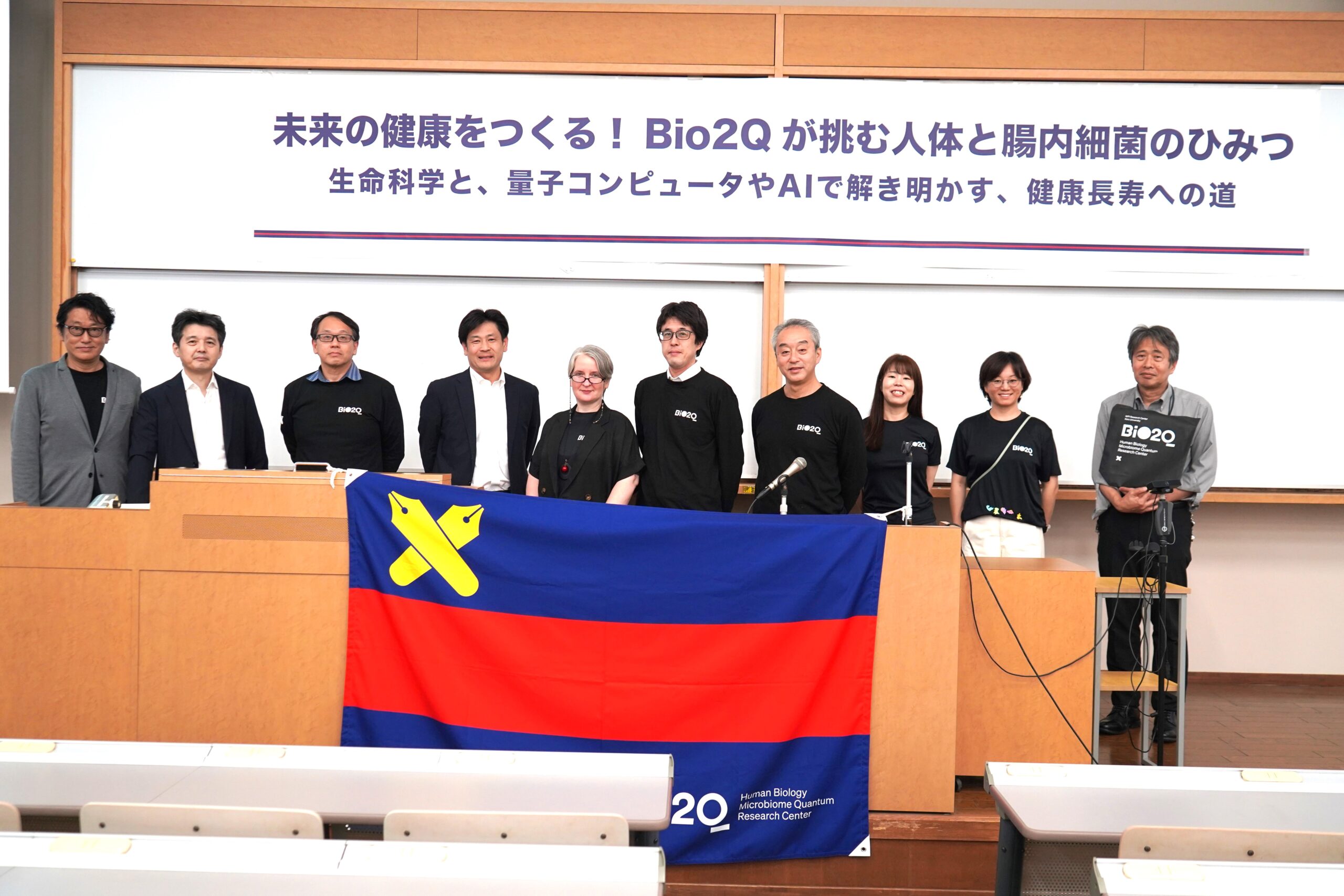
【Event Report】The 2026 Keio Mita-Kai Homecoming Day
Keio University Human Biology-Microbiome-Quantum Research Center (WPI-Bio2Q) gave presentations at the 2026 Keio Mita-Kai Homecoming Day as follows. Event Summary * Event Name: The 2026 Keio Mita-Kai Homecoming Day – Bio2Q Special Lecture * Date & Time: Sunday, October 18, 2026 | 12:00 – 15:00 (Session 1: 12:00~, Session 2: 13:00~, Session 3: 14:00~) * Location: Keio University Hiyoshi...
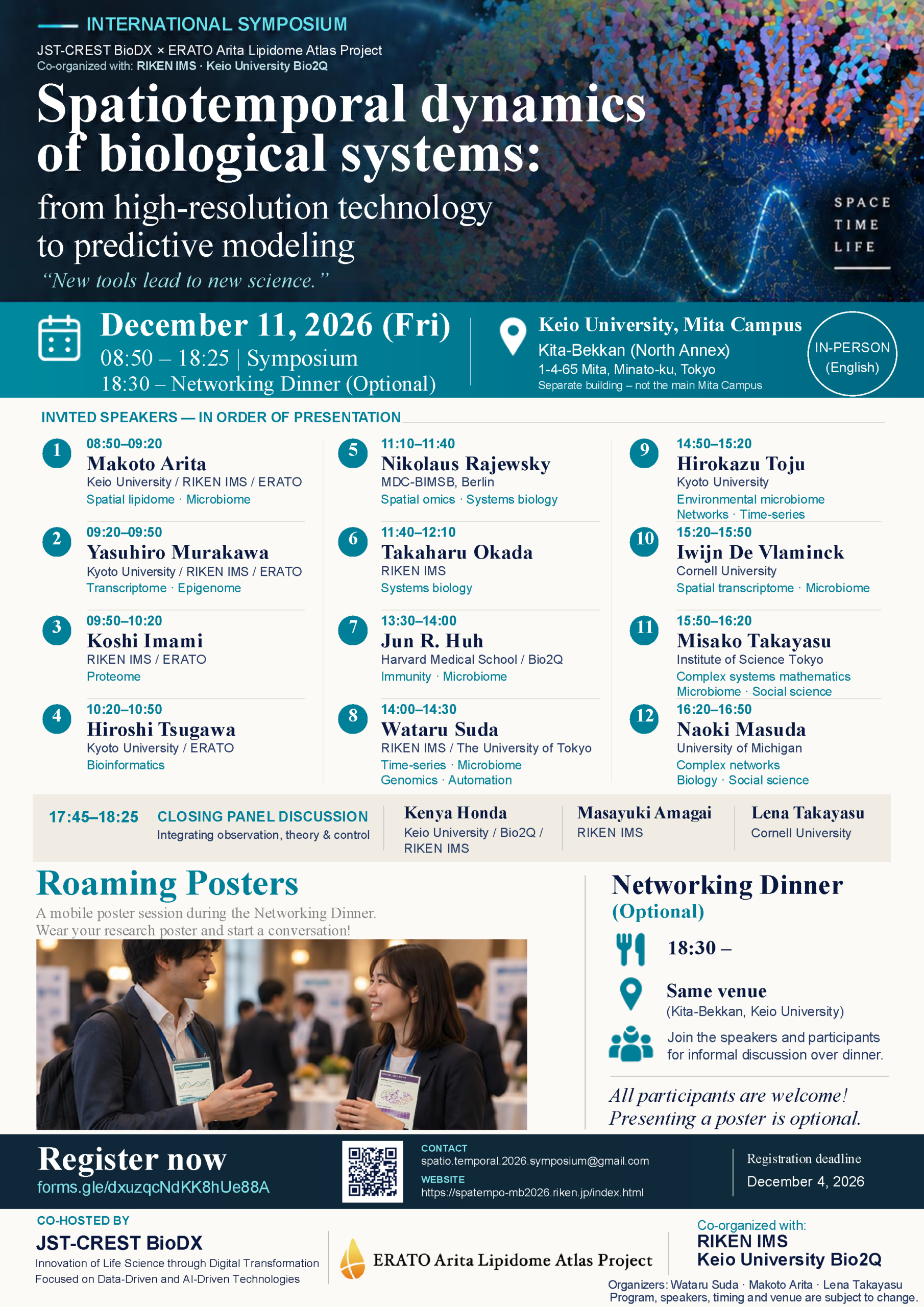
【Event Notice】International Symposium: "Spatiotemporal dynamics of biological sy...
We are pleased to announce the upcoming International Symposium co-organized by JST-CREST BioDX, ERATO Arita Lipidome Atlas Project, RIKEN IMS, and Keio University WPI-Bio2Q, to be held on Friday, December 11, 2026. This symposium will feature leading international and domestic researchers discussing the spatiotemporal dynamics of biological systems, spanning from cutting-edge high-resolution m...
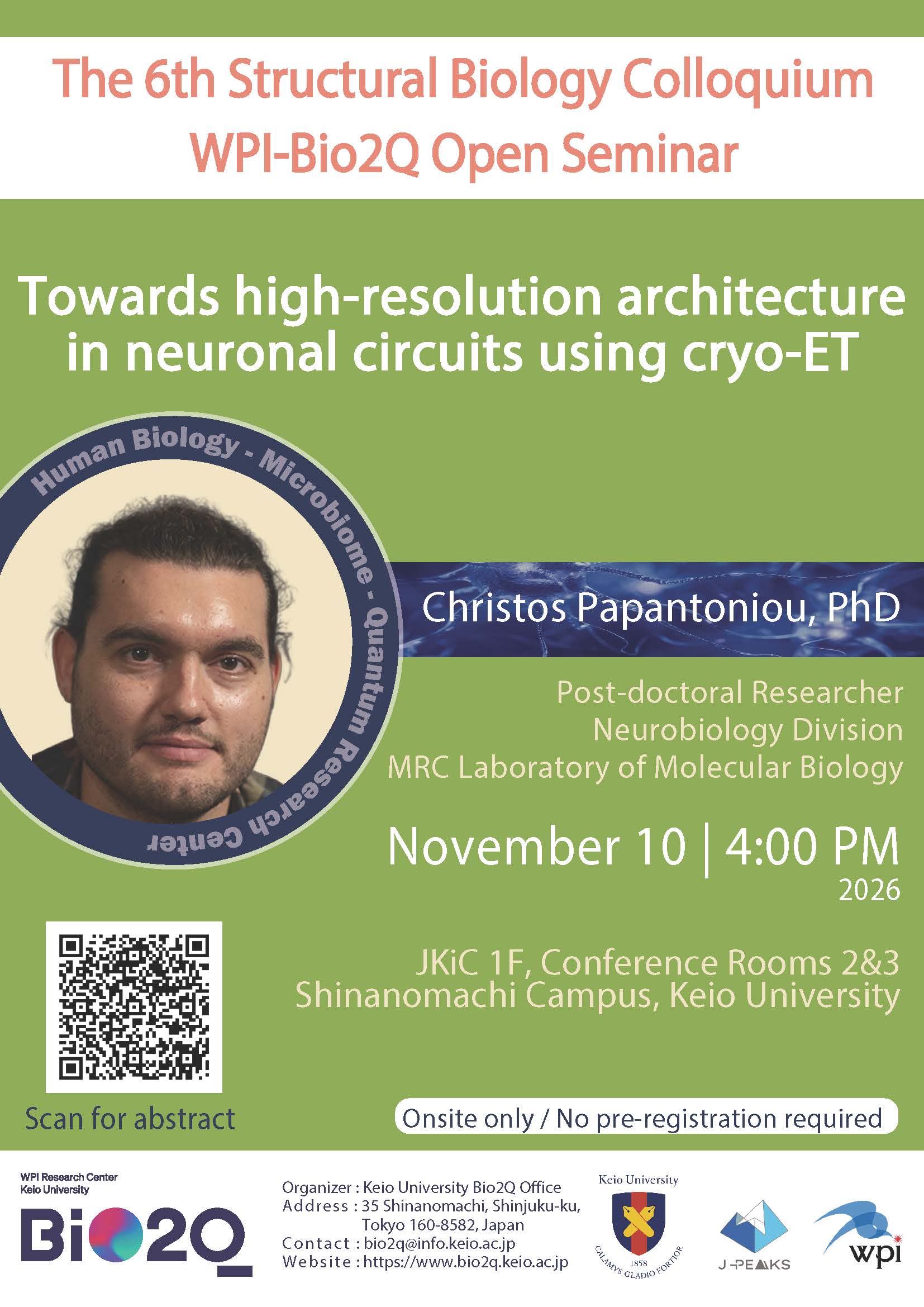
【11/10 Seminar】The 6th Structural Biology Colloquium / WPI-Bio2Q Open Seminar
Keio University Human Biology-Microbiome-Quantum Research Center (WPI-Bio2Q) will hold a seminar as follows. This is an event for faculty, students, and staff of Keio University. We sincerely look forward to your participation. Date 16:00~17:00, November 10, 2026 Venue JKiC 1F, Seminar Room2&3, Shinanomachi Campus, Keio University Title Towards high-resolution architect...
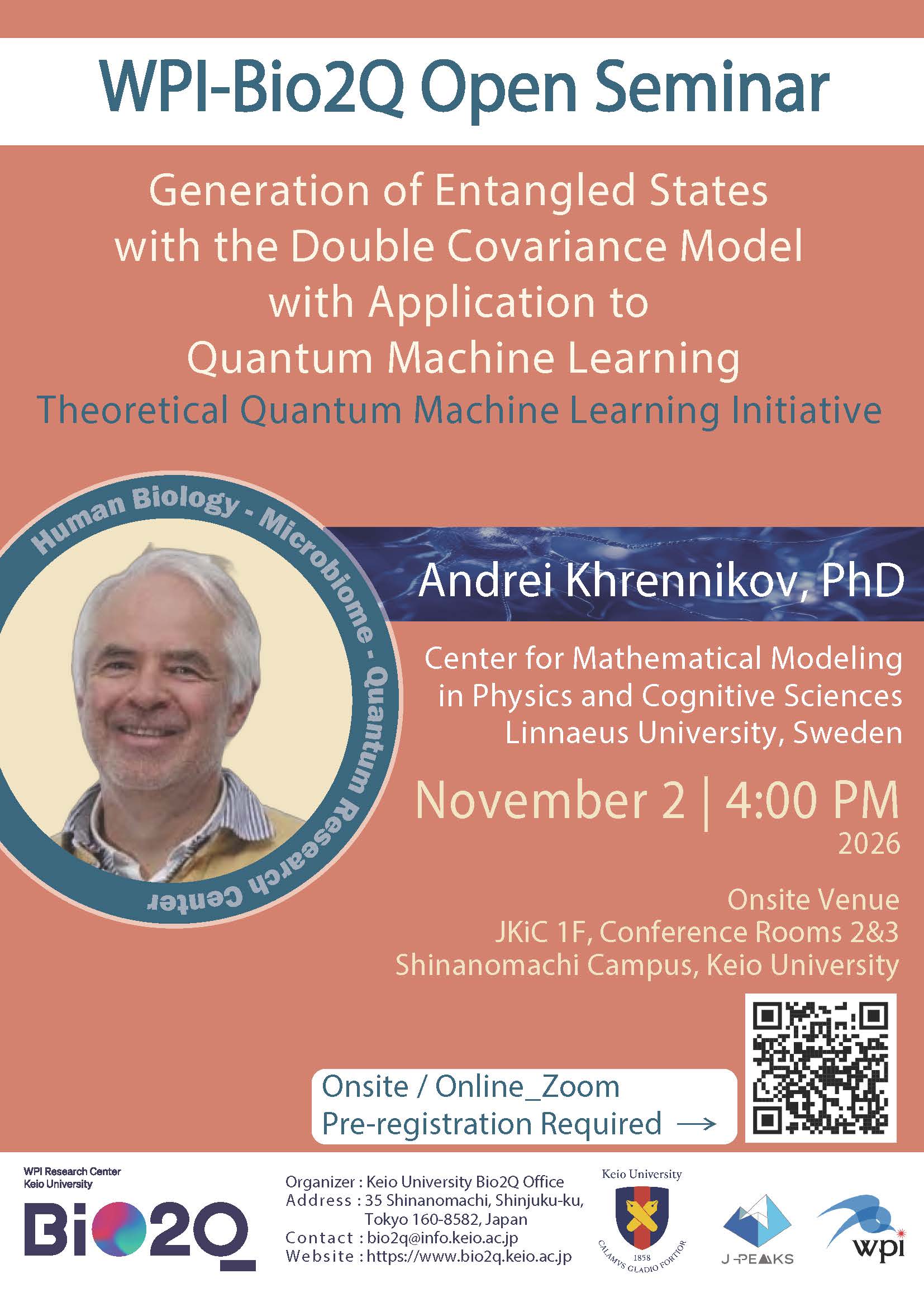
【11/2 Seminar】WPI-Bio2Q Open Seminar: Andrei Khrennikov, PhD
Keio University Human Biology-Microbiome-Quantum Research Center (WPI-Bio2Q) will hold a seminar as follows. This is an event for faculty, students, and staff of Keio University. We sincerely look forward to your participation. Date & Time 16:00~17:30, November 2 (Monday), 2026 Participation Options Onsite: JKiC 1F, Seminar Room 2&3, Shinanomachi Campus, Keio University ...
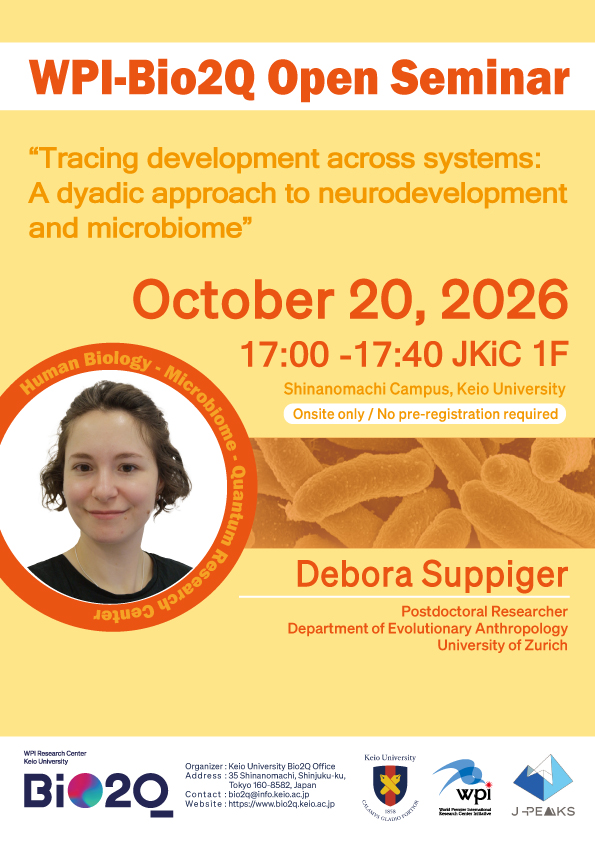
【10/20 Seminar】 WPI-Bio2Q Open Seminar: Debora Suppiger, PhD(for Keio Members)
Keio University Human Biology-Microbiome-Quantum Research Center (WPI-Bio2Q) will hold a seminar as follows. This event is only for faculty, students, and staff of Keio University. Date&Time Tuesday, October 20, 2026, 17:00-17:40 Speaker Debora Suppiger, PhD(Postdoctoral Researcher, Department of Evolutionary Anthropology, University of Zurich) Title Tracing development across...
