




RESEARCH
[Publication] Brain-wide mapping of immune receptors uncovers a neuromodulatory role
July 11, 2025
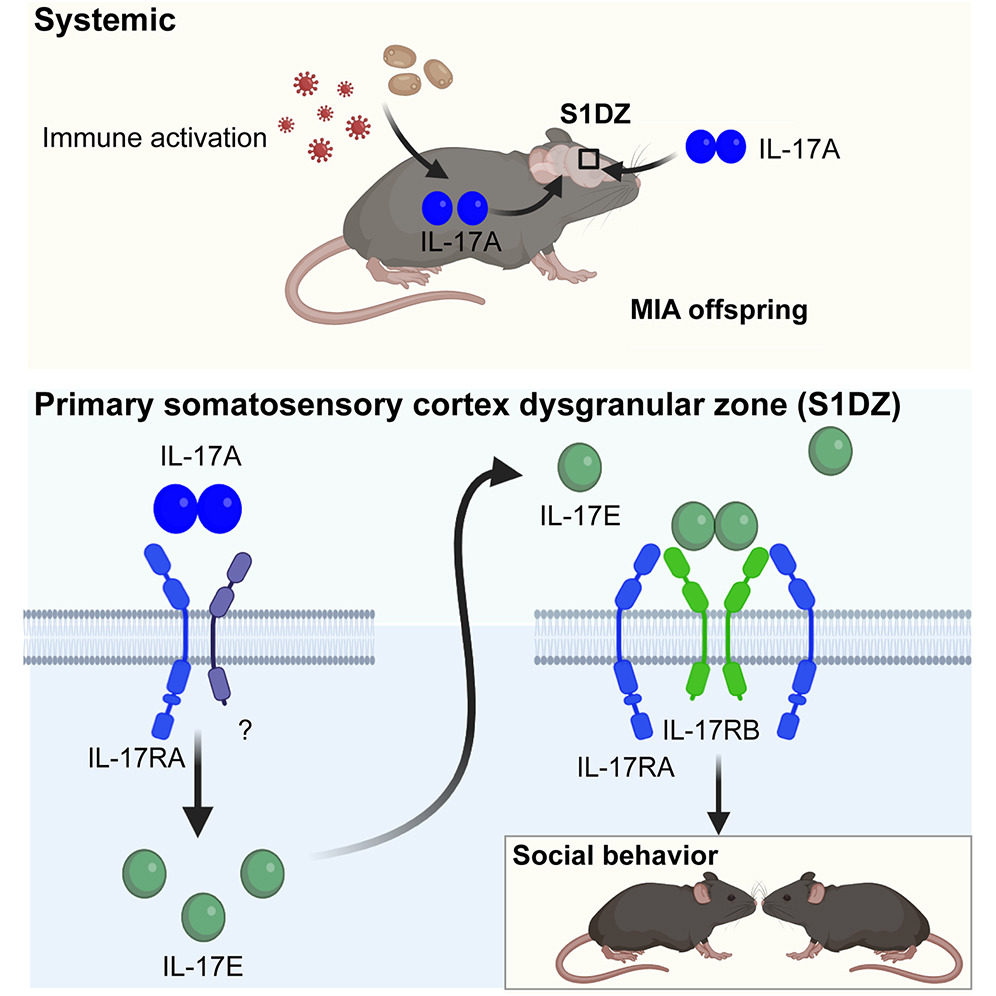
Credits: 2025 Yunjin Lee et al.
This work reveals that immune molecules actively shape brain circuits, challenging the idea they only appear in disease and shedding light on brain-immune links in disorders.
| Title | Brain-wide mapping of immune receptors uncovers a neuromodulatory role |
|---|---|
| Authors | Yunjin Lee [1],[12]; Tomoe Ishikawa[2],[3],[12]; Hyeseung Lee[2],[3],[4]; Byeongjun Lee[2],[3]; Changhyeon Ryu[2],[3]; Irene Davila Mejia[2],[3]; Minjin Kim[1]; Guangqing Lu[1]; Yujin Hong[1]; Mengyang Feng[2],[3]; Hyeyoon Shin[1]; Sylvain Meloche[5]; Richard M. Locksley[6],[7]; Ekaterina Koltsova[8]; Sergei I. Grivennikov[8],[9]; Myriam Heiman[2],[3],[4]; Gloria B. Choi[2],[3]; Jun R. Huh[1,][10],[11],[13] |
| Short Description | Immune-Neural Crosstalk in the Healthy Brain Revealed by Spatial Transcriptomics The immune system and brain are often viewed as separate domains, but a new study, that includes Bio2Q researchers, uncovers an unexpected connection. Using brain-wide spatial transcriptomics, researchers mapped immune receptor expression across the mouse brain and discovered that many immune molecules are active participants in neural circuits. This challenges the traditional view of immune molecules as appearing only during disease, instead revealing their role in neuromodulation within the healthy brain. These findings offer valuable insights into neurodevelopmental and neuropsychiatric disorders, where immune signaling has long been poorly understood. |
| DOI | https://doi.org/10.1016/j.cell.2025.03.006 |
| Journal | Cell |
| Vol/Num/Page | Volume 188, Issue 8, p2203-2217.e17 |
| Publication Date | Published online: 2025 April 7. |
Affiliations:
[1] Department of Immunology, Blavatnik Institute, Harvard Medical School, Boston, MA, USA
[2] Picower Institute for Learning and Memory, Massachusetts Institute of Technology, Cambridge, MA, USA
[3] Department of Brain and Cognitive Sciences, Massachusetts Institute of Technology, Cambridge, MA, USA
[4] Broad Institute of MIT and Harvard, Cambridge, MA, USA
[5] Institute for Research in Immunology and Cancer (IRIC), Montreal, QC, Canada
[6] Department of Medicine, University of California, San Francisco, San Francisco, CA, USA
[7] Howard Hughes Medical Institute, University of California, San Francisco, San Francisco, CA, USA
[8] Departments of Medicine and Biomedical Sciences, Cedars-Sinai Cancer, Cedars-Sinai Medical Center, Los Angeles, CA, USA
[9] Cancer Prevention and Control Program, Fox Chase Cancer Center, Philadelphia, PA, USA
[10] Human Biology Microbiome Quantum Research Center (Bio2Q), Keio University, Tokyo, Japan
[11] Lurie Center for Autism, Massachusetts General Hospital, Lexington, MA, USA
[12] These authors contributed equally
[13] Lead contact
SHARE




More Bio2Q News
【Seminar Report】WPI-Bio2Q Open Seminar: Nicolas Manel, PhD
Keio University Human Biology-Microbiome-Quantum Research Center (WPI-Bio2Q) held a seminar as follows. Date:17:00 -18:00, September 14, ...
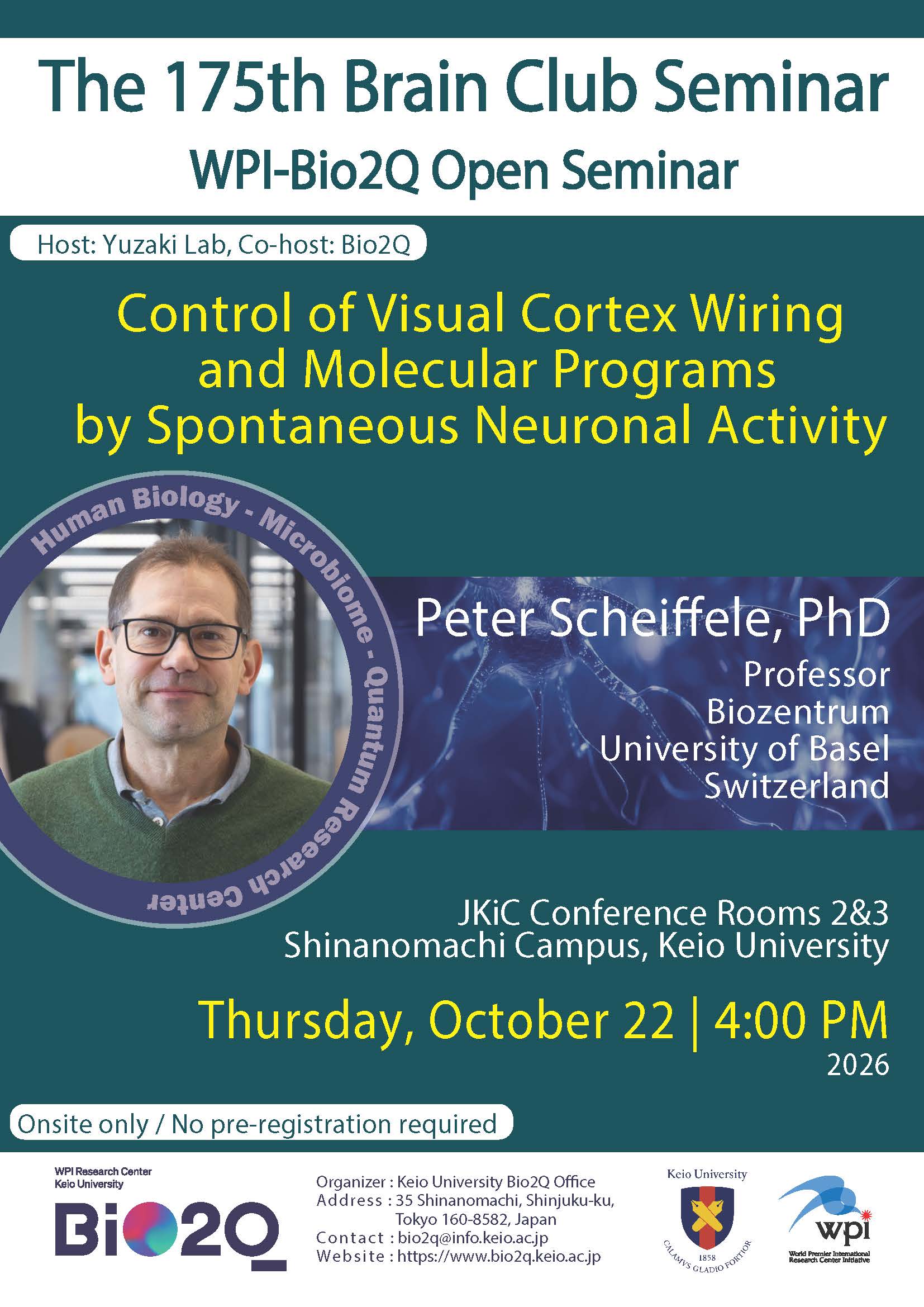
【10/22 Seminar】The 175th Brain Club Seminar (WPI-Bio2Q Open Seminar)
Keio University Human Biology-Microbiome-Quantum Research Center (WPI-Bio2Q) will hold a seminar as follows. This is an event for faculty, ...

【9/16 Seminar】 WPI-Bio2Q Open Seminar: Yue Yin(for Keio Members)
Keio University Human Biology-Microbiome-Quantum Research Center (WPI-Bio2Q) will hold a seminar as follows. This event is only for faculty...
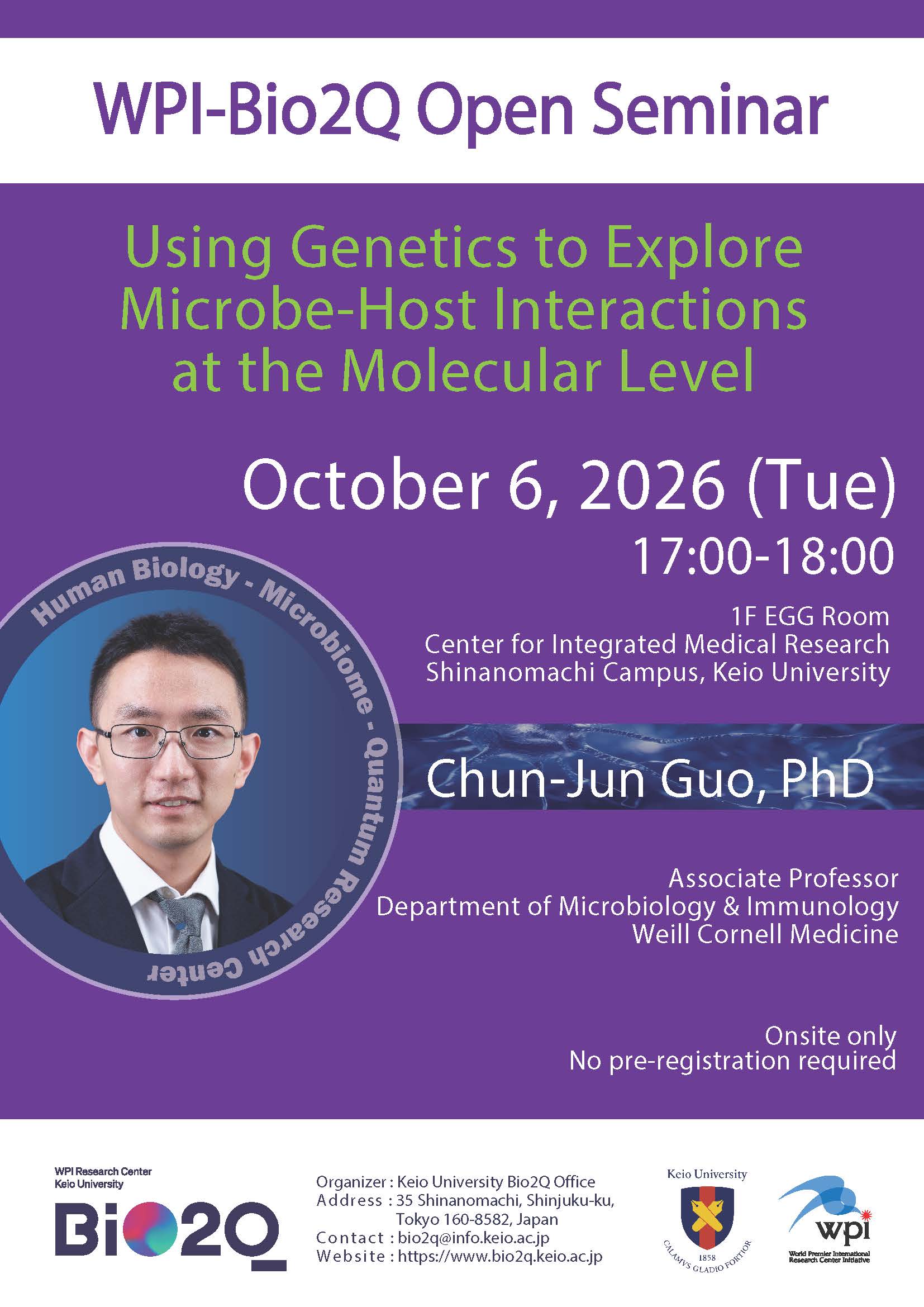
【10/6 Seminar】Bio2Q Open Seminar: Chun-Jun Guo, PhD
Keio University Human Biology-Microbiome-Quantum Research Center (WPI-Bio2Q) will hold a seminar as follows. This is an event for faculty, ...
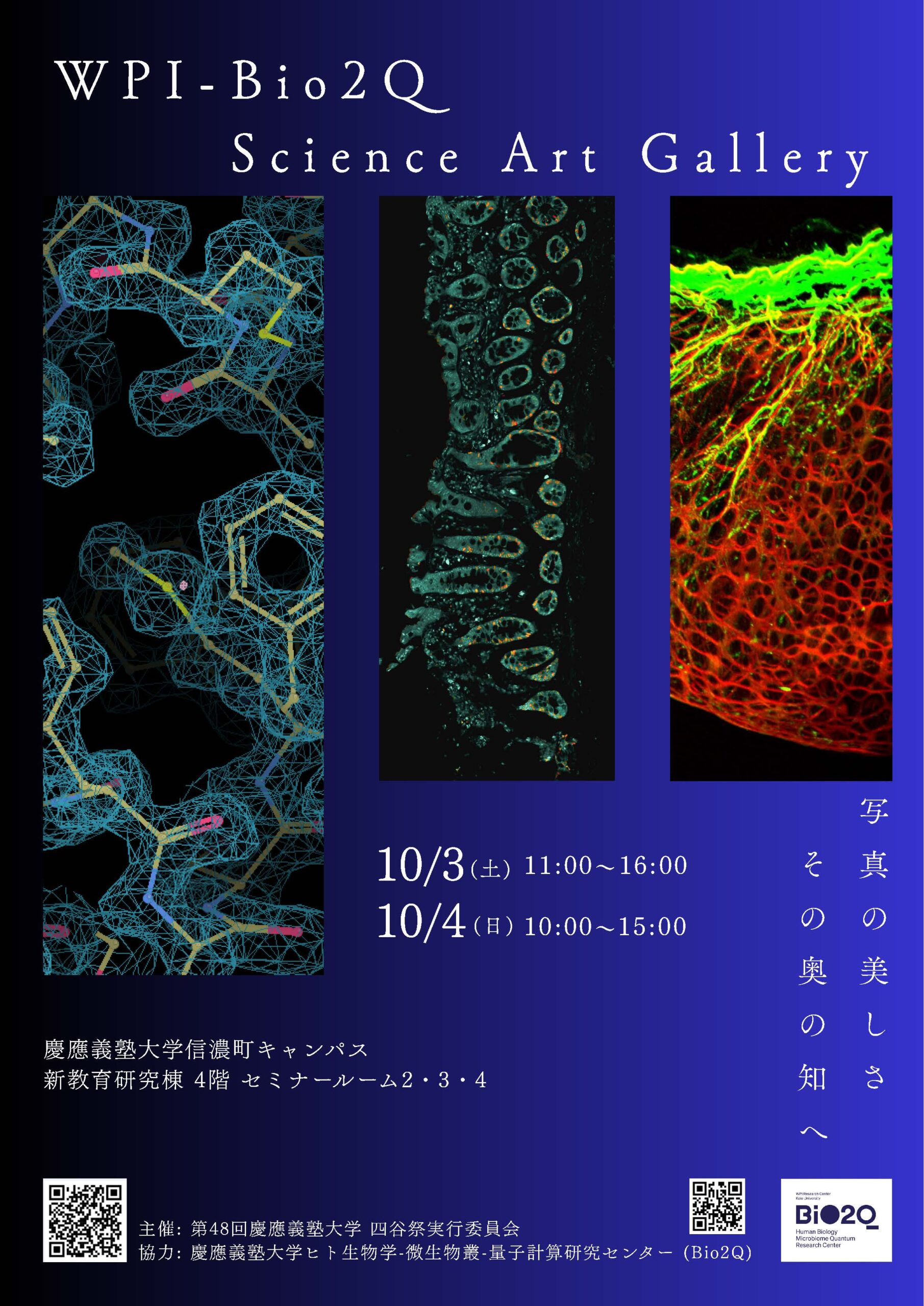
【10/3-10/4 Yotsuya Festival】 WPI-Bio2Q Science Art Gallery
The 48th Yotsuya Festival will be held on October 3 (Sat) and 4 (Sun), 2026, at Keio University's Shinanomachi Campus. In collaboration with...
