





RESEARCH
【Publication】Identification and characterization of CXCL13 producers in bone tissue in response to fasting
September 2, 2026
Credits: WPI-Bio2Q
Credits: Okawa et al., 2026
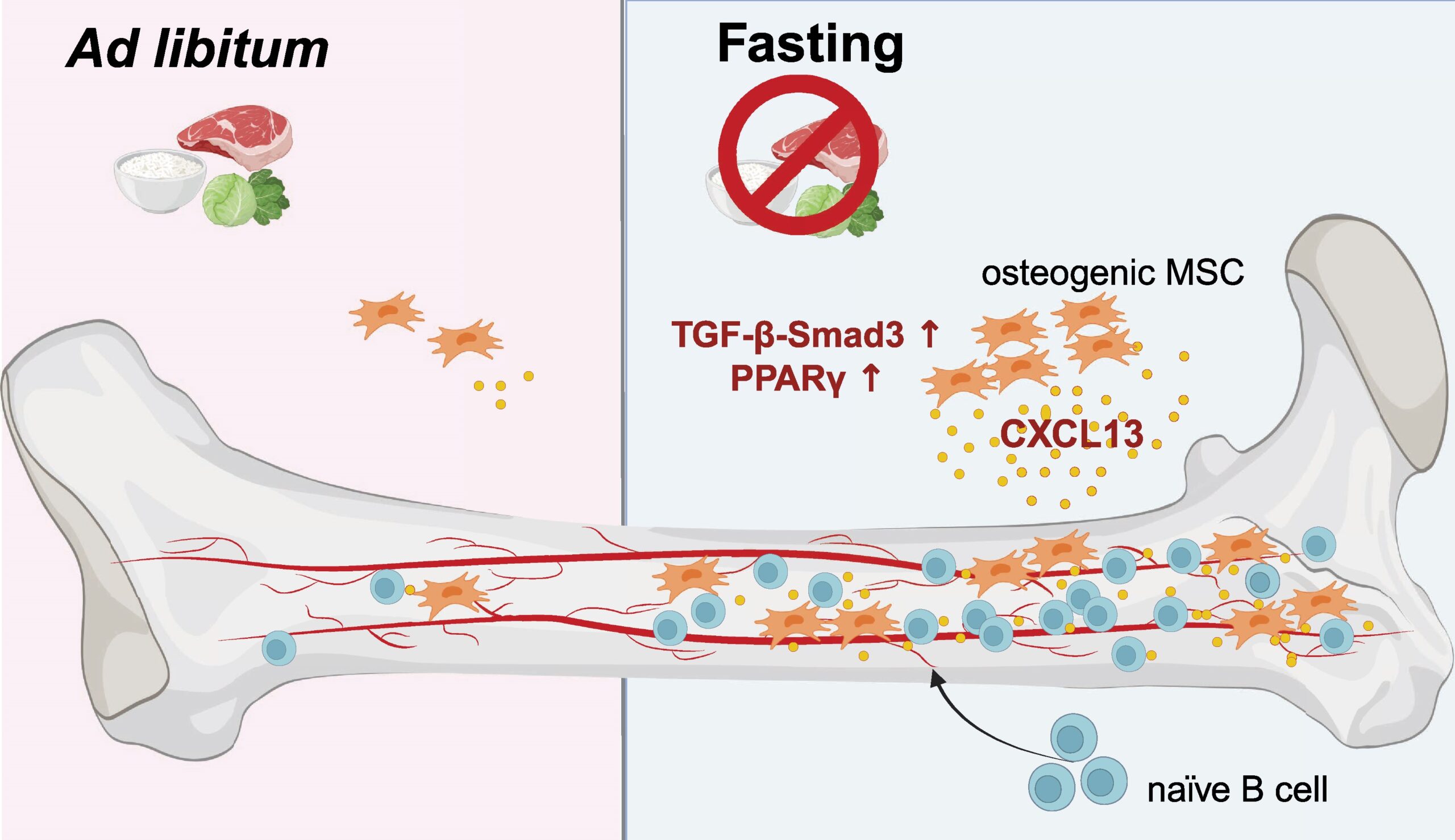
Co-authored by researchers from Bio2Q and published in the journal International Immunology, this study clarifies how fasting alters the immune environment within bone marrow and promotes the migration of specific immune cells (naive B cells). The researchers identified a series of pathways in which metabolic changes accompanying fasting induce bone cells to secrete signaling molecules that attract these immune cells. Consequently, this work contributes to a deeper understanding of how the body’s energy status and immune system work in tandem.
| Title | Identification and characterization of CXCL13 producers in bone tissue in response to fasting |
|---|---|
| Authors | Takuma Okawa 1, Motoyoshi Nagai 1 2, Shinya Fujita 3, Koichiro Suzuki 1, Kazuaki Nakata 2, Reina Miyajima 1, Hiroaki Shiratori 1, Seiga Komiyama 1, Daisuke Takahashi 1, Yuki I Kawamura 2 4, Taeko Dohi 1, Burkhard Ludewig 5, Keiyo Takubo 3 6, Koji Hase 1 7 8 9 |
| Short Description |
This study, co-authored by researchers from Bio2Q and Keio University, reveals how fasting reshapes the bone marrow immune environment to promote the migration of naïve B cells. During fasting, naïve B cells temporarily relocate from Peyer’s patches in the intestine to the bone marrow, but the cellular mechanisms controlling this response have remained unclear. Here, the researchers demonstrated that this migration is driven by the CXCL13–CXCR5 signaling pathway and identified osteogenic mesenchymal stromal cells (MSCs) in the perivascular region of bone as a major source of CXCL13. Using single-cell RNA sequencing, they showed that fasting selectively induces CXCL13 production in a distinct population of pre-osteogenic MSCs and identified TGF-β and PPARγ signaling as important regulators of this response. Pharmacological inhibition of either pathway reduced CXCL13 production and the accumulation of naïve B cells in the bone marrow. By uncovering how metabolic changes during fasting alter stromal cell signaling to control immune cell trafficking, this study provides new insight into the dynamic communication between systemic energy status, the bone microenvironment, and the immune system. |
| DOI | 10.1093/intimm/dxag005 |
| Journal | International immunology |
| Vol/Num/Page |
38(7):418-431
|
| Publication Date | July 1, 2026 |
Affiliations
1 Division of Biochemistry, Graduate School of Pharmaceutical Science, Keio University, Tokyo 105-8512, Japan.
2 Clinical Research Advancement Section, National Institute of Global Health and Medicine, Japan Institute for Health Security, Tokyo 162-8655, Japan.
3 Department of Stem Cell Biology, National Institute of Global Health and Medicine, Japan Institute for Health Security, Tokyo 162-8655, Japan.
4 Course of Advanced and Specialized Medicine, Juntendo University Graduate School of Medicine, Tokyo 113-8421, Japan.
5 Institute of Immunobiology, Cantonal Hospital St. Gallen, Rorschacher Str. 95, St. Gallen 9000, Switzerland.
6 Department of Cell Fate Biology and Stem Cell Medicine, Tohoku University Graduate School of Medicine, Sendai 980-0872, Japan.
7 Human Biology-Microbiome-Quantum Research Center (WPI-Bio2Q), Keio University, Tokyo 160-8582, Japan.
8 The Institute of Fermentation Sciences (IFeS), Faculty of Food and Agricultural Sciences, Fukushima University, Fukushima 960-1248, Japan.
9 International Vaccine Design Center, The Institute of Medical Science, The University of Tokyo (IMSUT), Tokyo 108-0071, Japan.
SHARE




More Bio2Q News
【Publication】Microbiome-dependent phytosterol sulfates production and tissue dis...
Researchers from Bio2Q and Keio University have demonstrated that gut bacteria convert dietary plant sterols into compounds known as phytosterol sulfates. These metabolites can accumulate in multiple organs, their levels increasing with age. These findings reveal a previously unknown connection between gut microbial activity and the distribution of dietary compounds in the body, providing new insi...
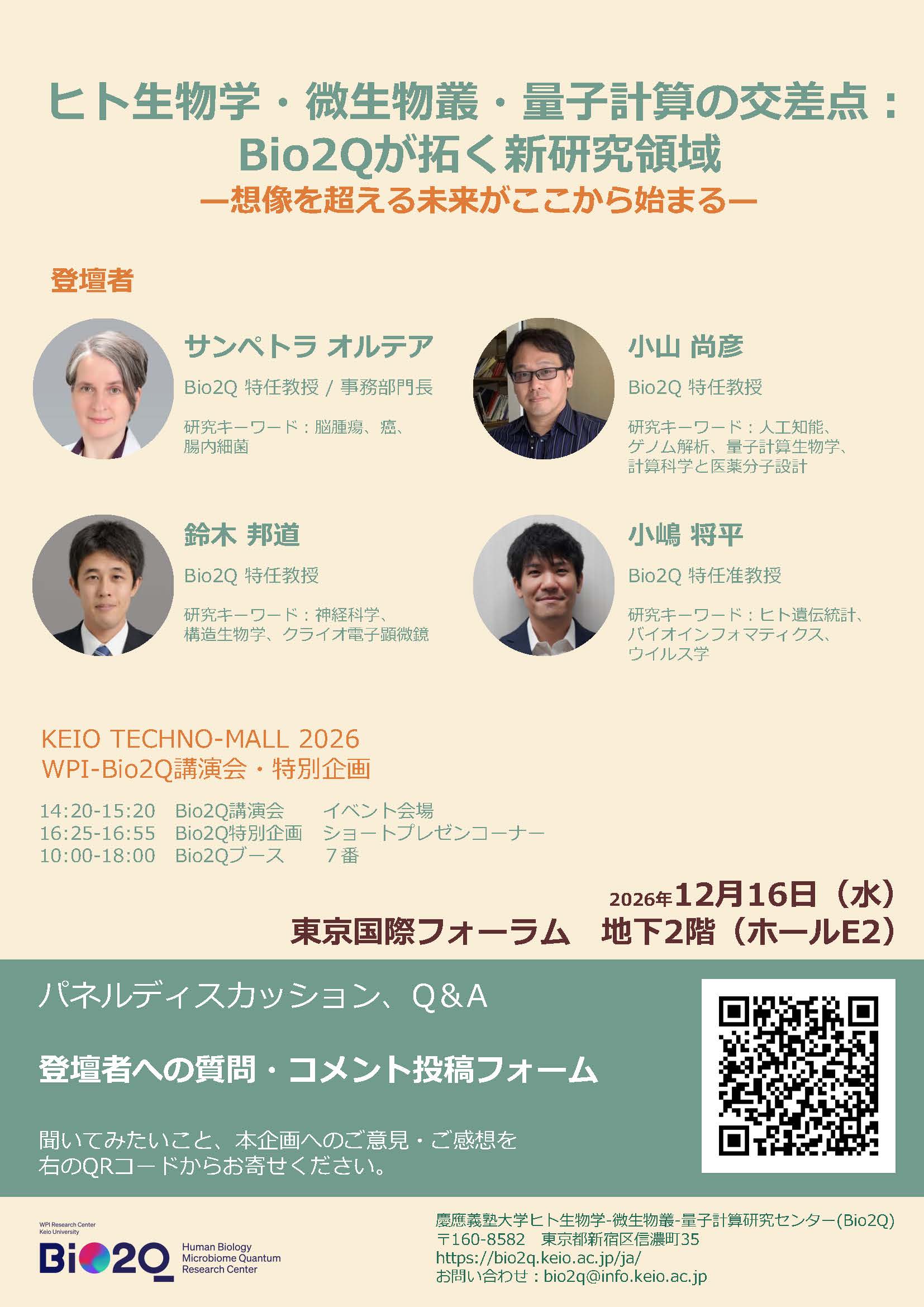
[Event] WPI-Bio2Q to Exhibit at KEIO TECHNO-MALL 2026
Keio University Human Biology-Microbiome-Quantum Research Center (Bio2Q) will exhibit at KEIO TECHNO-MALL 2026 (The 27th Keio Science and Technology Exhibition) on Wednesday, December 16, 2026. Through this exhibition, Bio2Q strives to serve as a hub connecting our center with society and sparking diverse collaborative opportunities. We are offering three key programs—a Lecture, a Special Event...
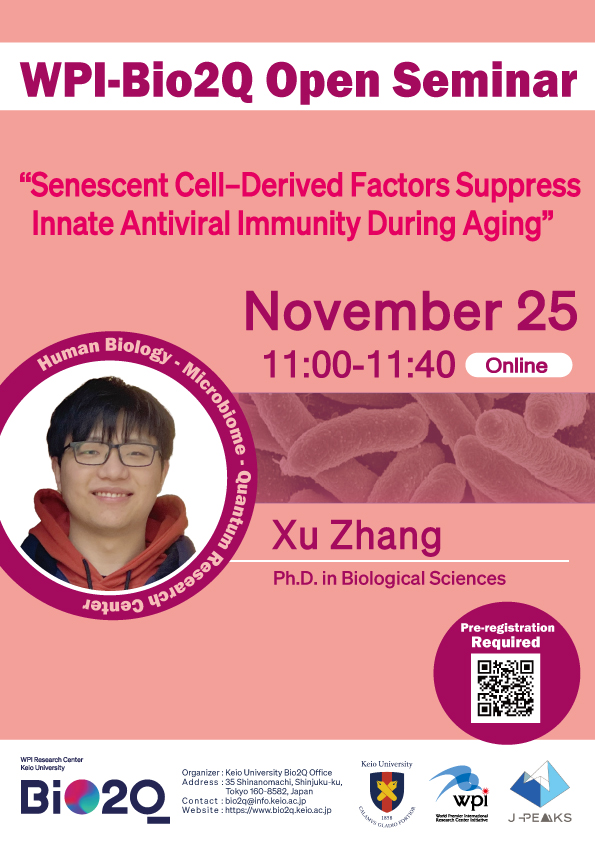
【Nov. 25 Seminar】 WPI-Bio2Q Open Seminar: Xu Zhang, PhD(for Keio Members)
Keio University Human Biology-Microbiome-Quantum Research Center (WPI-Bio2Q) will hold a seminar as follows. This event is only for faculty, students, and staff of Keio University. Date and Time Wednesday, November 25, 2026, 11:00-11:40 Format Zoom (Online only) Title Senescent Cell–Derived Factors Suppress Innate Antiviral Immunity During Aging Speaker Xu Zha...
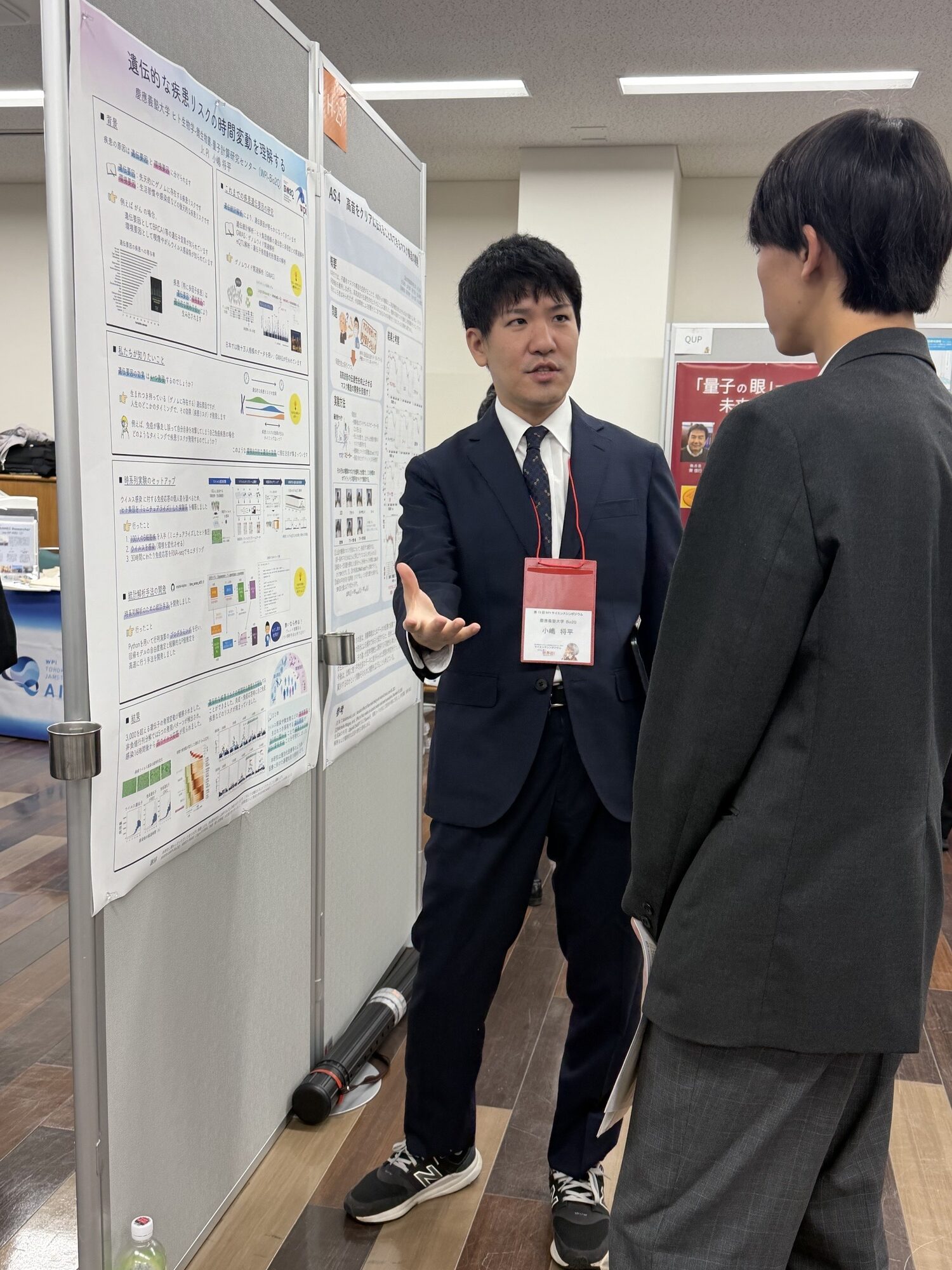
【Event Report】Bio2Q Participates in the 15th WPI Science Symposium, Engaging wit...
On Saturday, November 14, 2026, the 15th WPI Science Symposium, themed “World Premieres Born from Me! ~Science I Want to Share with Someone~,” was held at the Osaka University Convention Center in Suita, Osaka, hosted by the Osaka University Premium Research Institute for Human Metaverse Medicine (WPI-PRIMe). The event featured a special lecture by Prof. Shimon Sakaguchi (Distinguished University ...

WPI-Bio2Q now recruiting administrative staff– Deadline: January 11, 2027
WPI-Bio2Q Administrative Office is currently hiring administrative staff. We look forward to receiving applications from candidates with English proficiency who can support international researchers and anticipate to work at Bio2Q Administrative Office. Application Deadline: January 11, 2027 For more details, please refer to the application information at the link below, Application Info...
