





RESEARCH
【Publication】Accurate, sensitive, and efficient chromatin accessibility quantification at target loci using UNIChro-seq
August 31, 2026
Credits: WPI-Bio2Q
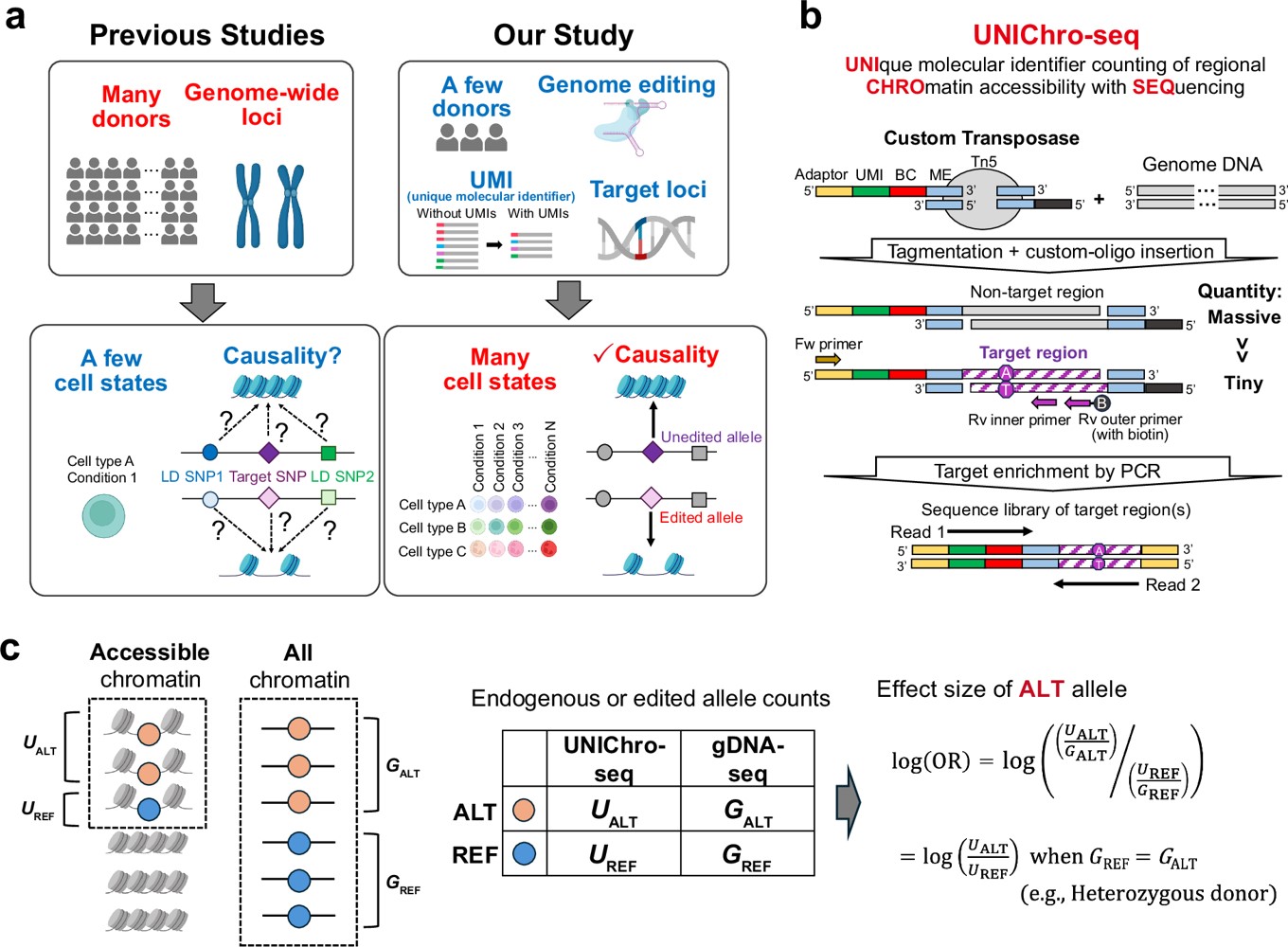
Fig. 1: Overview of our study design and UNIChro-seq.
Credits: Kono et al., 2026
Co-authored by researchers at Bio2Q and published in Nature Communications, this study developed a new analytical technology to accurately and efficiently examine how disease-related genetic variations function within the body. The researchers established a high-precision measurement method capable of capturing subtle changes, applying it to the data analysis of genes involved in immune diseases and to verifying the impacts of gene editing. As a result, the method enables detailed elucidation of the effects of disease-related genes, contributing to clarifying the causes of intractable diseases and advancing drug discovery research.
| Title | Accurate, sensitive, and efficient chromatin accessibility quantification at target loci using UNIChro-seq |
|---|---|
| Authors | Michihiro Kono # 1 2, Hiroaki Hatano # 1 2, Kenichiro Asahara 2, Masahiro Nakano 2, Reza Bagherzadeh 1 2, Tsugumi Kawashima 2, Takahiro Arakawa 2, Miho Sato 2, Hajime Inokuchi 1 2, Takahiro Nishino 1 2, Takahiro Itamiya 2 3 4, Haruka Takahashi 1 2, Bunki Natsumoto 2, Akari Suzuki 5, Kazuhiko Yamamoto 5, Kazuyoshi Ishigaki 6 7 8 |
| Short Description |
This study, co-authored by researchers from Bio2Q, Keio University, and RIKEN, introduces UNIChro-seq, a new method for accurately and efficiently measuring how disease-associated genetic variants affect chromatin accessibility at specific genomic regions. Although genome-wide association studies have identified many variants associated with complex diseases, determining their molecular functions remains challenging as conventional approaches often require large numbers of donors and may lack the sensitivity to detect subtle or cell state specific effects. Here, these researchers developed a method called UNIChro-seq, which uses unique molecular identifiers, and targeted amplification, to digitally count accessible chromatin molecules and precisely quantify allele-specific effects. Applying the method to autoimmune disease risk variants across multiple immune cell types and conditions, they demonstrated its ability to detect both baseline and dynamic effects on chromatin accessibility using relatively few donors. By combining UNIChro-seq with genome editing, this research team also identified a previously underappreciated bias caused by the editing process itself and showed that bi-directional genome editing can distinguish this bias from genuine causal effects. Finally, functional analysis of a rheumatoid arthritis-associated variant at the LEF1 locus linked altered chromatin accessibility to LEF1 dysregulation in CD4+ T cells. Together, this work establishes UNIChro-seq as a sensitive and scalable platform for investigating how disease-associated genetic variants influence gene regulation and contribute to complex disease. |
| DOI | 10.1038/s41467-026-75767-2 |
| Journal | Nature Communications |
| Vol/Num/Page |
17(1):8807
|
| Publication Date | July 20, 2026 |
Affiliations
1 Department of Microbiology and Immunology, Keio University School of Medicine, Tokyo, Japan.
2 Laboratory for Human Immunogenetics, RIKEN Center for Integrative Medical Sciences, Yokohama, Japan.
3 Department of Functional Genomics and Immunological Diseases, Graduate School of Medicine, The University of Tokyo, Tokyo, Japan.
4 Department of Allergy and Rheumatology, Graduate School of Medicine, The University of Tokyo, Tokyo, Japan.
5 Laboratory for Autoimmune Diseases, RIKEN Center for Integrative Medical Sciences, Yokohama, Japan.
6 Department of Microbiology and Immunology, Keio University School of Medicine, Tokyo, Japan.
7 Laboratory for Human Immunogenetics, RIKEN Center for Integrative Medical Sciences, Yokohama, Japan.
8 Keio University Human Biology-Microbiome-Quantum Research Center (WPI-Bio2Q), Tokyo, Japan.
SHARE




More Bio2Q News
【Publication】Microbiome-dependent phytosterol sulfates production and tissue dis...
Researchers from Bio2Q and Keio University have demonstrated that gut bacteria convert dietary plant sterols into compounds known as phytosterol sulfates. These metabolites can accumulate in multiple organs, their levels increasing with age. These findings reveal a previously unknown connection between gut microbial activity and the distribution of dietary compounds in the body, providing new insi...
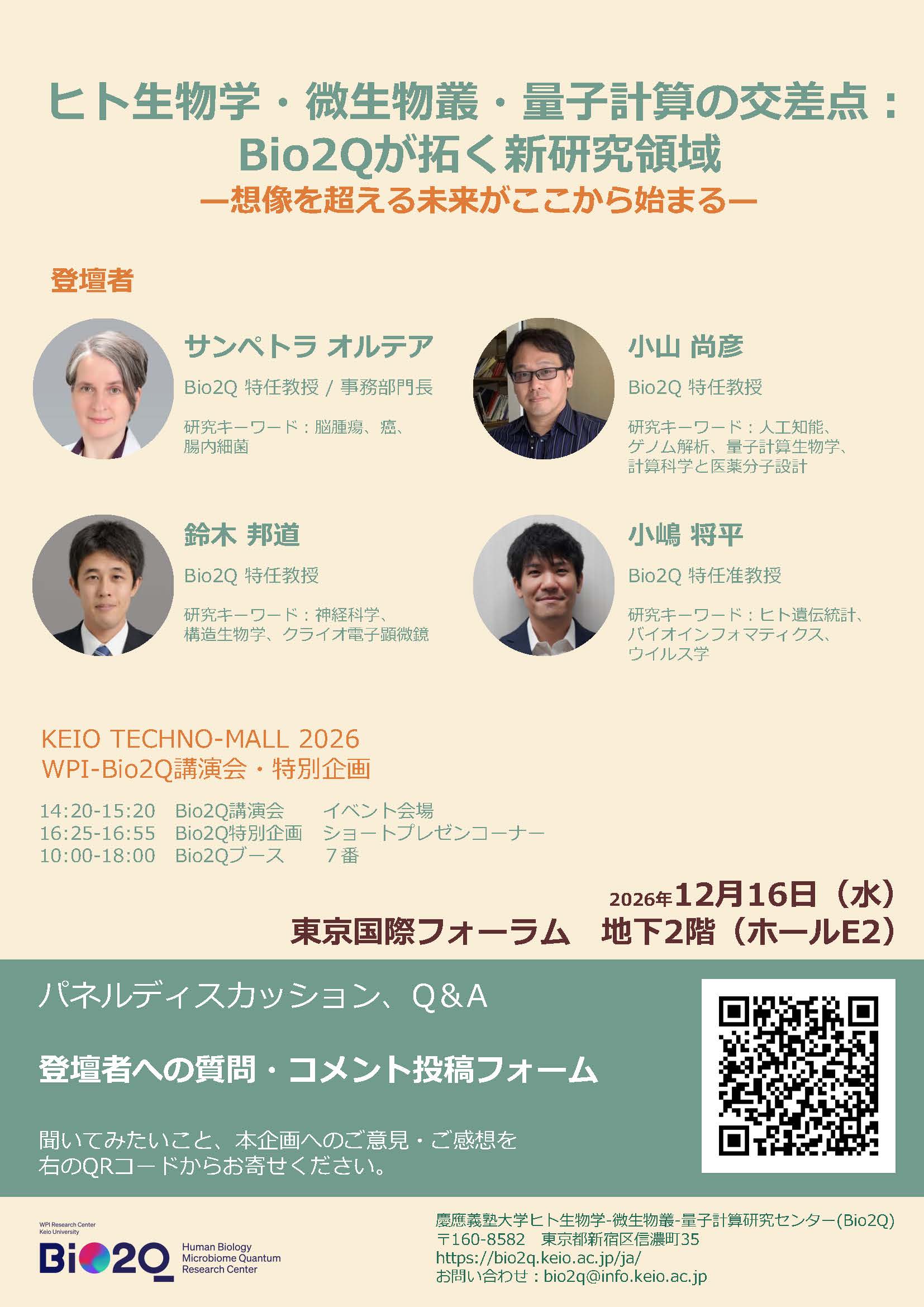
[Event] WPI-Bio2Q to Exhibit at KEIO TECHNO-MALL 2026
Keio University Human Biology-Microbiome-Quantum Research Center (Bio2Q) will exhibit at KEIO TECHNO-MALL 2026 (The 27th Keio Science and Technology Exhibition) on Wednesday, December 16, 2026. Through this exhibition, Bio2Q strives to serve as a hub connecting our center with society and sparking diverse collaborative opportunities. We are offering three key programs—a Lecture, a Special Event...
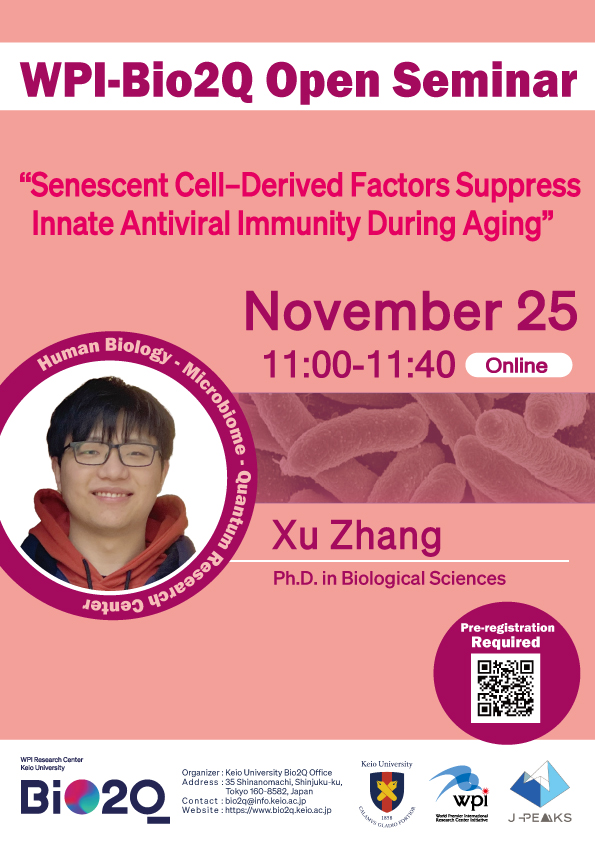
【Nov. 25 Seminar】 WPI-Bio2Q Open Seminar: Xu Zhang, PhD(for Keio Members)
Keio University Human Biology-Microbiome-Quantum Research Center (WPI-Bio2Q) will hold a seminar as follows. This event is only for faculty, students, and staff of Keio University. Date and Time Wednesday, November 25, 2026, 11:00-11:40 Format Zoom (Online only) Title Senescent Cell–Derived Factors Suppress Innate Antiviral Immunity During Aging Speaker Xu Zha...
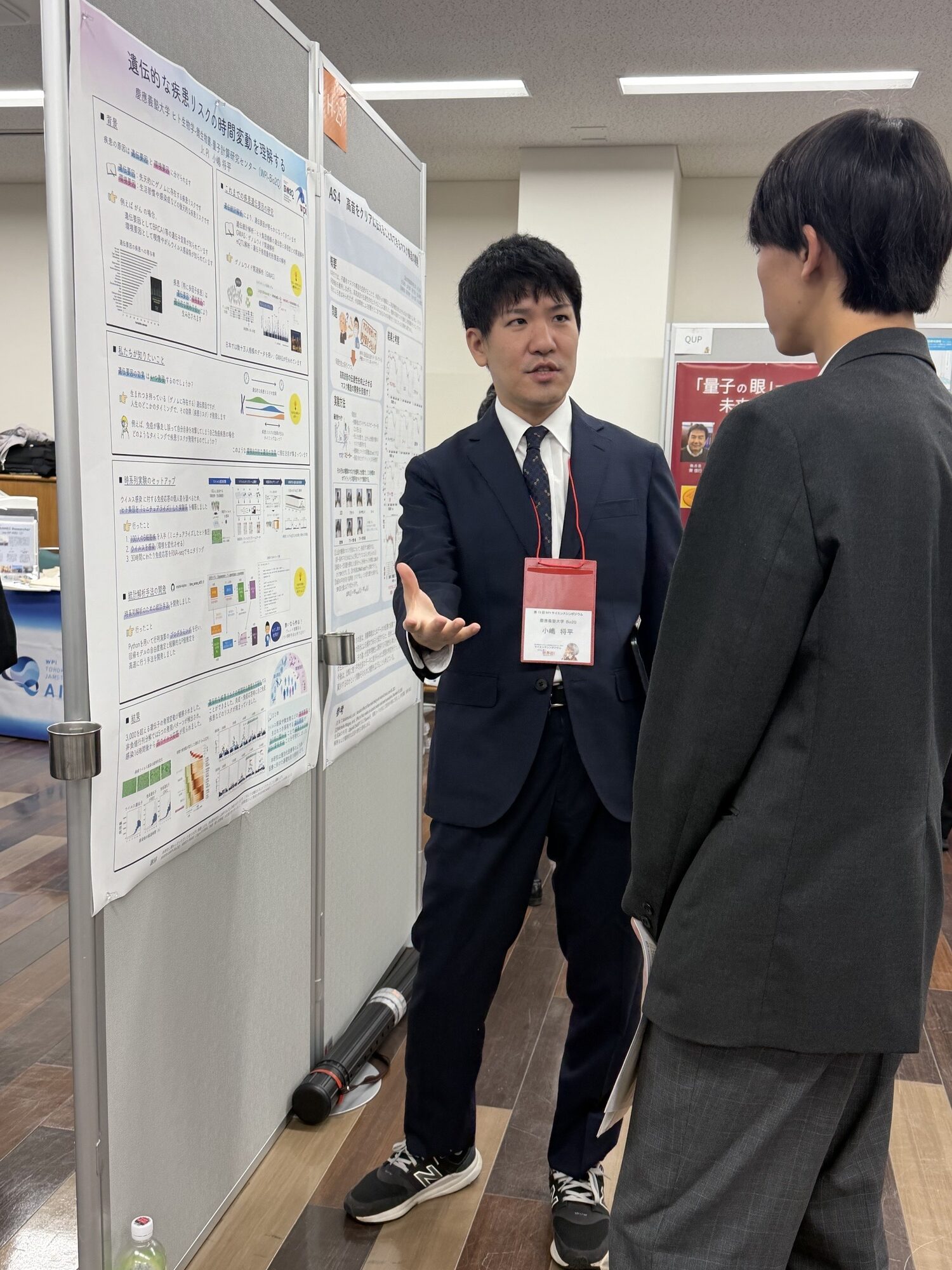
【Event Report】Bio2Q Participates in the 15th WPI Science Symposium, Engaging wit...
On Saturday, November 14, 2026, the 15th WPI Science Symposium, themed “World Premieres Born from Me! ~Science I Want to Share with Someone~,” was held at the Osaka University Convention Center in Suita, Osaka, hosted by the Osaka University Premium Research Institute for Human Metaverse Medicine (WPI-PRIMe). The event featured a special lecture by Prof. Shimon Sakaguchi (Distinguished University ...

WPI-Bio2Q now recruiting administrative staff– Deadline: January 11, 2027
WPI-Bio2Q Administrative Office is currently hiring administrative staff. We look forward to receiving applications from candidates with English proficiency who can support international researchers and anticipate to work at Bio2Q Administrative Office. Application Deadline: January 11, 2027 For more details, please refer to the application information at the link below, Application Info...
