





RESEARCH
【Publication】Metagenomic sequencing as a diagnostic tool for urine culture negative febrile urinary tract infection
August 7, 2026
Credits: WPI-Bio2Q
Co-authored by Bio2Q researchers and published in the Journal of Infection, this study demonstrates that metagenomic sequencing serves as an effective diagnostic tool for febrile urinary tract infections (fUTIs) where conventional urine cultures fail to identify the causative pathogen due to prior antibiotic administration. By analyzing urine samples from patients with bloodstream-confirmed fUTIs, the researchers successfully identified pathogens with high precision, even in the vast majority of culture-negative cases. These findings establish a new complementary diagnostic approach for culture-negative urinary tract infections that were previously difficult to diagnose, highlighting its potential to advance precision antimicrobial therapy.
| Title | Metagenomic sequencing as a diagnostic tool for urine culture negative febrile urinary tract infection |
|---|---|
| Authors | V A Janes1, J E Stalenhoef2, B C L van der Putten3, L A M Koster4, M E Jakobs4, J T van Dissel5, M D de Jong3, C Schultsz6, D R Mende7 |
| Short Description | This study, co-authored by researchers from both Bio2Q and Amsterdam UMC, demonstrates how shotgun metagenomic sequencing can overcome a major limitation of conventional urine culture by identifying the causative pathogen in febrile urinary tract infections (fUTIs) even after antibiotic treatment.
Diagnosing fUTIs typically relies on urine culture, but bacterial growth is often suppressed when antibiotics are administered before samples are collected, leaving clinicians without microbiological confirmation or guidance for targeted therapy. Here, these researchers applied urine metagenomic sequencing to patients with bloodstream-confirmed fUTIs and evaluated its ability to detect the infecting pathogen in both culture-positive and culture-negative urine samples. The approach successfully identified the causative pathogen in the vast majority of cases, including most patients whose urine cultures were negative following antibiotic pre-treatment. Although prediction of antimicrobial resistance from sequencing data requires further refinement before it can reliably guide treatment decisions, the method developed here was proved to be highly effective for pathogen identification when conventional culture failed. By demonstrating that metagenomic sequencing can recover clinically relevant pathogens despite prior antibiotic exposure, this study establishes the technique as a promising complementary diagnostic approach for culture-negative urinary tract infections and a potential tool for improving precision antimicrobial therapy. |
| DOI | 10.1016/j.jinf.2026.106783 |
| Journal | Journal of Infection |
| Vol/Num/Page | Volume 93, Issue 2 |
| Publication Date | August, 2026 |
Affiliations
1 Amsterdam UMC, University of Amsterdam, Department of Medical Microbiology, Amsterdam, Netherlands; Department of Medical Microbiology, Central Bacteriology and Serology Laboratory, Tergooi Medical Centre, Hilversum, Netherlands. Electronic address: v.a.janes@amsterdamumc.nl.
2 Department of Internal Medicine and Infectious Diseases, OLVG, Amsterdam, Netherlands.
3 Amsterdam UMC, University of Amsterdam, Department of Medical Microbiology, Amsterdam, Netherlands.
4 Amsterdam UMC, University of Amsterdam, Clinical Genetics, Core Facility Genomics, Amsterdam, Netherlands.
5 Department of Infectious Diseases, Leiden University Medical Centre, Leiden, Netherlands.
6 Amsterdam UMC, University of Amsterdam, Department of Medical Microbiology, Amsterdam, Netherlands; Amsterdam UMC, University of Amsterdam, Department of Global Health, Amsterdam Institute for Global Health and Development (AIGHD), Amsterdam, Netherlands.
7 Amsterdam UMC, University of Amsterdam, Department of Medical Microbiology, Amsterdam, Netherlands; Human Biology-Microbiome-Quantum Research Center (WPI-Bio2Q), Keio University, Tokyo, Japan.
SHARE




More Bio2Q News
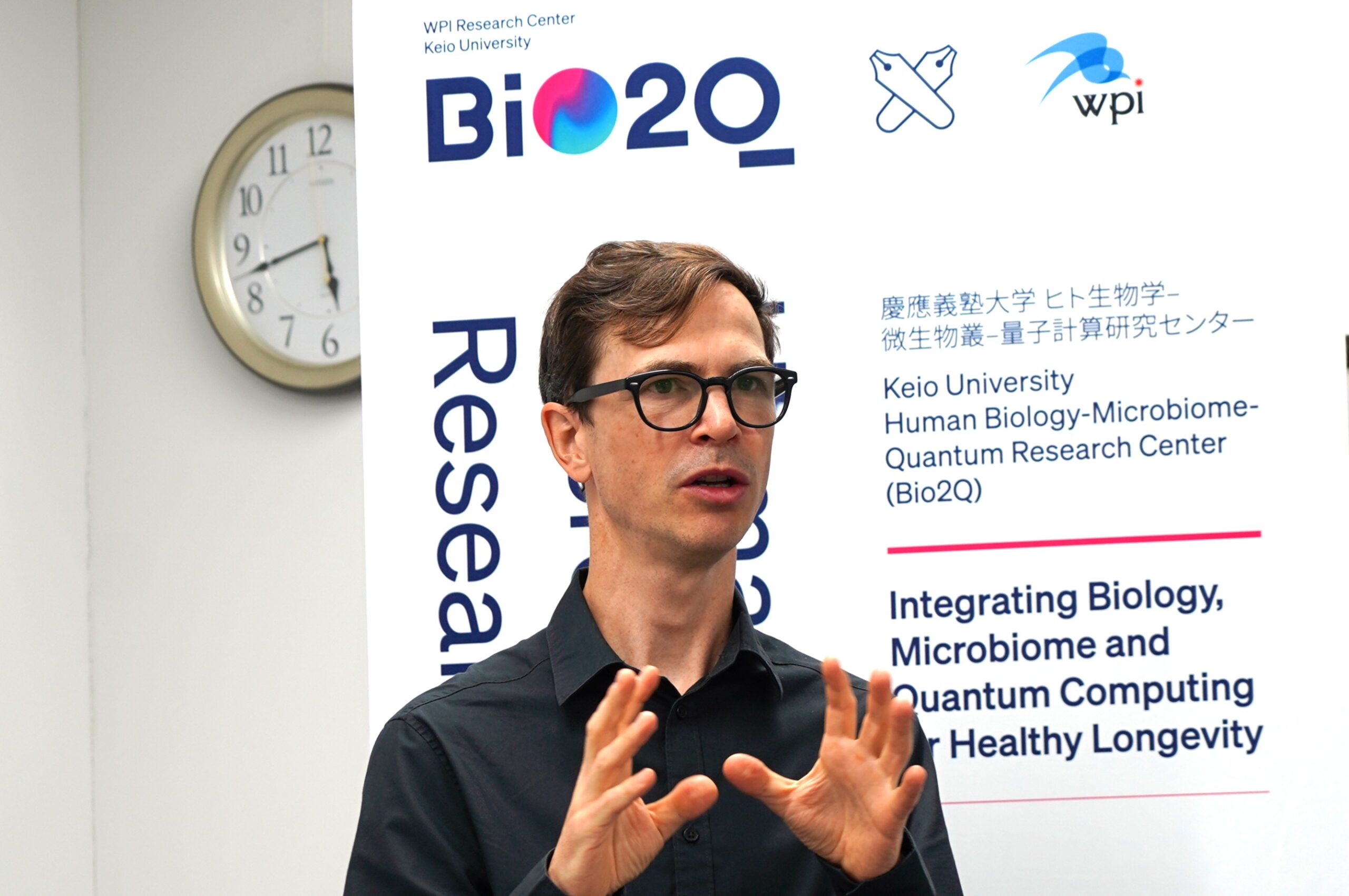
【Seminar Report】WPI-Bio2Q Open Seminar: Nicolas Manel, PhD
Keio University Human Biology-Microbiome-Quantum Research Center (WPI-Bio2Q) held a seminar as follows. Date:17:00 -18:00, September 14, ...
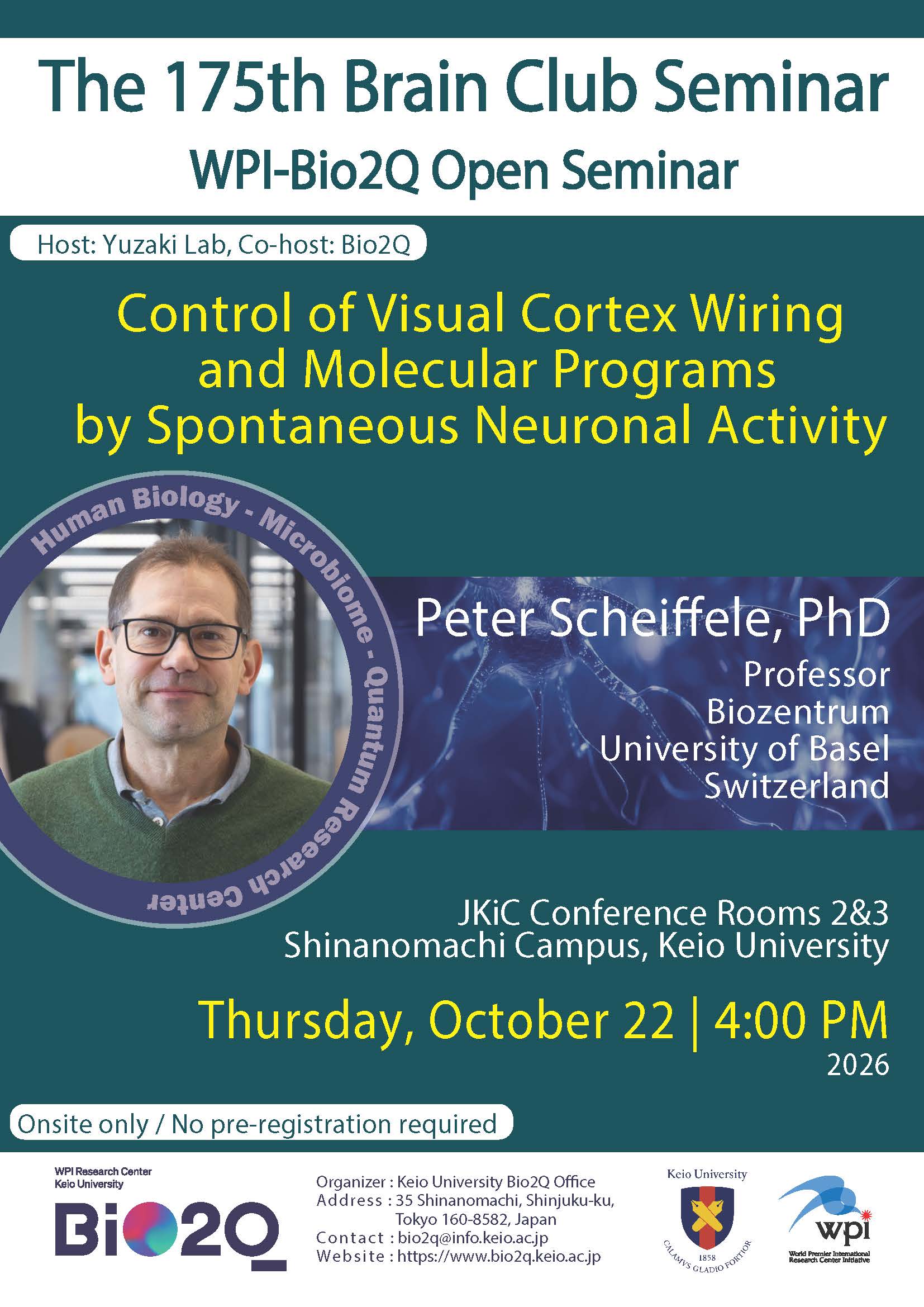
【10/22 Seminar】The 175th Brain Club Seminar (WPI-Bio2Q Open Seminar)
Keio University Human Biology-Microbiome-Quantum Research Center (WPI-Bio2Q) will hold a seminar as follows. This is an event for faculty, ...

【9/16 Seminar】 WPI-Bio2Q Open Seminar: Yue Yin(for Keio Members)
Keio University Human Biology-Microbiome-Quantum Research Center (WPI-Bio2Q) will hold a seminar as follows. This event is only for faculty...
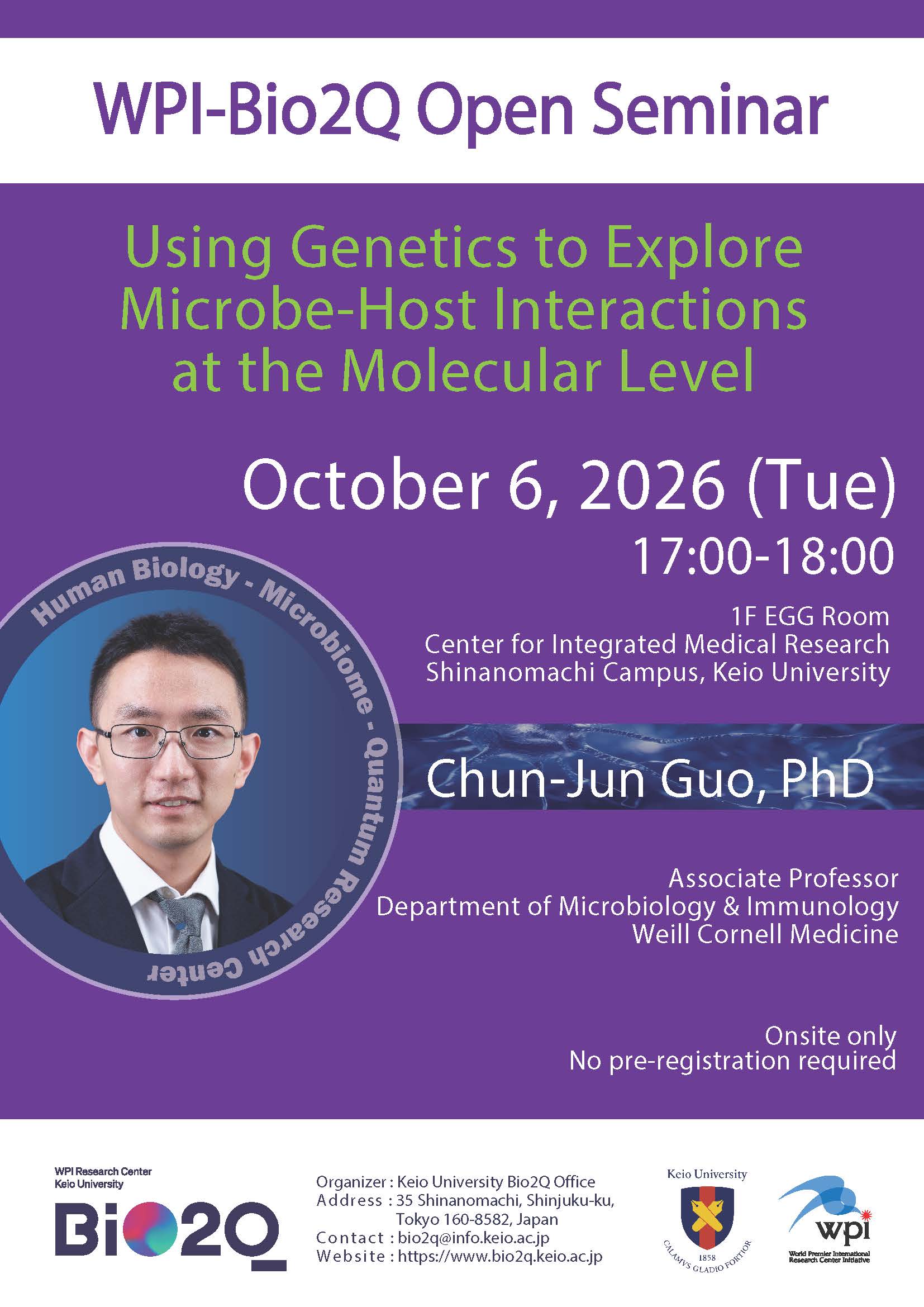
【10/6 Seminar】Bio2Q Open Seminar: Chun-Jun Guo, PhD
Keio University Human Biology-Microbiome-Quantum Research Center (WPI-Bio2Q) will hold a seminar as follows. This is an event for faculty, ...
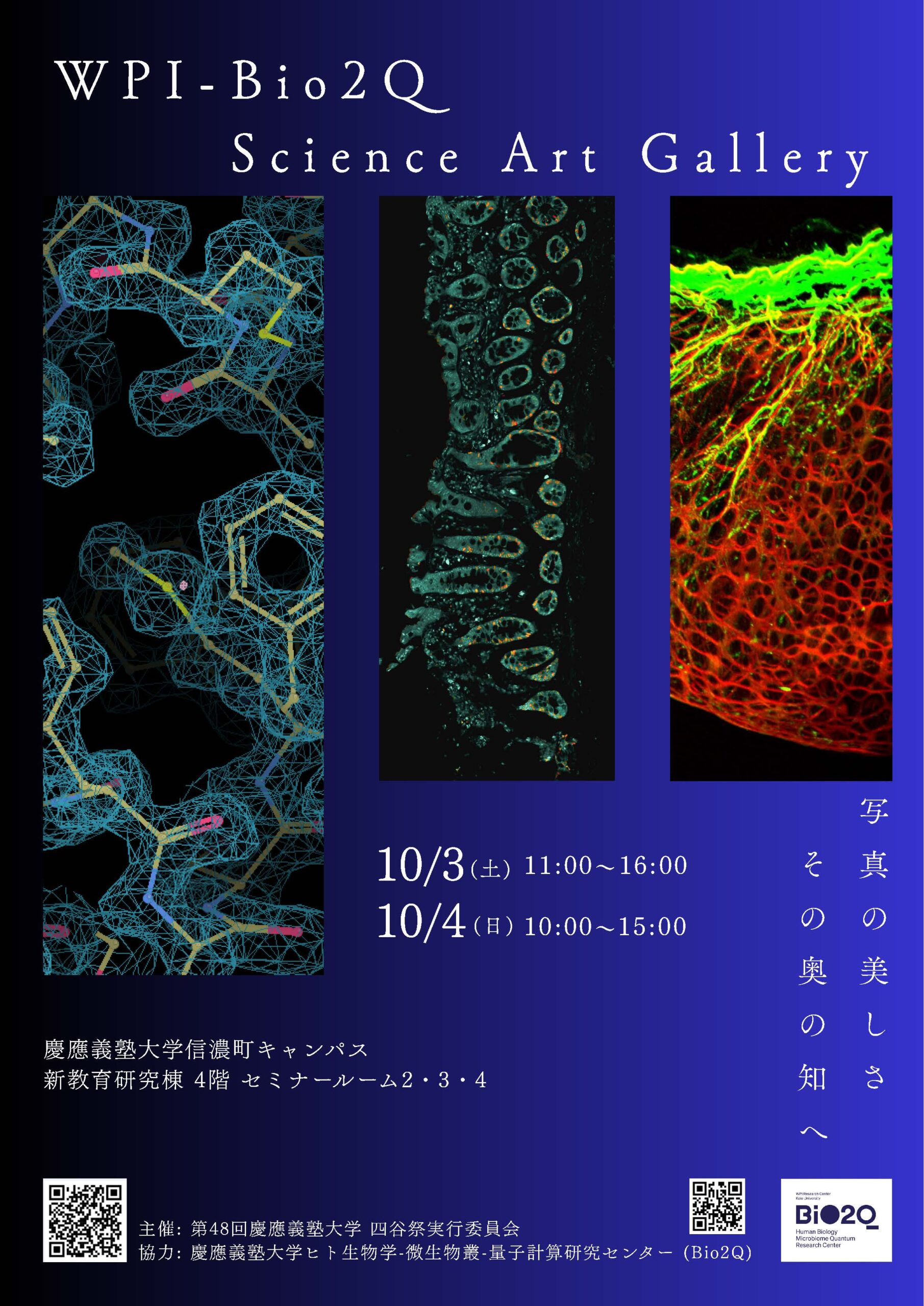
【10/3-10/4 Yotsuya Festival】 WPI-Bio2Q Science Art Gallery
The 48th Yotsuya Festival will be held on October 3 (Sat) and 4 (Sun), 2026, at Keio University's Shinanomachi Campus. In collaboration with...
