





ANNOUNCEMENT
Five WPI-Bio2Q Researchers Named as “Highly Cited Researchers 2024”
December 13, 2024

Bio2Q Researchers selected in Highly Cited Researchers 2024
Credits: WPI-Bio2Q
Keio University Human Biology-Microbiome-Quantum Research Center (WPI-Bio2Q) is proud to announce that five of our researchers were selected as Clarivate’s Highly Cited Researchers 2024, published on November 19, 2024, as shown on the table below. Director Honda was selected for the 11th consecutive year since 2014, Deputy Director Sato for the 6th consecutive year since 2019, Jr. PI Atarashi for the 4th consecutive year since 2021, and PI Kanai for the 2nd consecutive year since 2023, and Affiliated PI Hase for the first time. From Keio University, two more researchers, Taishiro Kishimoto (Project Professor, Hills Joint Research Laboratory for Future Preventive Medicine and Wellness) and Shinji Fukuda (Project Professor, Graduate School of Media and Governance), were also selected under the category of cross-field.
The Highly Cited Researchers identifies researchers who have authored multiple papers which rank in the top 1% by citations for 21 research categories (including cross-field). In the 2024 list, 6,636 individuals (6,886 designations in total) were selected from 59 countries/regions, and 76 of them are from Japan.
Please refer to Clarivate’s website from the “related links” to see the full list of Highly Cited Researchers 2024 and the selection methodology.
| Name | Affiliation | Category |
|---|---|---|
| Kenya Honda (Center Director) | Professor, Microbiology and Immunology, School of Medicine | Immunology |
| Toshiro Sato (Deputy Director/Bio-2 Core Director) | Professor, Biochemistry, School of Medicine | Molecular Biology and Genetics |
| Takanori Kanai (PI) | Professor, Gastroenterology and Hepatology, School of Medicine | Cross-Field |
| Koji Atarashi (Jr. PI) | Visiting Professor, Microbiology and Immunology, School of Medicine | Immunology |
| Koji Hase (Affiliated PI) | Professor, Division of Biochemistry, Department of Pharmaceutical Sciences, Faculty of Pharmacy | Cross-Field |
SHARE


More Bio2Q News
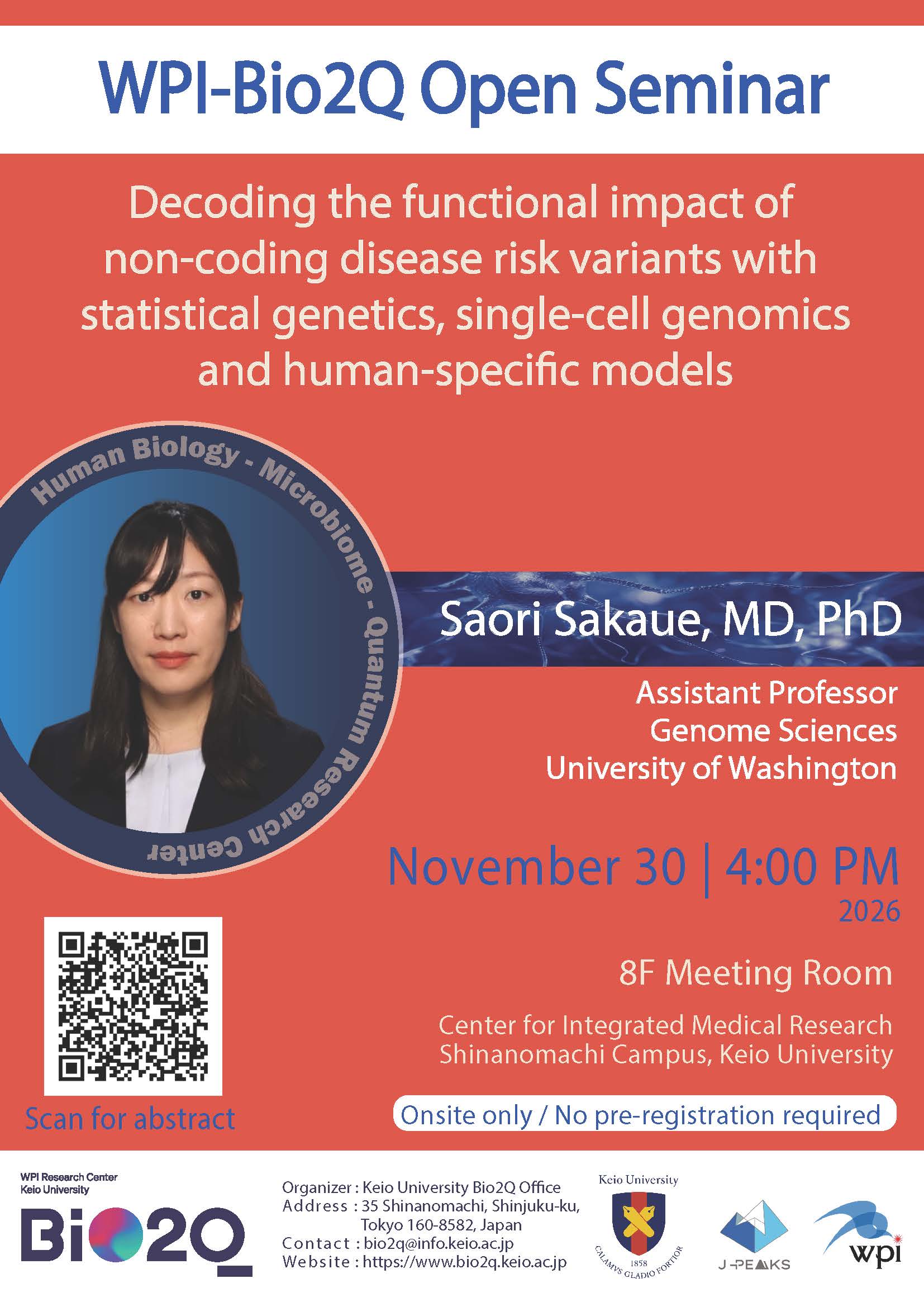
【11/30 Seminar】WPI-Bio2Q Open Seminar: Saori Sakaue, MD, PhD
Keio University Human Biology-Microbiome-Quantum Research Center (WPI-Bio2Q) will hold a seminar as follows. This is an event for faculty, students, and staff of Keio University. We sincerely look forward to your participation. Date 16:00~17:00, November 30, 2026 Venue 8F Meeting Room Center for Integrated Medical Research Shinanomachi Campus, Keio University Title Decodin...
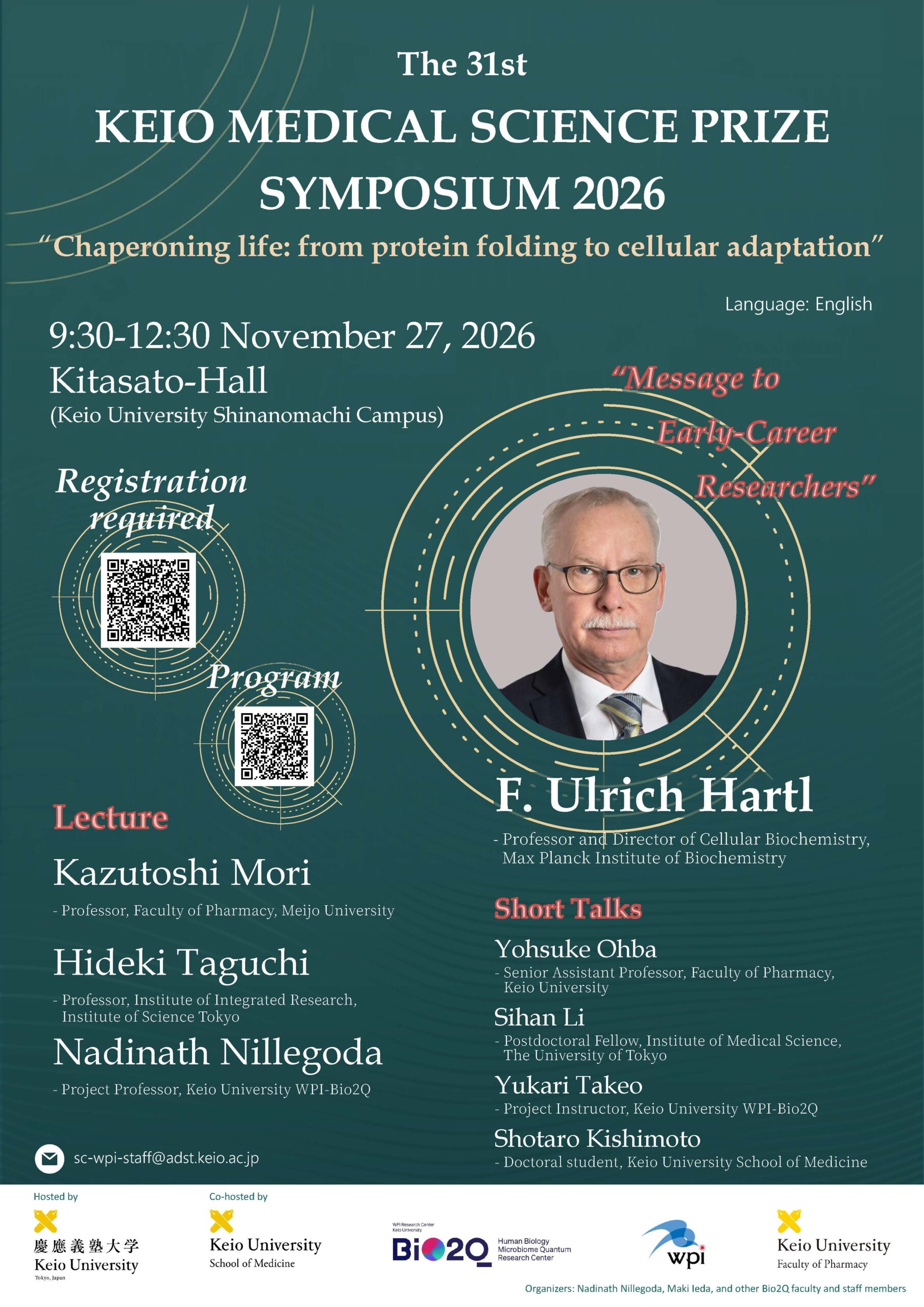
The 31st Keio Medical Science Prize Symposium 2026: "Chaperoning life: from prot...
In celebration of the 31st Keio Medical Science Prize, we are pleased to announce a commemorative symposium featuring the laureate, Dr. F. Ulrich Hartl, alongside distinguished researchers from Japan and abroad. Your active participation is highly encouraged! For details regarding the Prize announcement, please visit the Keio University Medical Science Fund website. Event Details Date & T...

WPI-Bio2Q Newsletter “Bio2Q Connect” Vol.2, Issue 19 Published
WPI-Bio2Q has published the latest issue of its newsletter, “Bio2Q Connect,” today on September 29, 2026. Highlights of this issue include: Introduction to Bio2Q Research: Accessible overviews of research fields and topics, introduced by our researchers Welcome On Board: Introducing Jungho Sohn, who joined us in October Science Art Gallery: Featuring works from the WPI-Bio2Q Science Art G...
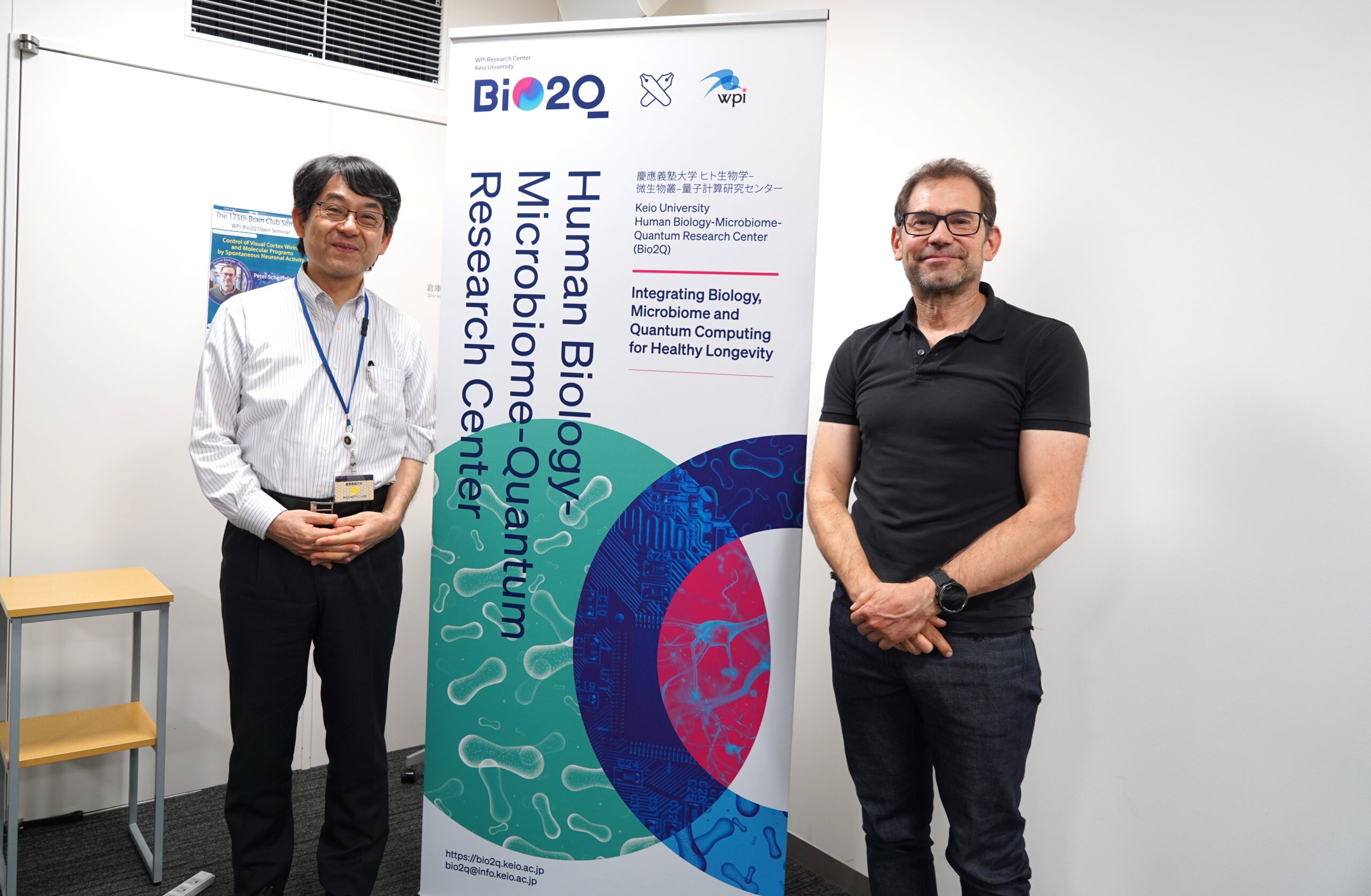
【Seminar Report】The 175th Brain Club Seminar (WPI-Bio2Q Open Seminar)
Keio University Human Biology-Microbiome-Quantum Research Center (WPI-Bio2Q) held a seminar as follows. Date:16:00 -17:00, October 22, 2026 Venue:JKiC 1F, Seminar Room, Shinanomachi Campus, Keio University Speaker:Peter Scheiffele, PhD Professor, Biozentrum, University of Basel, Switzerland Title: Control of Visual Cortex Wiring and Molecular Programs by Spontaneous Neuronal Activi...
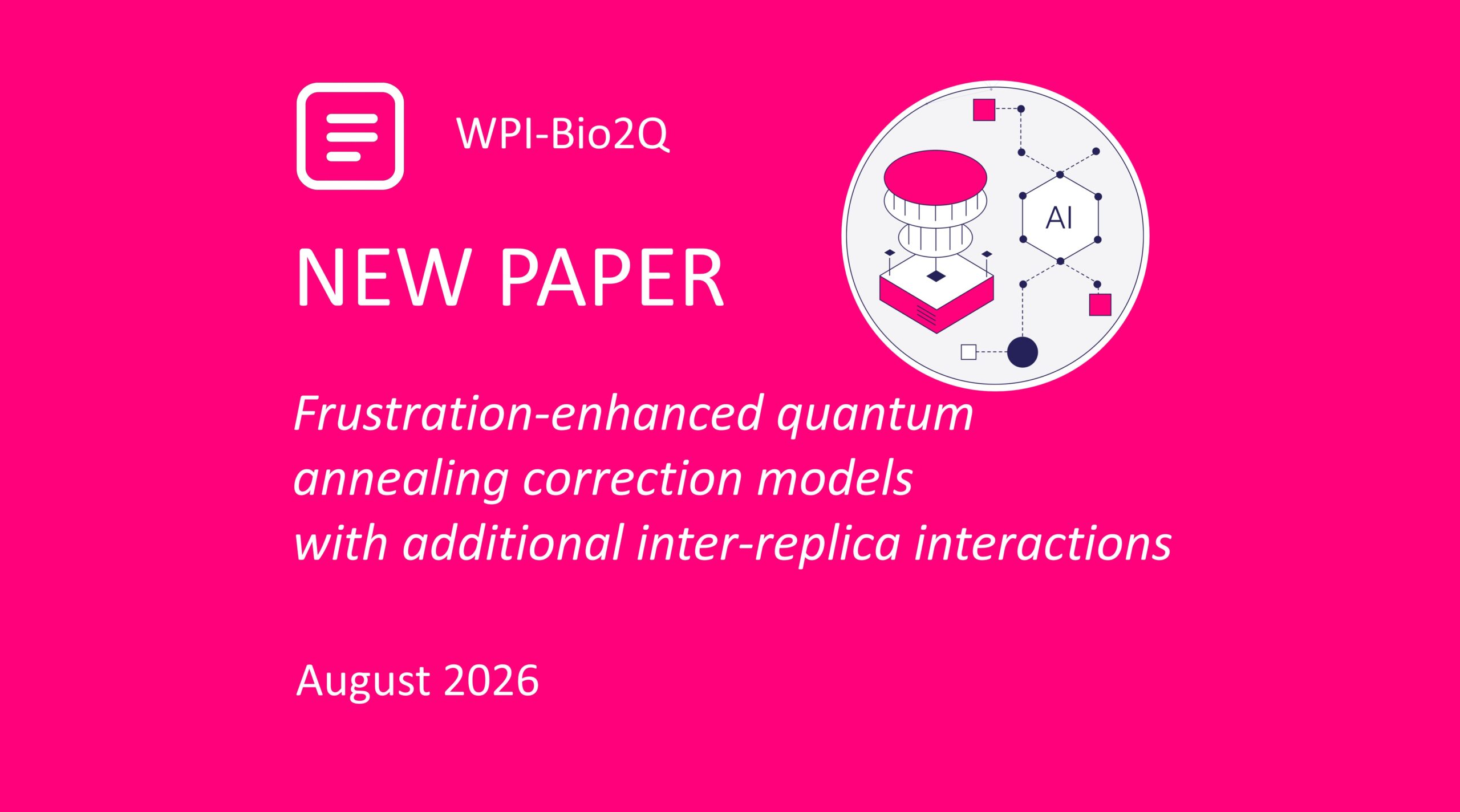
【Publication】Frustration-enhanced quantum annealing correction models with addit...
Researchers from Bio2Q and Keio University have demonstrated that introducing additional interactions between copies of a quantum optimization problem can improve the performance of quantum annealers. By exploiting a phenomenon known as frustration, their approach enables more reliable identification of optimal solutions, even with short computation times and challenging energy conditions. These f...
