





EVENT
【1/7 Seminar】WPI-Bio2Q Open Seminar: Masahiro Kanai, PhD
December 18, 2025
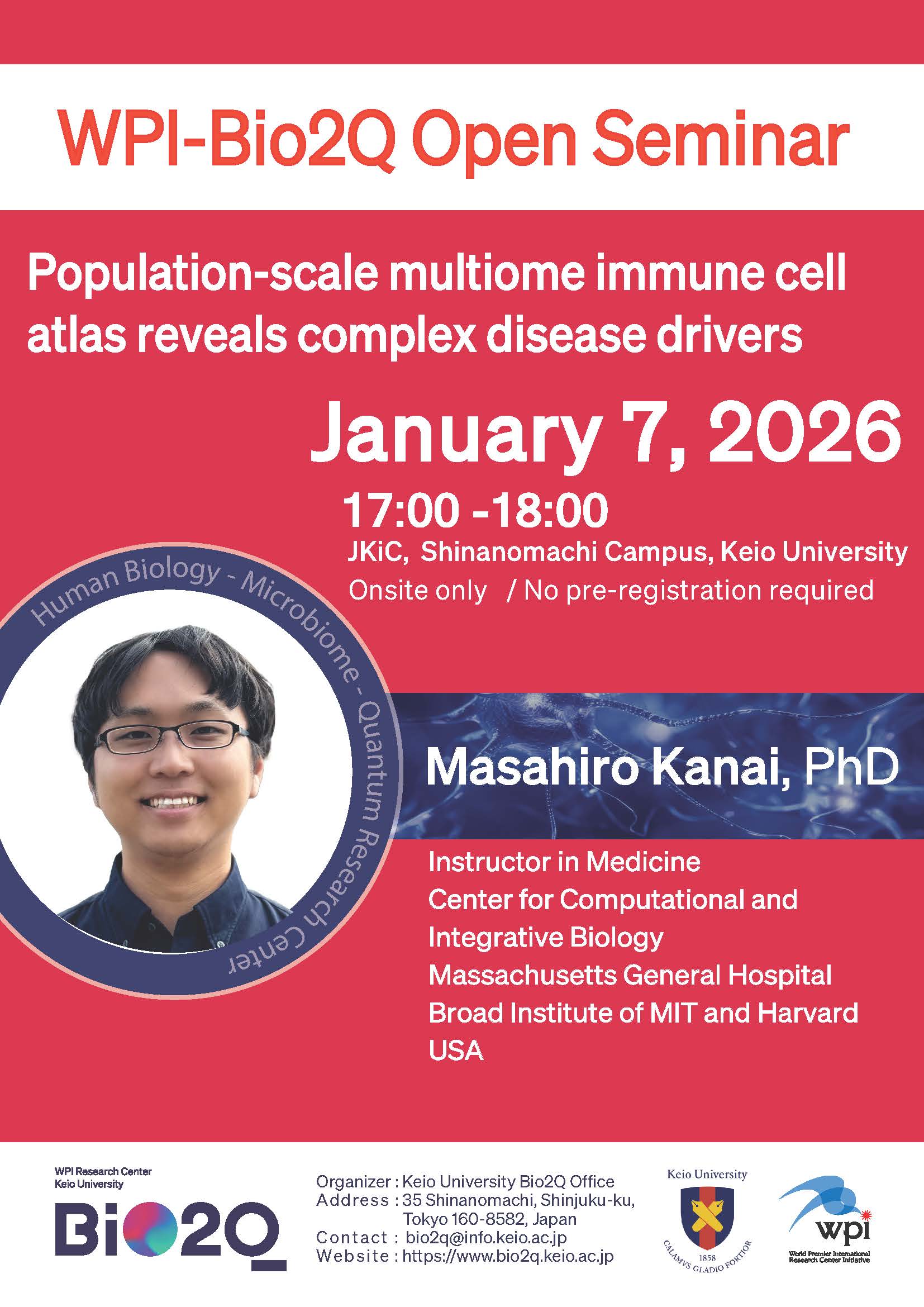
Poster
Credits: WPI-Bio2Q
Keio University Human Biology-Microbiome-Quantum Research Center (WPI-Bio2Q) will hold a seminar as follows.
This is an event for faculty, students, and staff of Keio University.
| Date & Time | 17:00 -18:00 January 7, 2026 |
|---|---|
| Venue | JKiC 1F, Shinanomachi Campus, Keio University |
| Title | Population-scale multiome immune cell atlas reveals complex disease drivers |
| Speaker | Masahiro Kanai, PhD, Instructor in Medicine, Center for Computational and Integrative Biology Massachusetts General Hospital Broad Institute of MIT and Harvard USA |
| Language | English |
| Poster | |
| Onsite | Pre-registration not required |
Most genetic variants associated with complex diseases lie in non-coding regions, yet mechanistic insights have been limited by the lack of an empirical framework for characterizing the molecular consequences of regulatory variation. Single-cell profiling of molecular quantitative trait loci (QTL) can connect variants to gene regulation, but prior studies lacked the sample size to detect variants at disease-relevant genes and the simultaneous measurements across regulatory layers needed to trace complete mechanisms from chromatin state to gene expression. Here we show that population-scale simultaneous profiling of chromatin accessibility and gene expression across immune cell types reveals multi-layered regulatory pathways connecting genetic variants to disease. We generated paired single-nucleus ATAC-seq and RNA-seq profiles from 10 million peripheral blood mononuclear cells across 1,108 Finnish individuals, identifying 51,083 cis-eQTLs for 20,829 genes, 338,100 cis-caQTLs for 210,584 peaks, 119,094 fine-mapped variants, and 496,488 enhancer–gene links. Systematic classification of regulatory mechanisms revealed that variants with complete chromatin-to-expression cascades show twice the disease colocalization of chromatin-only effects, establishing a hierarchy where mechanistic cascade predicts disease relevance. Analysis of evolutionarily constrained genes revealed multi-layered regulatory buffering where chromatin accessibility changes occur with normal effect sizes, but transmission to gene expression is attenuated through systematically weaker enhancer–gene links, reconciling why disease variants preferentially target these genes despite apparent eQTL depletion. We incorporated base editing to experimentally validate causal variants and mechanisms at Finnish-enriched disease loci such as TNRC18. This resource provides testable mechanistic hypotheses for over half of immune disease associations.
SHARE




More Bio2Q News
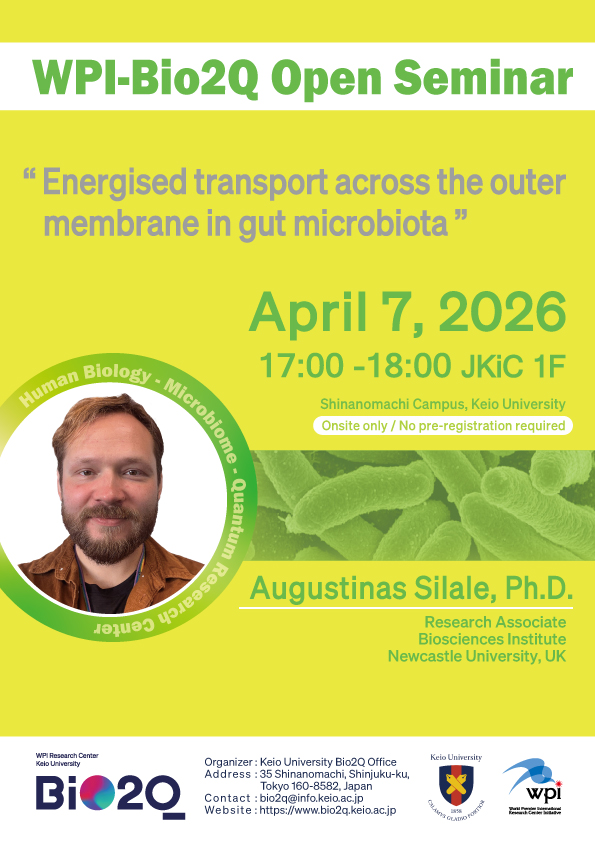
【4/7 Seminar】 WPI-Bio2Q Open Seminar: Augustinas Silale, Ph.D.(for Keio Members)
Keio University Human Biology-Microbiome-Quantum Research Center (WPI-Bio2Q) will hold a seminar as follows. This event is only for faculty...
【Seminar Report】WPI-Bio2Q Open Seminar: Yikuan YU
Keio University Human Biology-Microbiome-Quantum Research Center (WPI-Bio2Q) held a seminar as follows. 14:00 -15:00, March 16, 2026 V...
【Seminar Report】WPI-Bio2Q Open Seminar: Arjun S. Raman, MD PhD
Keio University Human Biology-Microbiome-Quantum Research Center (WPI-Bio2Q) held a seminar as follows. 15:00 -16:00, March 12, 2026 V...
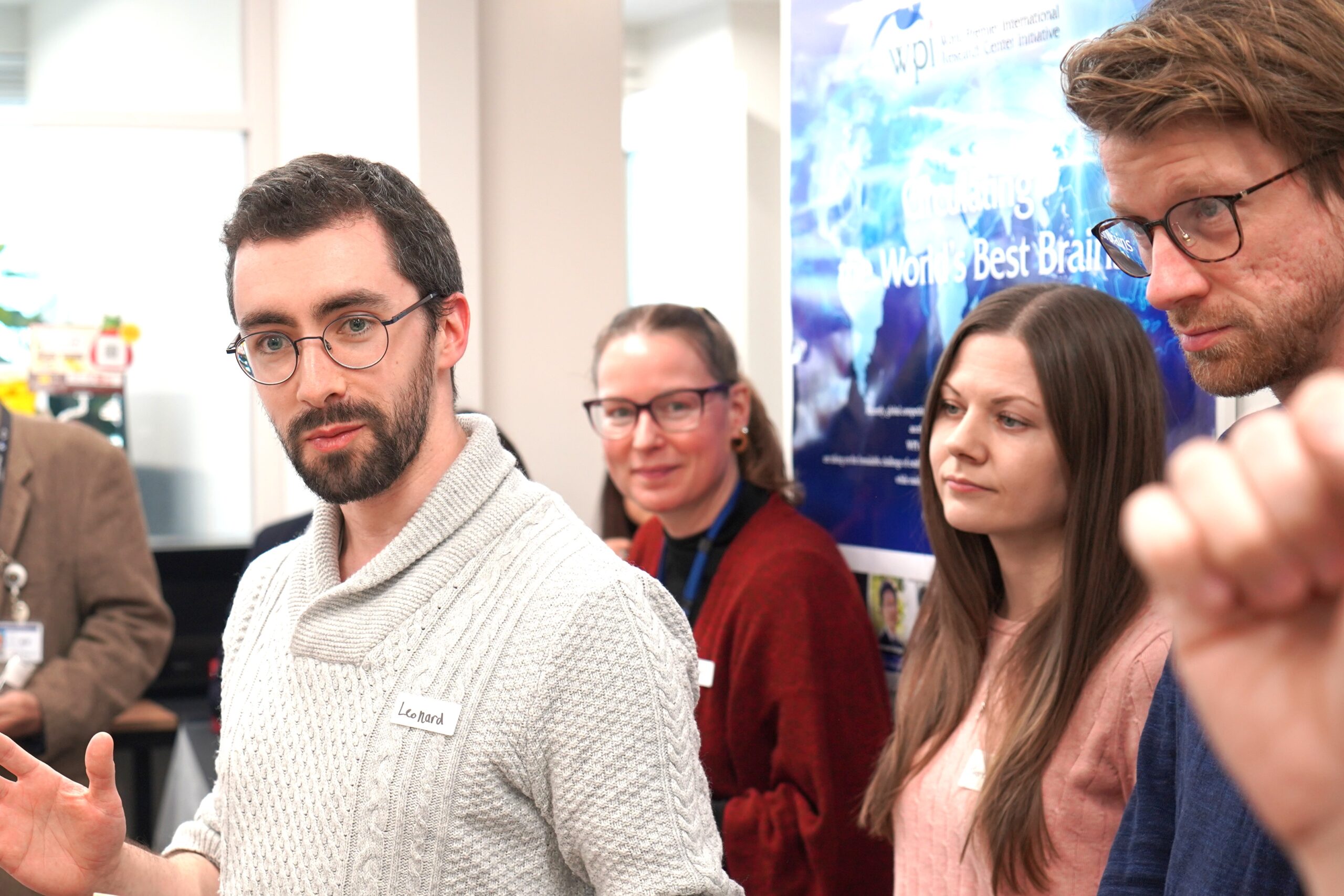
WPI-Bio2Q Social Event (Bio2Q CONNECT)End of Academic Year Gathering
WPI-Bio2Q held a social event at Keio University's Shinanomachi Campus. Date & Time: Thursday, March 12, 2026, 12:00-13:00 Venue: Bio2Q ...
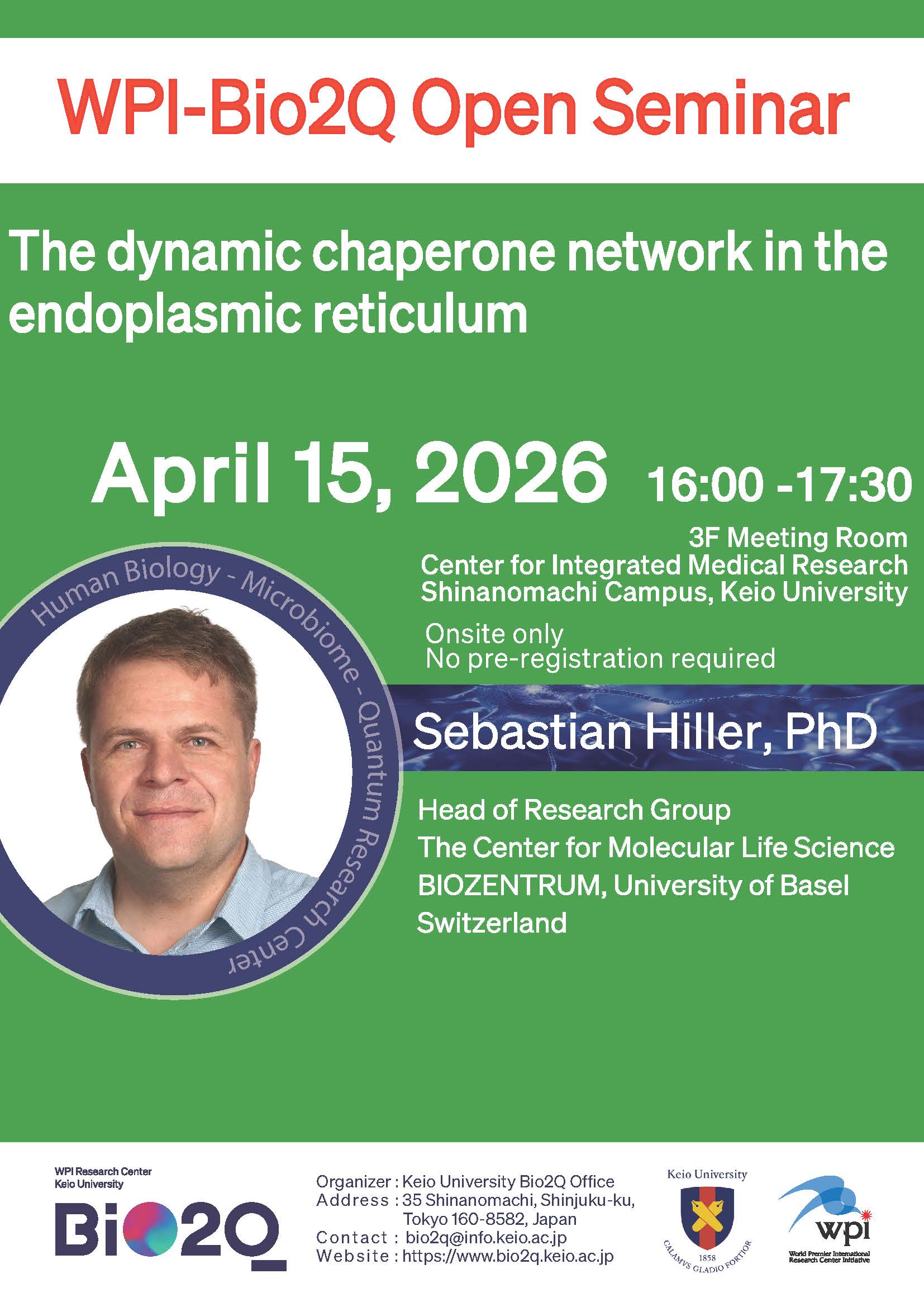
【4/15 Seminar】WPI-Bio2Q Open Seminar: Sebastian Hiller
Keio University Human Biology-Microbiome-Quantum Research Center (WPI-Bio2Q) will hold a seminar as follows. This is an event for faculty, ...
