





RESEARCH
[Publication] Mammalian Tolerance to Amino Acid Heterochirality
July 22, 2025
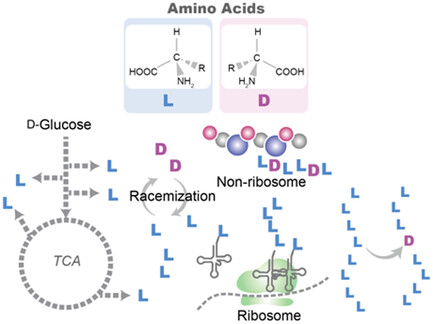
Organisms preferentially use l-amino acids (l-AAs). However, de novo synthesized l-AAs are in part converted to d-AAs. The ribosome has a robust system to use l-AAs for protein synthesis, whereas non-ribosomal synthesis can also use d-AAs. Furthermor
Credits: 2025 Sakiko Taniguchi et al.
Co-authored by Bio2Q and Keio University researchers, this Review explores the role of D-amino acids in mammals, highlighting their functional relevance despite the body’s predominant use of L-enantiomers. The authors outline how enzymatic control, microbial interactions, and tissue-level adaptations allow mammals to maintain control over environments with mixed amino acid chirality.
| Title | Mammalian Tolerance to Amino Acid Heterochirality |
|---|---|
| Authors | Sakiko Taniguchi [1],[2], Kenichiro Adachi [1], Xuan Tran [1],[3], Masataka Suzuki [1],[4], Jumpei Sasabe [5],[6], |
| Short Description | This review article, co-authored by Bio2Q and Keio University researchers, examines how mammals tolerate and utilize D-amino acids, once thought to be inert or even harmful byproducts of metabolism. While systemic amino acid metabolism strongly favors L-enantiomers, this work highlights the active roles that D-amino acids play in the brain, endocrine system, immune signaling, and in the gut epithelium. The authors integrate findings from across disciplines, including microbiome science, to explore how enzymatic degradation, renal filtration, and cellular proofreading mechanisms coordinate to maintain overall homochirality, while also supporting functional heterochirality. This Review works to reframe D-amino acids not as metabolic errors, but as selectively integrated components of mammalian physiology, offering a foundation for future research into their regulatory and therapeutic potential. |
| DOI | https://doi.org/10.1016/j.coi.2025.102568. |
| Journal | ChemBioChem |
| Vol/Num/Page | Volume 26, Issue 13, e202500273 |
| Publication Date | 2025 June 3. |
Affiliations:
[1] Department of Pharmacology, Keio University School of Medicine, 35 Shinanomachi, Shinjuku-ku, Tokyo, 160-8582 Japan
[2] Research Fellow of Japan Society for the Promotion of Science, 35 Shinanomachi, Shinjuku-ku, Tokyo, 160-8582 Japan
[3] Department of Plant Physiology, Eberhard Karls Universitat Tubingen, Auf der Morgenstalle 32, 72076 Tubingen, Germany
[4] Department of Medicine, Harvard Medical School, 181 Longwood Avenue, Boston, MA, 02115 USA
[5] Laboratory of Electron Microscope and Chiral Medical Biology, Keio University School of Medicine, 35 Shinanomachi, Shinjuku-ku, Tokyo, 160-8582 Japan
[6] WPI-Bio2Q, Keio University, 35 Shinanomachi, Shinjuku-ku, Tokyo, 160-8582 Japan
SHARE




More Bio2Q News
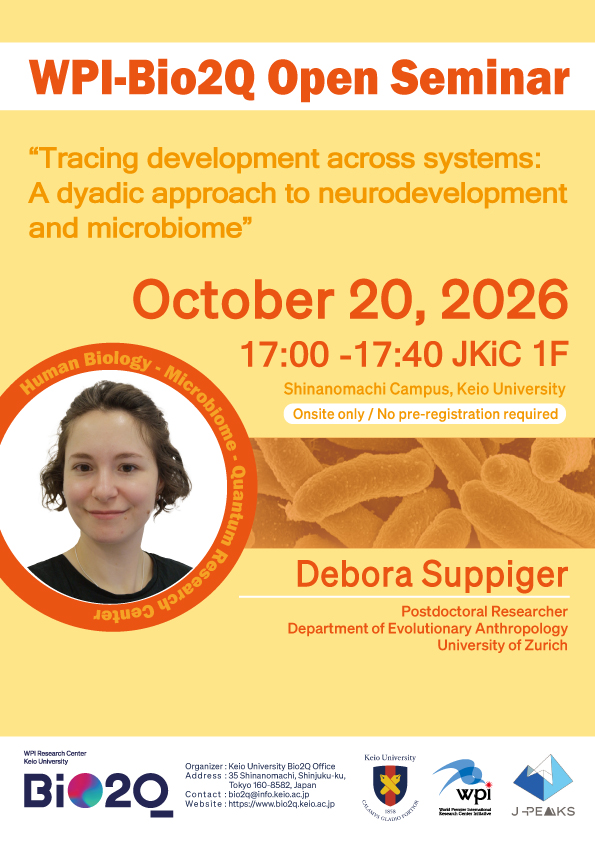
【10/20 Seminar】 WPI-Bio2Q Open Seminar: Debora Suppiger, PhD(for Keio Members)
Keio University Human Biology-Microbiome-Quantum Research Center (WPI-Bio2Q) will hold a seminar as follows. This event is only for faculty, students, and staff of Keio University. Date&Time Tuesday, October 20, 2026, 17:00-17:40 Speaker Debora Suppiger, PhD(Postdoctoral Researcher, Department of Evolutionary Anthropology, University of Zurich) Title Tracing development across...
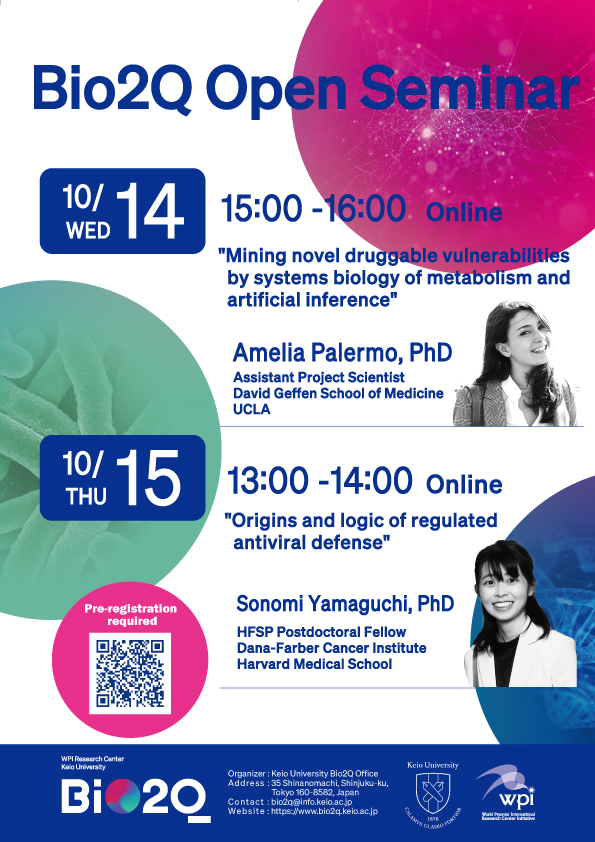
【10/14, 15 Seminar】 WPI-Bio2Q Open Seminar: Amelia Palermo, PhD&Sonomi Yamaguchi...
Keio University Human Biology-Microbiome-Quantum Research Center (WPI-Bio2Q) will hold seminars as follows. These events are only for faculty, students, and staff of Keio University, and pre-registration is required. Session #1 Date and Time Wednesday, October 14, 2026, 15:00-16:00 Title Mining novel druggable vulnerabilities by systems biology of metabolism and artificial inferenc...
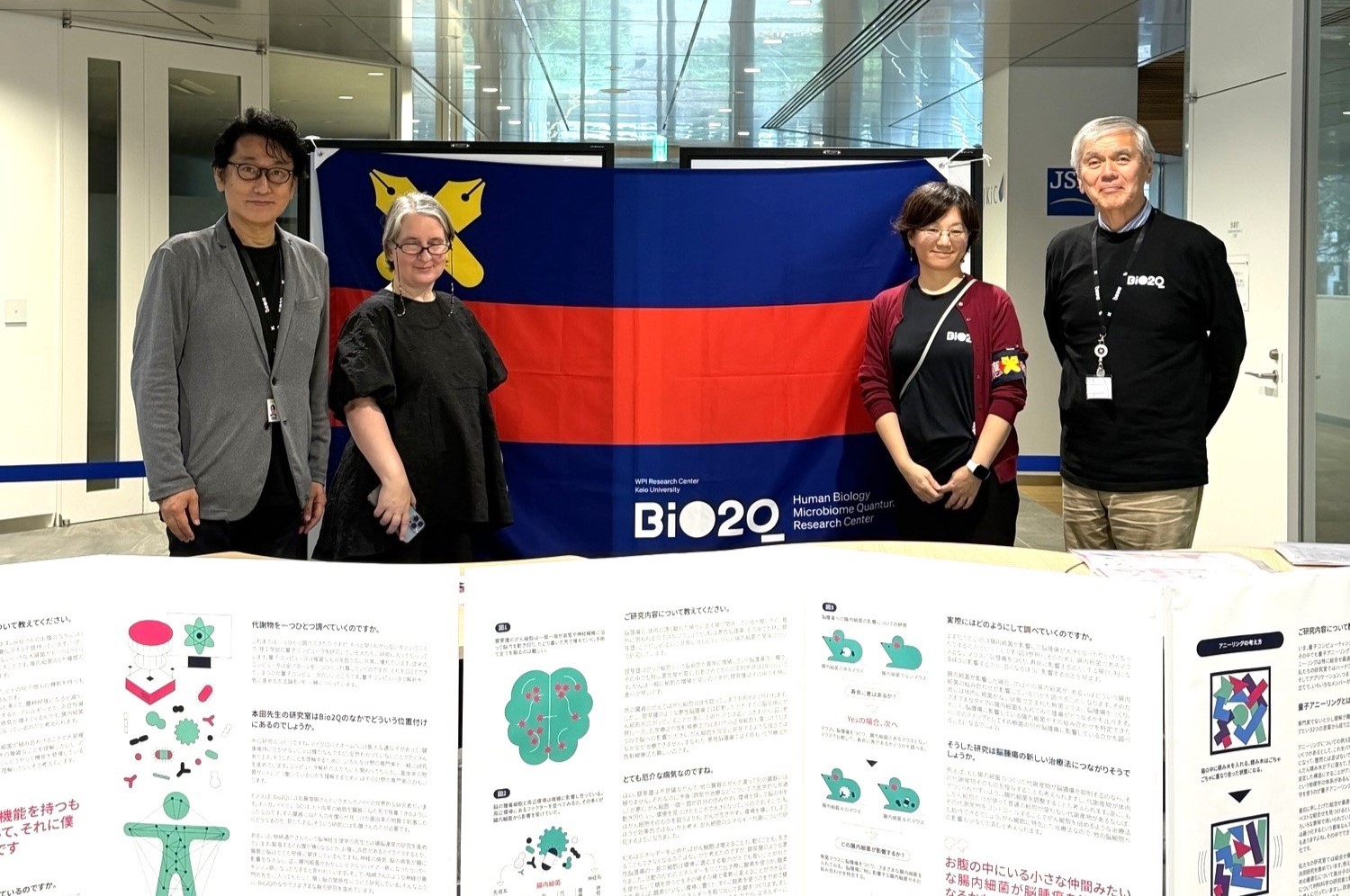
【Event】Participation in Keio University’s “Yotsuya Festival”
Keio University Human Biology-Microbiome-Quantum Research Center (WPI-Bio2Q) participated in the following event. Keio University Shinanomachi Campus “Yotsuya Festival” October 3 (Sat) 11:00 AM – 4:00 PM October 4 (Sun) 10:00 AM – 3:00 PM In addition to introducing Bio2Q’s research activities, we also hosted a Science Art Gallery on the day of the event. We welcomed 278 visitors and estab...
【Seminar Report】WPI-Bio2Q Open Seminar: Chun-Jun Guo, PhD
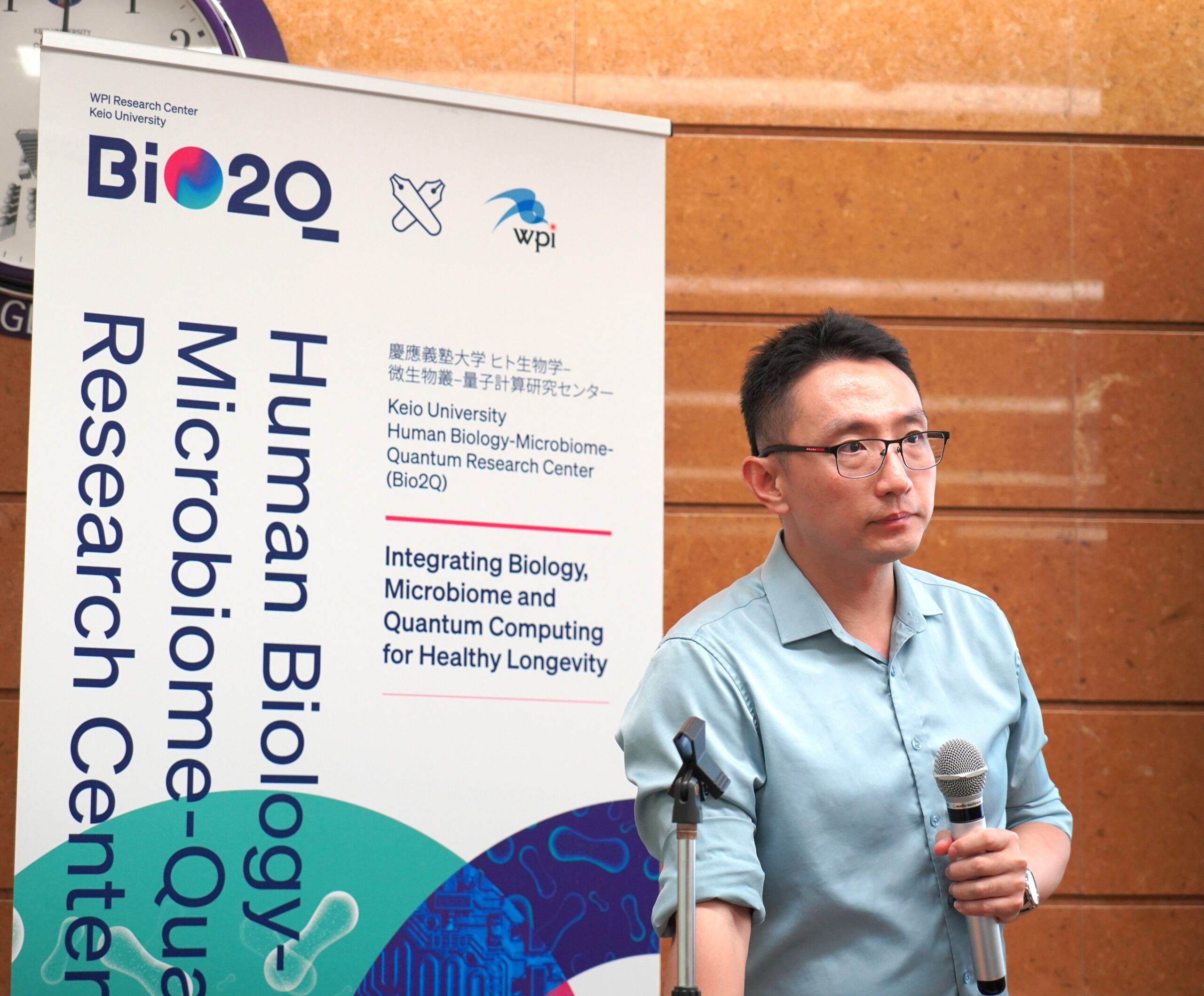
Keio University Human Biology-Microbiome-Quantum Research Center (WPI-Bio2Q) held a seminar as follows. Date:17:00 -18:00, October 6, 2026 Venue:1F Lounge, Center for Integrated Medical Research, Shinanomachi Campus, Keio University Speaker:Chun-Jun Guo, PhD Associate Professor Department of Microbiology &Immunology Weill Cornell Medicine Title:Using Genetics to Explore Microbe-Host...
【Private Activity】Bio2Q Members Take Part in TOKYO ROKUTAI FES 2026
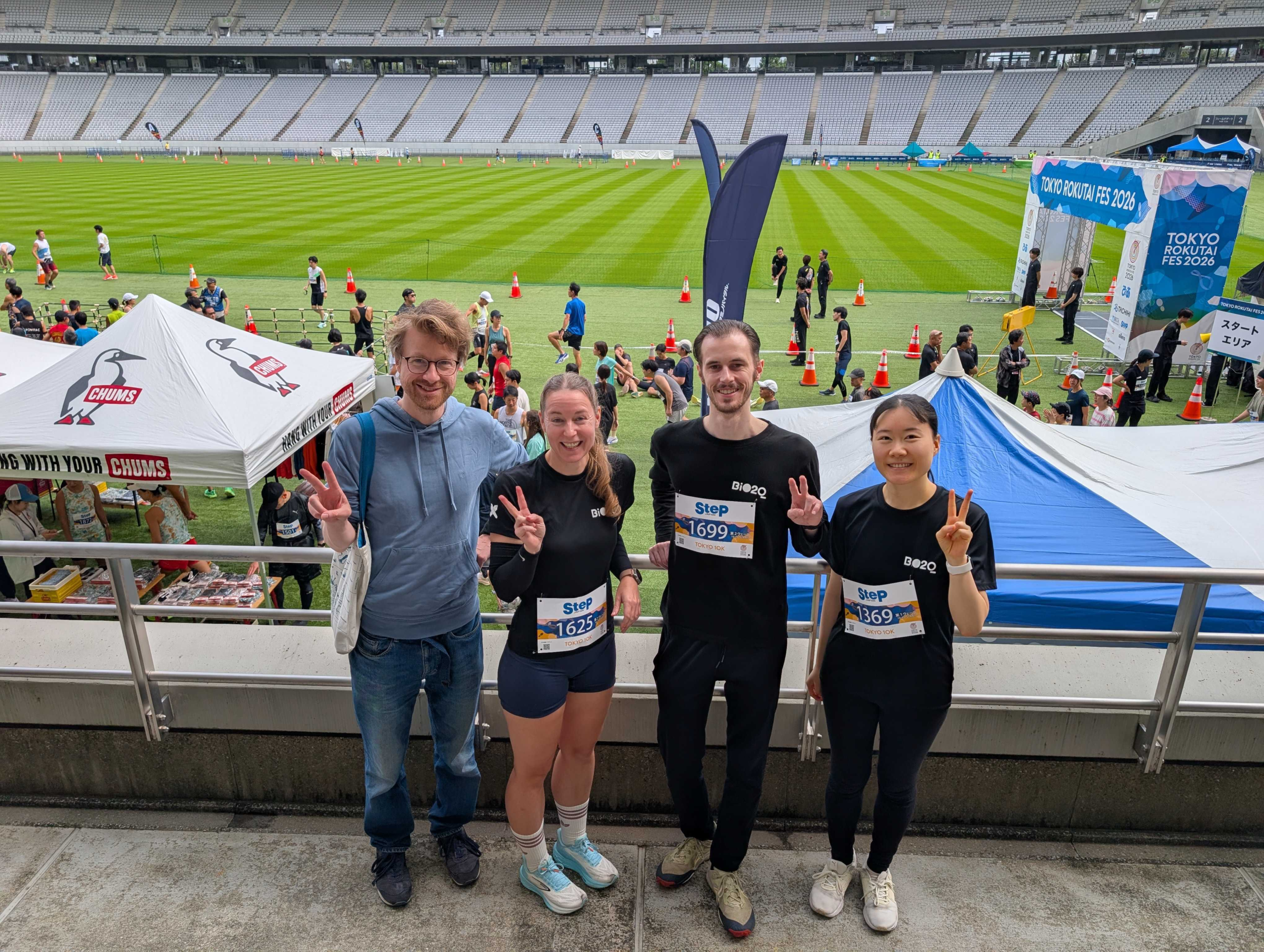
On Sunday, October 4th, members of the Keio University Human Biology-Microbiome-Quantum Computing Research Center (Bio2Q) participated in “TOKYO ROKUTAI FES 2026”, taking on the 10K run together! Researchers were joined by their family and friends, creating a fun and energetic atmosphere throughout the event. It was a great opportunity to stay active, challenge themselves, and strengthen connecti...
