





RESEARCH
【Publication】Microbiome-dependent phytosterol sulfates production and tissue distribution in mice
November 25, 2026
publication_2610_arita
Credits: WPI-Bio2Q
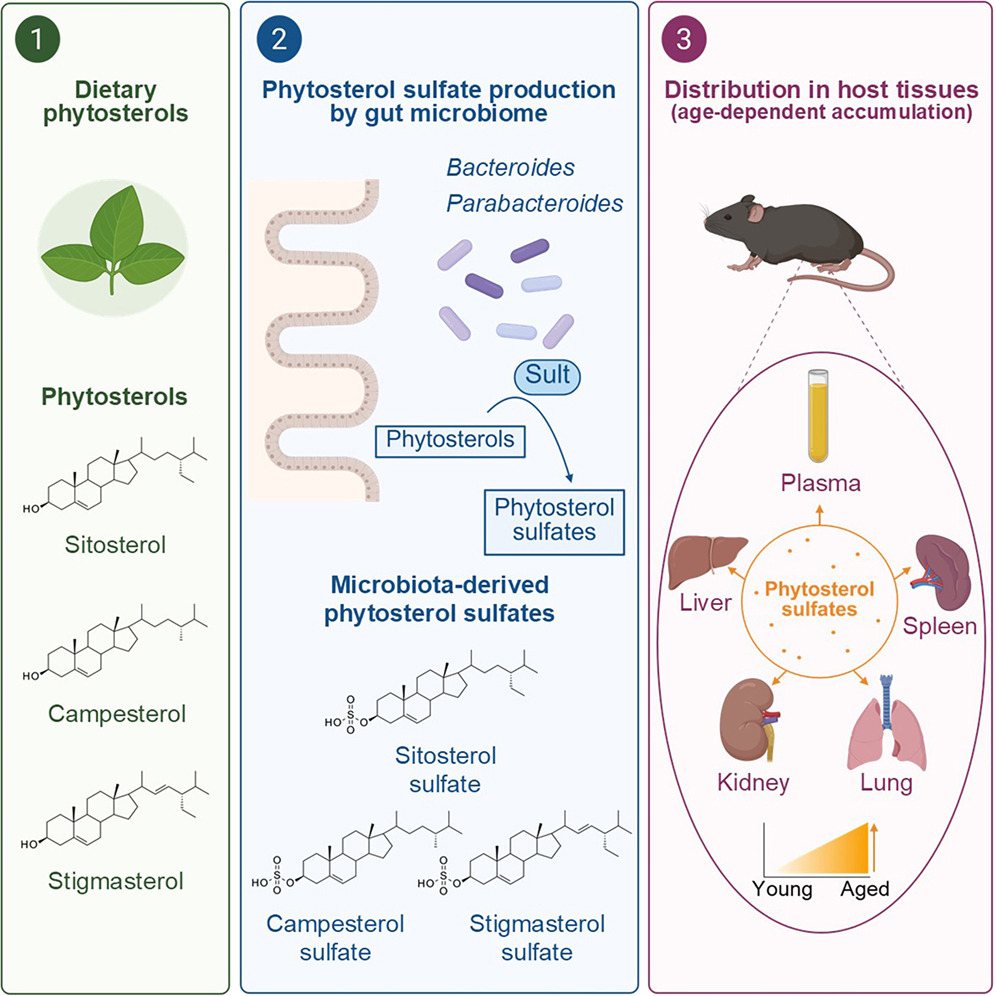
Graphical abstract
Credits: Tomita et al., 2026
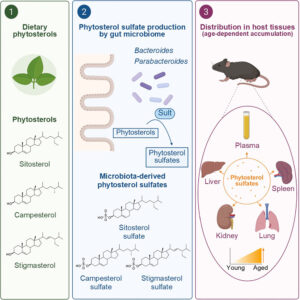
Researchers from Bio2Q and Keio University have demonstrated that gut bacteria convert dietary plant sterols into compounds known as phytosterol sulfates. These metabolites can accumulate in multiple organs, their levels increasing with age. These findings reveal a previously unknown connection between gut microbial activity and the distribution of dietary compounds in the body, providing new insights into how the gut microbiome influences host metabolism.
| Title | Microbiome-dependent phytosterol sulfates production and tissue distribution in mice |
|---|---|
| Authors | Koki Tomita 1 2 3, Takeru Nakano 1 2, Satoshi Morozumi 1 2, Nobuyuki Okahashi 1 2 4, Makoto Arita 1 2 3 5 |
| Short Description | Researchers from Bio2Q and Keio University have uncovered a previously underexplored mechanism through which the gut microbiome influence the metabolism and distribution of plant-derived compounds in the body.
Phytosterols are naturally occurring compounds found in plant based foods, and they are generally not absorbed well, or efficiently eliminated from the body. However, how the gut microbiome modifies these compounds and influences their distribution across different tissues has remained poorly understood. In this study, our researchers demonstrated that specific gut bacteria can convert dietary phytosterols into molecules known as phytosterol sulfates through the activity of specialized enzymes called sulfotransferases. Through the use of advanced lipidomics and in vivo experiments, several bacterial species responsible for producing these metabolites were identified, and it was shown that the bacterial enzymes that perform this conversion function more efficiently than their mammalian counterparts. Importantly, these researchers discovered that phytosterol sulfates can accumulate in multiple organs, including the liver, kidneys, and lungs, with levels increasing with age. These findings reveal a previously unrecognized pathway through which the microbiome influence the distribution of dietary compounds throughout the host. This work provides further insight into the complex interactions between the gut microbiome and host metabolism, and establishes a foundation for future research into the physiological roles of microbiome-derived metabolites. |
| DOI | 10.1016/j.isci.2026.117883 |
| Journal | iScience |
| Vol/Num/Page |
29(11):117883
|
| Publication Date | October 16, 2026 |
Author information
1 Division of Physiological Chemistry and Metabolism, Graduate School of Pharmaceutical Sciences, Keio University, 1-5-30 Shibakoen, Minato-ku, Tokyo 105-8512, Japan.
2 Laboratory for Metabolomics, RIKEN Center for Integrative Medical Sciences, 1-7-22 Suehiro-cho, Tsurumi-ku, Yokohama, Kanagawa 230-0045, Japan.
3 Human Biology Microbiome Quantum Research Center (WPI-Bio2Q), Keio University, 35 Shinanomachi, Shinjuku-ku, Tokyo 160-8582, Japan.
4 Department of Bioinformatic Engineering, Graduate School of Information Science and Technology, The University of Osaka, 1-5 Yamadaoka, Suita, Osaka 565-0871, Japan.
5 Cellular and Molecular Epigenetics Laboratory, Graduate School of Medical Life Science, Yokohama City University, 1-7-29 Suehiro-cho, Tsurumi-ku, Yokohama, Kanagawa 230-0045, Japan.
SHARE




More Bio2Q News
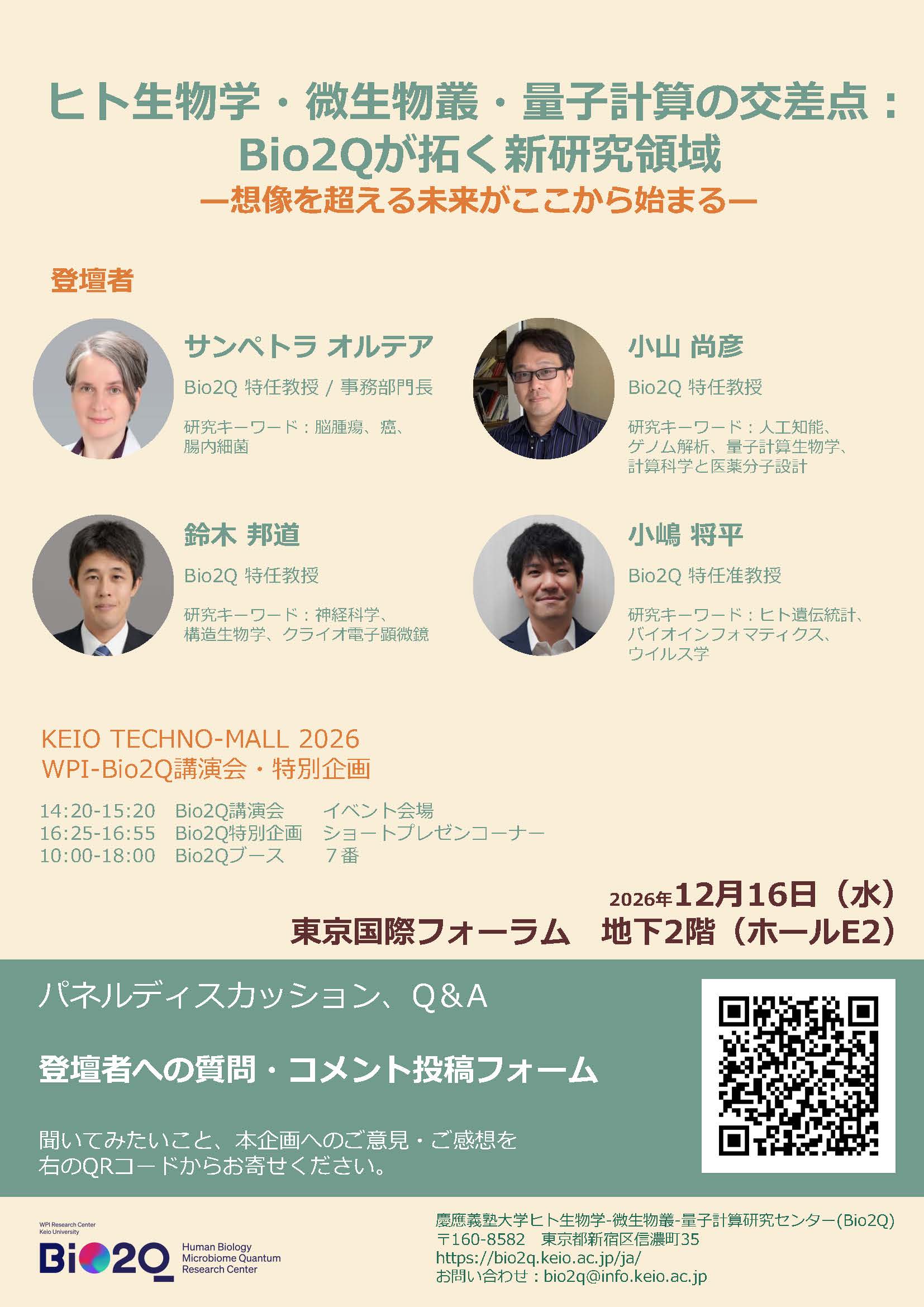
[Event] WPI-Bio2Q to Exhibit at KEIO TECHNO-MALL 2026
Keio University Human Biology-Microbiome-Quantum Research Center (Bio2Q) will exhibit at KEIO TECHNO-MALL 2026 (The 27th Keio Science and Technology Exhibition) on Wednesday, December 16, 2026. Through this exhibition, Bio2Q strives to serve as a hub connecting our center with society and sparking diverse collaborative opportunities. We are offering three key programs—a Lecture, a Special Event...
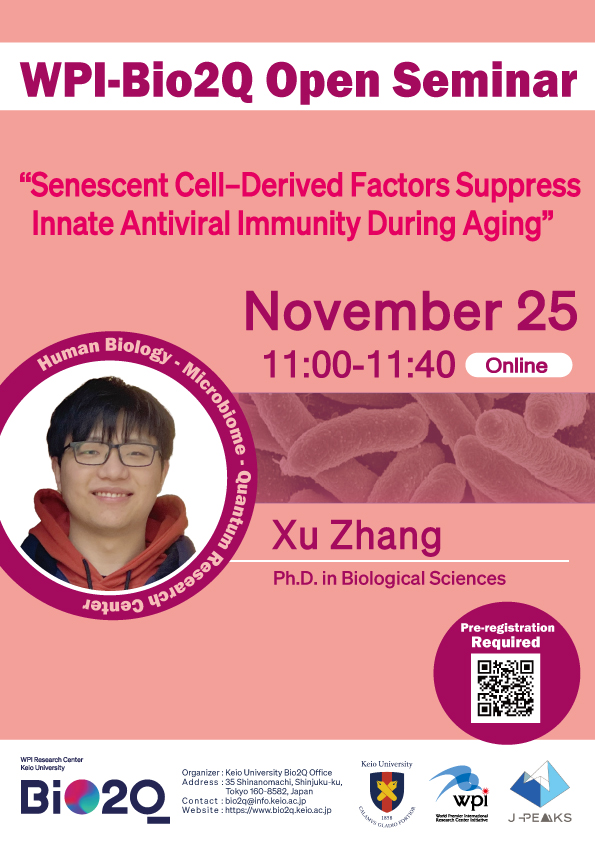
【Nov. 25 Seminar】 WPI-Bio2Q Open Seminar: Xu Zhang, PhD(for Keio Members)
Keio University Human Biology-Microbiome-Quantum Research Center (WPI-Bio2Q) will hold a seminar as follows. This event is only for faculty, students, and staff of Keio University. Date and Time Wednesday, November 25, 2026, 11:00-11:40 Format Zoom (Online only) Title Senescent Cell–Derived Factors Suppress Innate Antiviral Immunity During Aging Speaker Xu Zha...
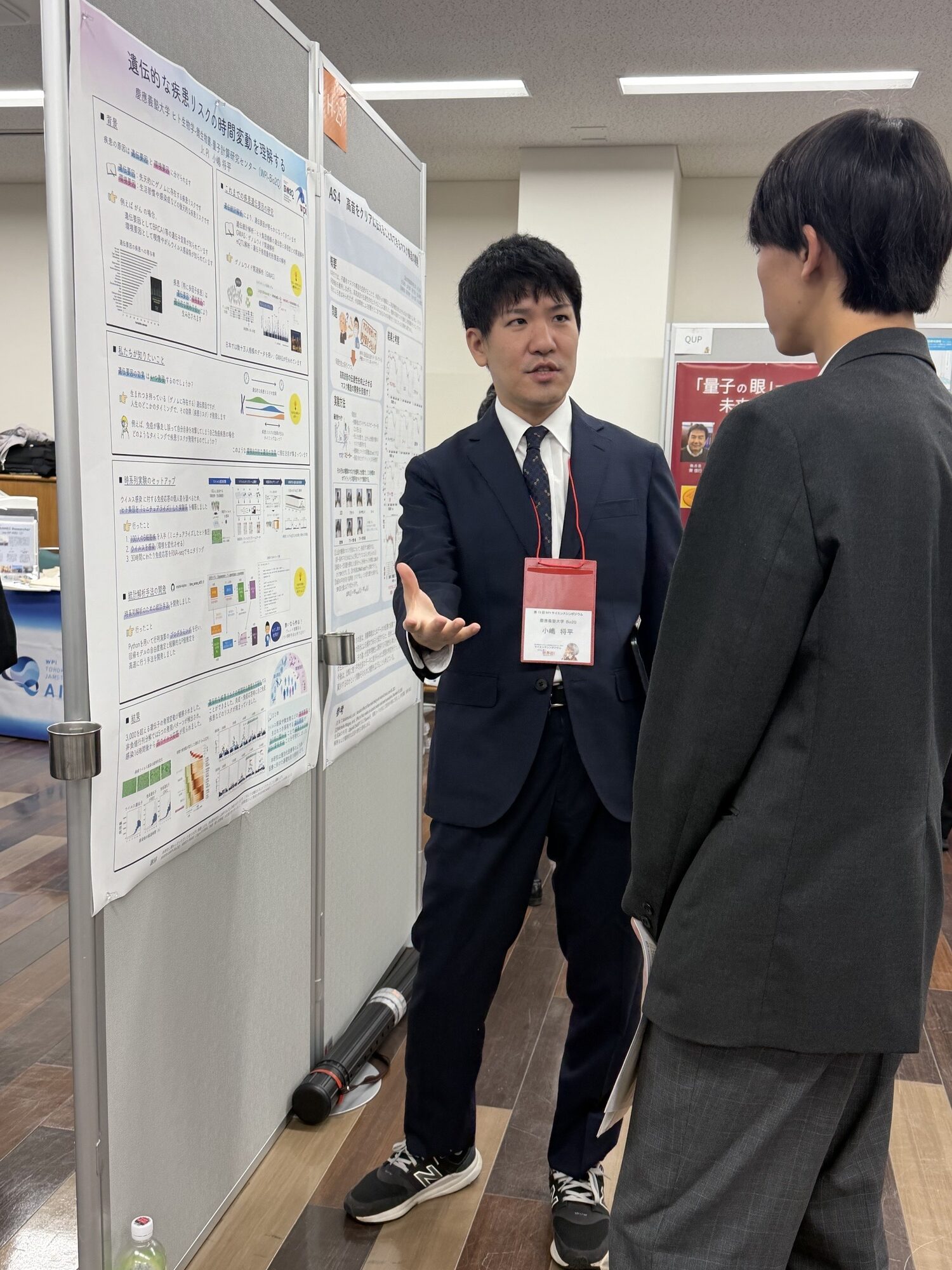
【Event Report】Bio2Q Participates in the 15th WPI Science Symposium, Engaging wit...
On Saturday, November 14, 2026, the 15th WPI Science Symposium, themed “World Premieres Born from Me! ~Science I Want to Share with Someone~,” was held at the Osaka University Convention Center in Suita, Osaka, hosted by the Osaka University Premium Research Institute for Human Metaverse Medicine (WPI-PRIMe). The event featured a special lecture by Prof. Shimon Sakaguchi (Distinguished University ...

WPI-Bio2Q now recruiting administrative staff– Deadline: January 11, 2027
WPI-Bio2Q Administrative Office is currently hiring administrative staff. We look forward to receiving applications from candidates with English proficiency who can support international researchers and anticipate to work at Bio2Q Administrative Office. Application Deadline: January 11, 2027 For more details, please refer to the application information at the link below, Application Info...
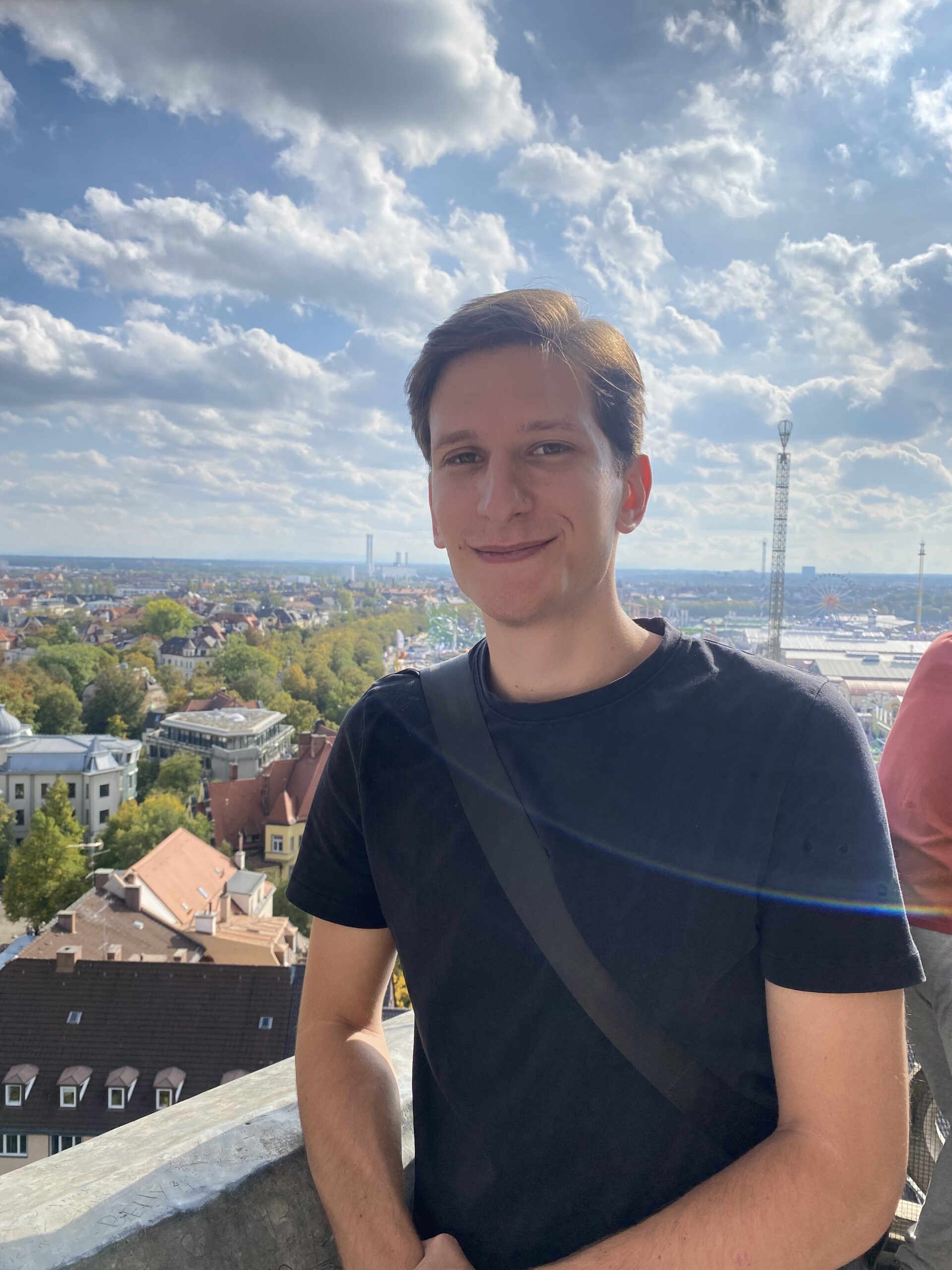
New Long-Term Internship Student-Mr. Kevin Deesy
Introducing a new Long-Term Internship Student of Bio2Q We are delighted to welcome Mr. Kevin Deesy as a new Long-Term Research Internship Student of Bio2Q. "Hello Bio2Q team, My name is Kevin Deesy, and I’m currently completing my Master’s in Sustainable Food at the Technical University of Munich (TUM), specializing in molecular biotechnology and microbiology. My research so far has take...
