





RESEARCH
【Publication】Factorization machine with quadratic-optimization annealing for RNA inverse folding and evaluation of binary-integer encoding and nucleotide assignment
August 10, 2026

Credits: WPI-Bio2Q
Co-authored by Bio2Q researchers and published in the journal Scientific Reports, this study proposes an efficient RNA design method using a factorization machine with quadratic-optimization annealing (FMQA) to tackle the “RNA inverse folding problem”—identifying nucleotide sequences that adopt a specified target secondary structure. The researchers comprehensively analyzed nucleotide encoding methods and successfully generated high-quality, thermodynamically stable RNA sequences by assigning guanine and cytosine to boundary values in domain-wall encoding. These findings demonstrate that FMQA is a promising, evaluation-efficient approach and provide practical guidelines for applying annealing-based optimization to RNA engineering.
| Title | Factorization machine with quadratic-optimization annealing for RNA inverse folding and evaluation of binary-integer encoding and nucleotide assignment |
|---|---|
| Authors | Shuta Kikuchi 1 2, Shu Tanaka 3 4 5 6 |
| Short Description |
Researchers at Keio University and Bio2Q have developed a machine learning–guided optimization approach that designs RNA sequences capable of folding into a desired secondary structure with far fewer sequence evaluations than conventional methods.
Designing RNA molecules with predictable structures is a major challenge in fields such as RNA therapeutics, synthetic biology, and biotechnology because existing computational methods often require searching through large numbers of candidate sequences, making experimental validation costly and time-consuming. To address this, this team of researchers combined a factorization machine, which learns from previously evaluated sequences, with annealing-based optimization to efficiently identify promising RNA designs. They also found that the way RNA sequences are represented during optimization has a significant impact on performance, with one-hot and domain-wall encoding strategies consistently outperforming binary and unary approaches. Domain-wall encoding further improved sequence quality when guanine and cytosine were assigned to specific encoding states, promoting the formation of more thermodynamically stable stem regions. Across multiple benchmark RNA structures, the method produced higher-quality RNA designs using fewer evaluations than Bayesian optimization, genetic algorithms, and random search.
These findings establish factorization machine with quadratic-optimization annealing (FMQA) as a promising, evaluation-efficient approach for RNA inverse folding while providing practical guidelines for applying annealing-based optimization to RNA engineering.
|
| DOI | 10.1038/s41598-026-50891-7 |
| Journal | Scientific Reports |
| Vol/Num/Page |
16(1):20460.
|
| Publication Date | May, 2026 |
Affiliations
1 Graduate School of Science and Technology, Keio University, Yokohama, Kanagawa, 223-8522, Japan.
2 Keio University Sustainable Quantum Artificial Intelligence Center (KSQAIC), Keio University, Minato-ku, Tokyo, 108-8345, Japan.
3 Graduate School of Science and Technology, Keio University, Yokohama, Kanagawa, 223-8522, Japan.
4 Keio University Sustainable Quantum Artificial Intelligence Center (KSQAIC), Keio University, Minato-ku, Tokyo, 108-8345, Japan.
5 Department of Applied Physics and Physico-Informatics, Keio University, Yokohama, Kanagawa, 223-8522, Japan.
6 Human Biology-Microbiome-Quantum Research Center (WPI-Bio2Q), Keio University, Minato-ku, Tokyo, 108-8345, Japan.
SHARE




More Bio2Q News

Open Call: Research Administrator (URA)
Bio2Q is seeking a Research Administrator (URA) (Project Instructor or Project Assistant Professor) to promote Bio2Q-related research throug...

【Publication】Metagenomic sequencing as a diagnostic tool for urine culture negat...
Co-authored by Bio2Q researchers and published in the Journal of Infection, this study demonstrates that metagenomic sequencing serves as an...
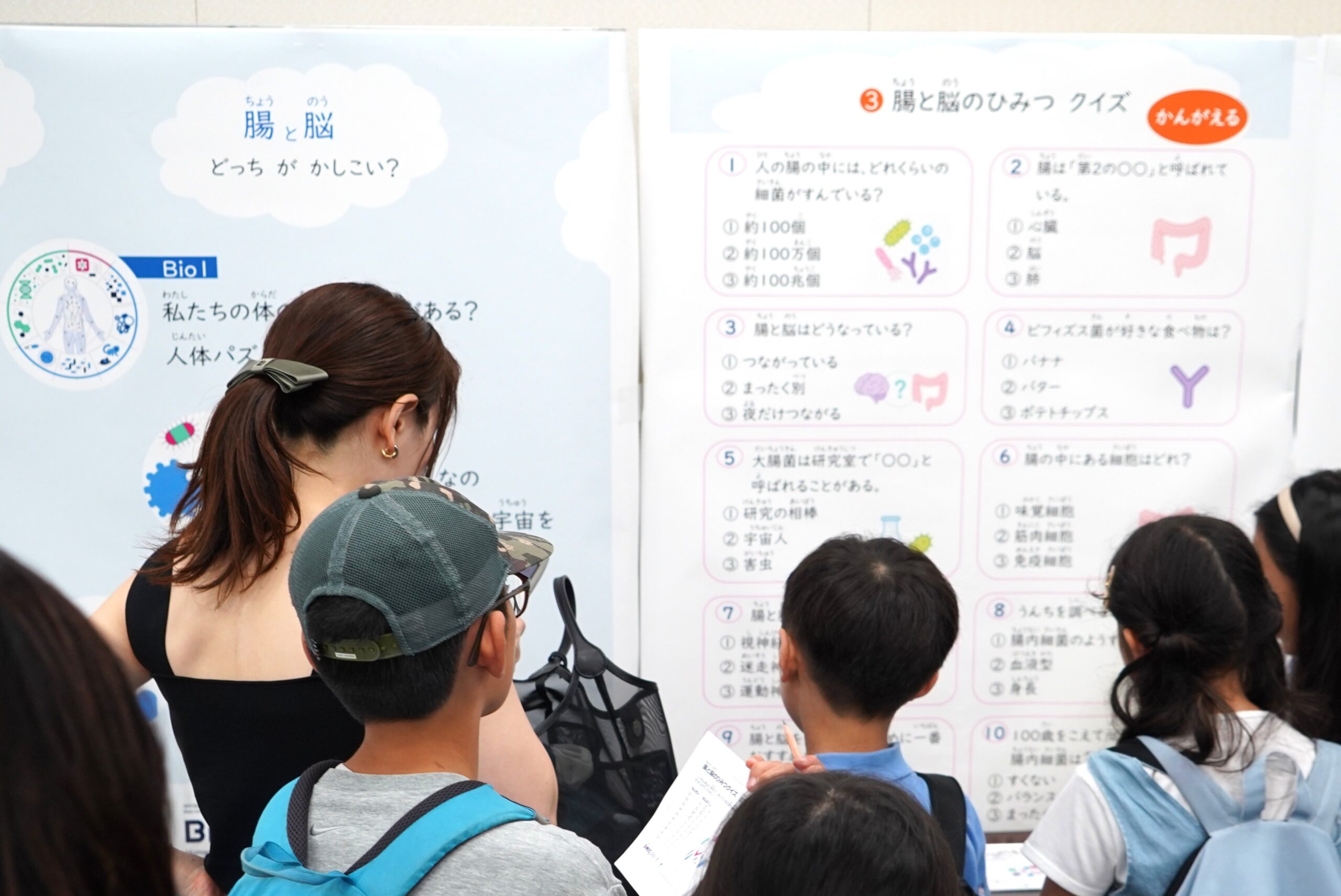
【Event Report】MEXT Children’s Kasumigaseki Tour Day
Keio University Human Biology-Microbiome-Quantum Research Center (WPI-Bio2Q) exhibited at the following event. MEXT Children’s Kasumigase...

【Publication】Quantum algorithm for metabolic network analysis
Authored by Bio2Q researchers and published in Machine Learning with Applications, this study demonstrates a novel quantum algorithm designe...
.jpg)
WPI-Bio2Q Newsletter “Bio2Q Connect” Vol.2, Issue 17 Published
WPI-Bio2Q has published the latest issue of its newsletter, “Bio2Q Connect,” today on May 29, 2026. This issue covers the following updates ...
