





EVENT
【4/15 Seminar】WPI-Bio2Q Open Seminar: Sebastian Hiller
March 16, 2026
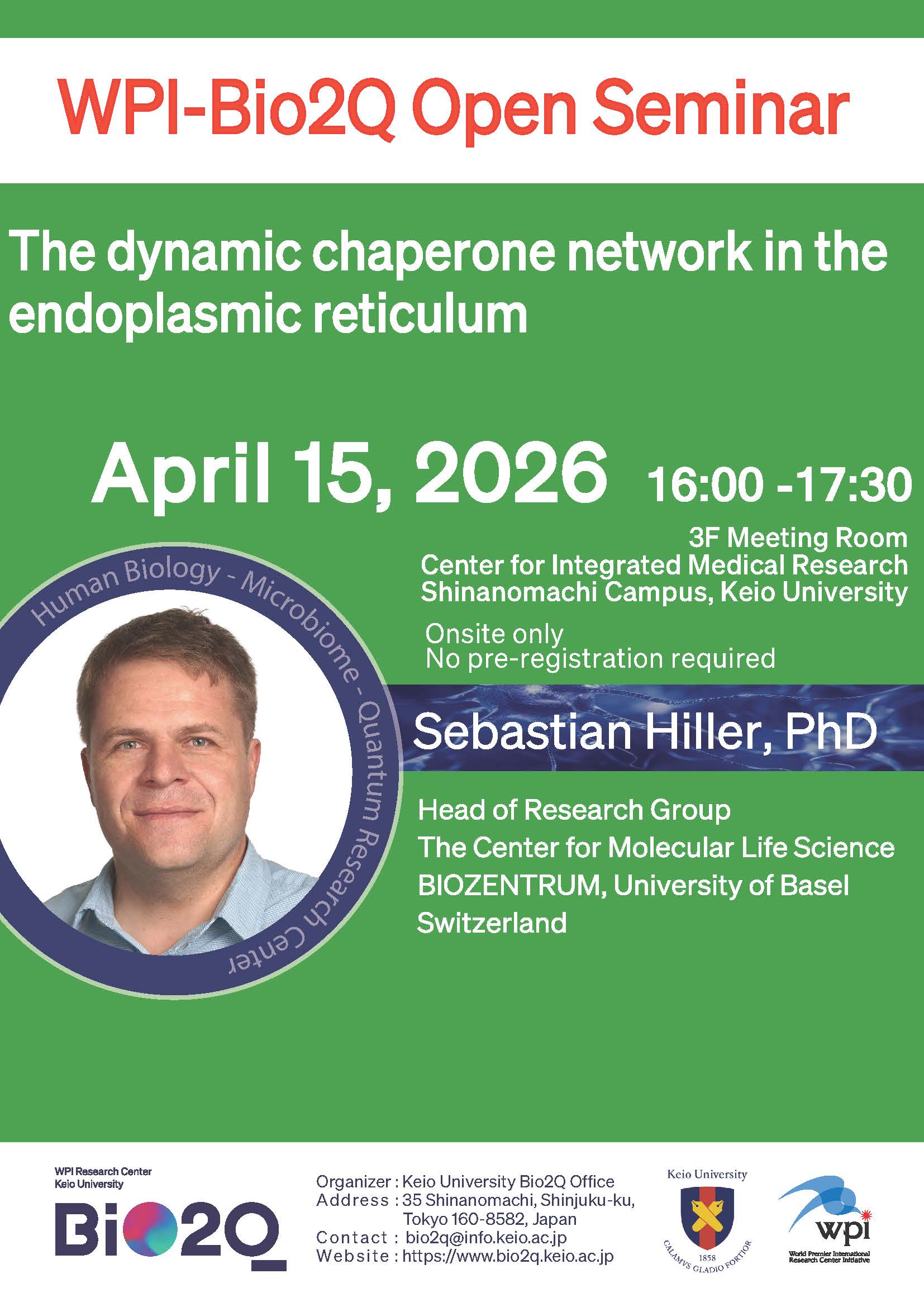
Poster
Credits: WPI-Bio2Q
Keio University Human Biology-Microbiome-Quantum Research Center (WPI-Bio2Q) will hold a seminar as follows.
This is an event for faculty, students, and staff of Keio University.
| Date & Time | 16:00 -17:30, April 15, 2026 |
|---|---|
| Venue | 3F Meeting Room, Center for Integrated Medical Research, Shinanomachi Campus, Keio University |
| Title | “The dynamic chaperone network in the endoplasmic reticulum” |
| Speaker | Sebastian Hiller, PhD Head of Research Group The Center for Molecular Life Science BIOZENTRUM, University of Basel Switzerland |
| Language | English |
| Poster | JPEG |
| Onsite | No pre-registration required |
In the eukaryotic cell, the endoplasmic reticulum (ER) is a specialized compartment for protein folding and maturation. Efficient ER functioning relies on a network of chaperones, calcium level and redox state, whereas variation in these cellular parameters can lead to ER stress and diseases. Here, we present structural and functional studies to resolve key mechanisms underlying the dynamic chaperone network at atomic resolution.
In a first step, we introduce in cyclo NMR to resolve the complete functional cycle of an ATP-driven molecular machine at atomic level. We create a non-equilibrium steady-state under turnover conditions inside the NMR tube, resolving all significantly populated states, their structures, mechanisms and kinetics connecting them, and the dynamic interplay with co-chaperones. The data resolve that the Hsp70 chaperone BiP undergoes a branched functional cycle comprised of seven states that is regulated by two autoinhibition switches.
In a second step, we characterize the disulfide isomerase PDIA6. We find that PDIA6 forms biomolecular condensates, both in vitro and in the ER lumen during protein folding homeostasis. Two specific interfaces in PDIA6 create the multivalency required for the condensate formation, which are dynamically regulated by calcium concentration. PDIA6 condensates recruit Hsp70 BiP and a number of further chaperones specifically into the condensates to form functional “folding factories” inside the ER. Together, our data establish the existence of a functional chaperone condensate that subcompartmentalizes the ER.
SHARE




More Bio2Q News
【10/20 Seminar】 WPI-Bio2Q Open Seminar: Debora Suppiger, PhD(for Keio Members)
Keio University Human Biology-Microbiome-Quantum Research Center (WPI-Bio2Q) will hold a seminar as follows. This event is only for faculty, students, and staff of Keio University. Date&Time Tuesday, October 20, 2026, 17:00-17:40 Speaker Debora Suppiger, PhD(Postdoctoral Researcher, Department of Evolutionary Anthropology, University of Zurich) Title Tracing development across...
【10/14, 15 Seminar】 WPI-Bio2Q Open Seminar: Amelia Palermo, PhD&Sonomi Yamaguchi...
Keio University Human Biology-Microbiome-Quantum Research Center (WPI-Bio2Q) will hold seminars as follows. These events are only for faculty, students, and staff of Keio University, and pre-registration is required. Session #1 Date and Time Wednesday, October 14, 2026, 15:00-16:00 Title Mining novel druggable vulnerabilities by systems biology of metabolism and artificial inferenc...
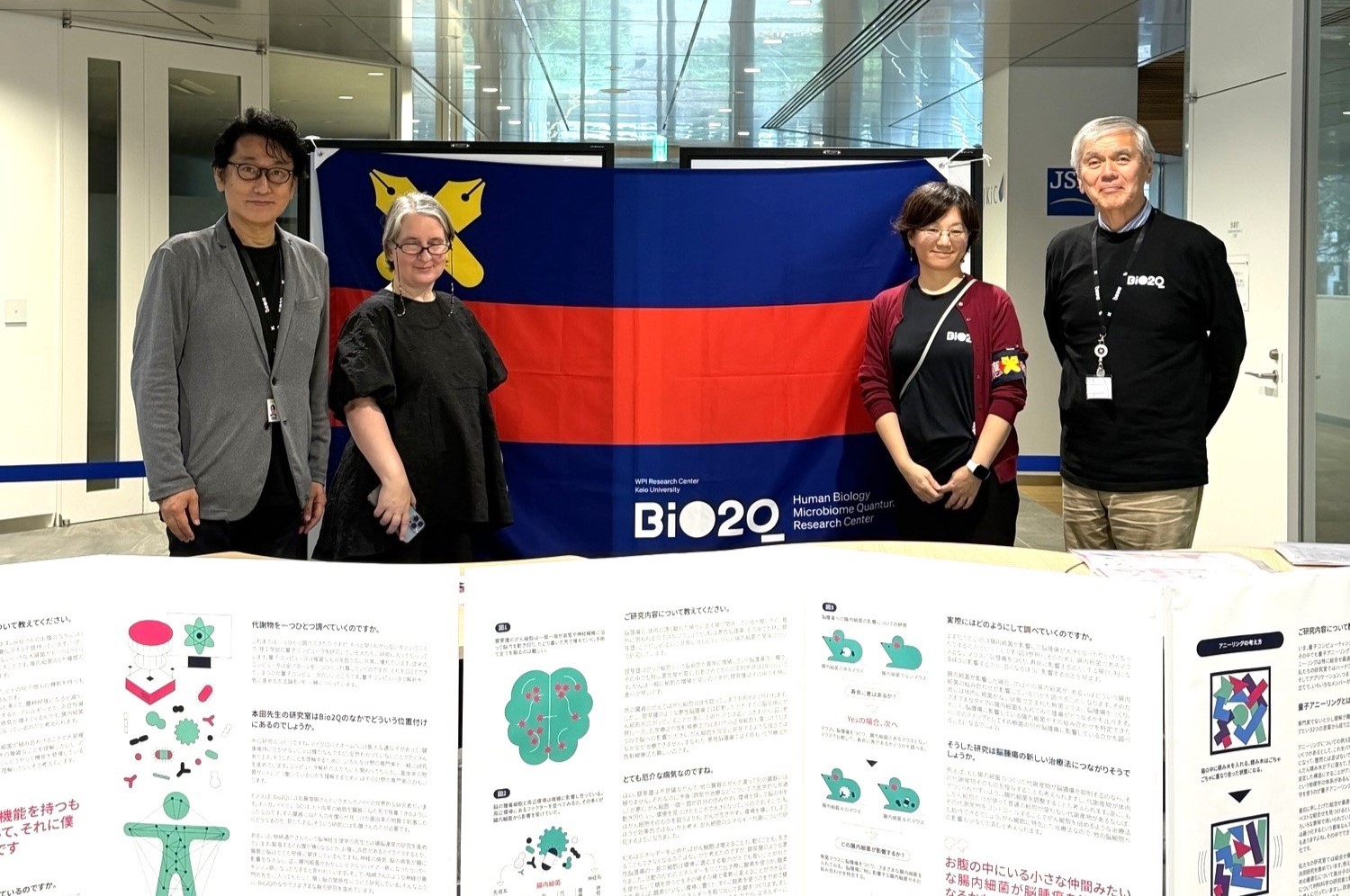
【Event】Participation in Keio University’s “Yotsuya Festival”
Keio University Human Biology-Microbiome-Quantum Research Center (WPI-Bio2Q) participated in the following event. Keio University Shinanomachi Campus “Yotsuya Festival” October 3 (Sat) 11:00 AM – 4:00 PM October 4 (Sun) 10:00 AM – 3:00 PM In addition to introducing Bio2Q’s research activities, we also hosted a Science Art Gallery on the day of the event. We welcomed 278 visitors and estab...
【Seminar Report】WPI-Bio2Q Open Seminar: Chun-Jun Guo, PhD
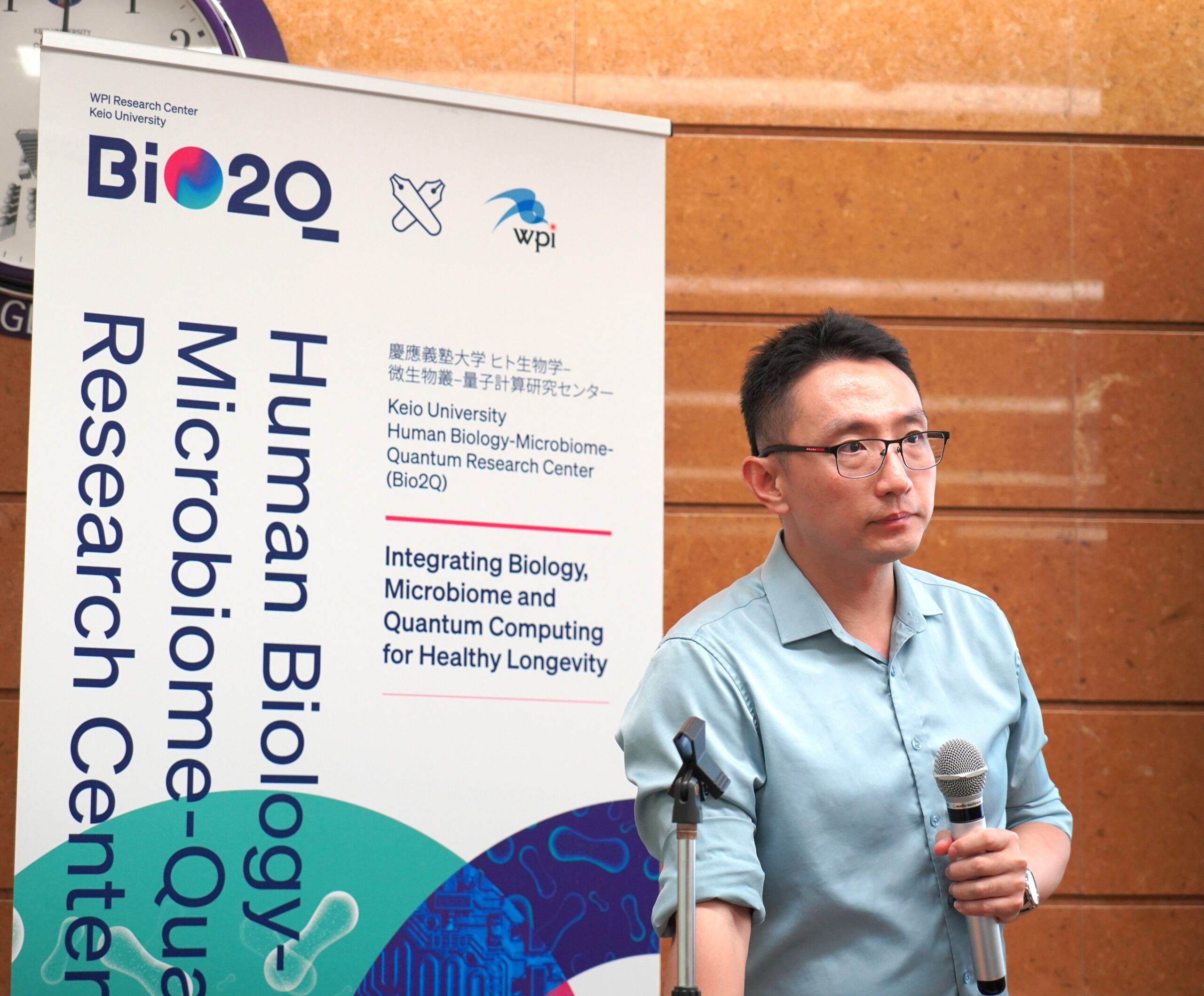
Keio University Human Biology-Microbiome-Quantum Research Center (WPI-Bio2Q) held a seminar as follows. Date:17:00 -18:00, October 6, 2026 Venue:1F Lounge, Center for Integrated Medical Research, Shinanomachi Campus, Keio University Speaker:Chun-Jun Guo, PhD Associate Professor Department of Microbiology &Immunology Weill Cornell Medicine Title:Using Genetics to Explore Microbe-Host...
【Private Activity】Bio2Q Members Take Part in TOKYO ROKUTAI FES 2026
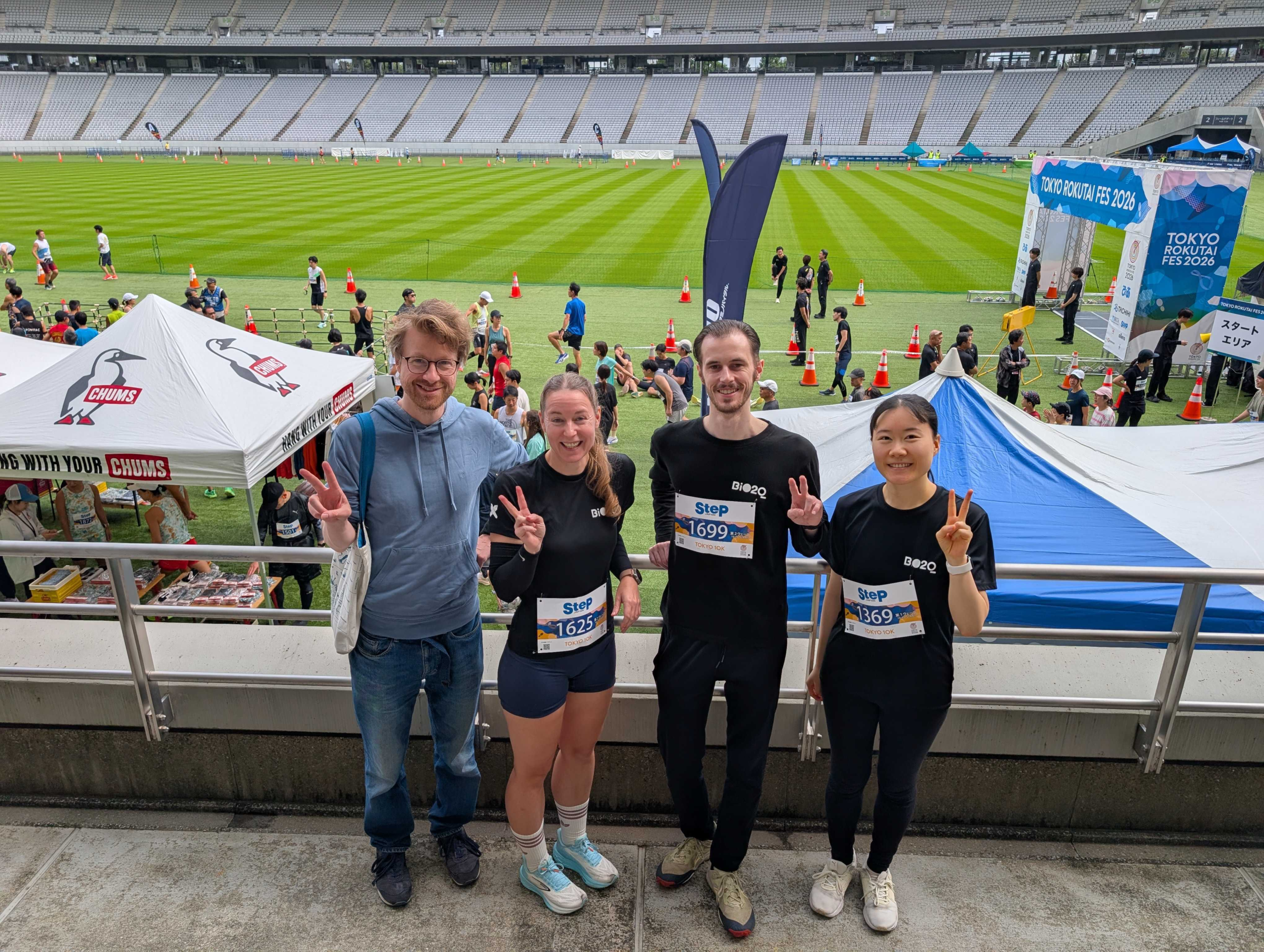
On Sunday, October 4th, members of the Keio University Human Biology-Microbiome-Quantum Computing Research Center (Bio2Q) participated in “TOKYO ROKUTAI FES 2026”, taking on the 10K run together! Researchers were joined by their family and friends, creating a fun and energetic atmosphere throughout the event. It was a great opportunity to stay active, challenge themselves, and strengthen connecti...
