





RESEARCH
[Publication]M cell–dependent commensal uptake confers encephalitogenic phenotypes on γδT17 cells in Peyer’s patches
January 15, 2026
Credits: WPI-Bio2Q
Co-authored by researchers from Bio2Q and Keio University, and published in Proceedings of the National Academy of Sciences (PNAS), this study identifies specialized epithelial cells in Peyer’s patches, called M cells, as a critical site that links gut commensal bacteria to central nervous system autoimmunity. These researchers show that the M cell–dependent uptake of specific commensal bacteria conditions encephalitogenic γδT17 cells in the gut, enabling their migration to the central nervous system, promoting disease onset in a mouse model of multiple sclerosis. These findings reveal a novel mechanistic link between the intestinal microbiota and neuroinflammation, further highlighting the gut–brain axis as a potentially important therapeutic target.
| Title | M cell–dependent commensal uptake confers encephalitogenic phenotypes on γδT17 cells in Peyer’s patches |
|---|---|
| Authors | Seiga Komiyama [a],[b], Yotaro Kodaira [a], Rae Maeda [c], Yuki Sugiura [b],[c],[d], Koichiro Suzuki [a], Aiko Saeki [a], Yusuke Kinashi [a], Hiroyuki Oguchi [a], Kokona Takano [a], Satoshi Onawa [e], Ako Matsui [f], Eita Sasaki [g], Kisara Hattori-Muroi [a], Shunsuke Kimura [a], Yumiko Fujimura [a], Yuyo Ka [h], Tomoyuki Ogura [h], Kenjiro Hanaoka [g], Minako Ito [f], Hiroshi Watarai [i], Tsuneyasu Kaisho [j], Nobuyuki Udagawa [k], Daisuke Takahashi [a], Koji Hase [a], [b], [l], [m] |
| Short Description | This study, co-authored by investigators from Bio2Q and Keio University, and published in the Proceedings of the National Academy of Sciences (PNAS), identifies a previously unrecognized pathway by which intestinal commensal bacteria influence autoimmune inflammation in the central nervous system. Using a model of multiple sclerosis (MS), the authors show that Peyer’s patch M cells act as a critical portal through which gut-derived signals shape disease-driving immune responses. Researchers demonstrate that M cell–mediated uptake of intestinal bacteria enables a population of gut-resident immune cells to acquire pathogenic properties and migrate to the spinal cord during early stages of disease. Once in the spinal cord, these cells promote neuroinflammation. Disrupting M cell function markedly reduces disease severity, while increased M cell abundance exacerbates pathology, directly linking intestinal immune surveillance to central nervous system autoimmunity. The study further identifies the specific commensal bacteria that act as key contributors to this process, in part through microbial metabolites that accumulate in the gut, and are detected in the inflamed nervous system. Together, these findings establish an M cell dependent gut–brain axis that contributes to MS pathogenesis, highlighting new therapeutic opportunities to target intestinal immune pathways. |
| DOI | https://www.pnas.org/doi/10.1073/pnas.2506550123 |
| Journal | PNAS |
| Vol/Num/Page | Volume 123, No.2, e2506550123 |
| Publication Date | 2026 January 9. |
Affiliations:
[a] Division of Biochemistry, Faculty of Pharmacy and Graduate School of Pharmaceutical Sciences, Keio University, Tokyo 105-8512, Japan
[b] Human Biology-Microbiome-Quantum Research Center (WPI-Bio2Q), Keio University, Tokyo 108-8345, Japan
[c] Multi-Omics Platform, Center for Cancer Immunotherapy and Immunobiology, Kyoto University Graduate School of Medicine, Kyoto 606-8501, Japan
[d] Department of Biochemistry, Keio University School of Medicine, Tokyo 160-8582, Japan
[e] Gut Environmental Design Group, Kanagawa Institute of Industrial Science and Technology, Kawasaki 210-0821, Japan
[f] Division of Allergy and Immunology, Medical Institute of Bioregulation, Kyushu University, Fukuoka 811-1347, Japan
[g] Division of Analytical Chemistry for Drug Discovery, Faculty of Pharmacy and Graduate School of Pharmaceutical Sciences, Keio University, Tokyo 105-8512, Japan
[h] Humanized Model Laboratory, Animal Resource Technical Research Center, Central Institute for Experimental Medicine and Life Science, Kanagawa 210-0821, Japan
[i] Department of Immunology and Stem Cell Biology, Kanazawa University, Kanazawa 920-8640, Japan
[j] Department of Immunology, Institute of Advanced Medicine, Wakayama Medical University, Wakayama 641-8509, Japan
[k] Department of Biochemistry, Matsumoto Dental University, Shiojiri 399-0781, Japan
[l] Research Management Division, The Institute of Fermentation Sciences, Faculty of Food and Agricultural Sciences, Fukushima University, Fukushima 960-1296, Japan
[m] Division of Mucosal Vaccine, International Vaccine Design Center, The Institute of Medical Science, The University of Tokyo, Tokyo 108-8639, Japan
SHARE




More Bio2Q News
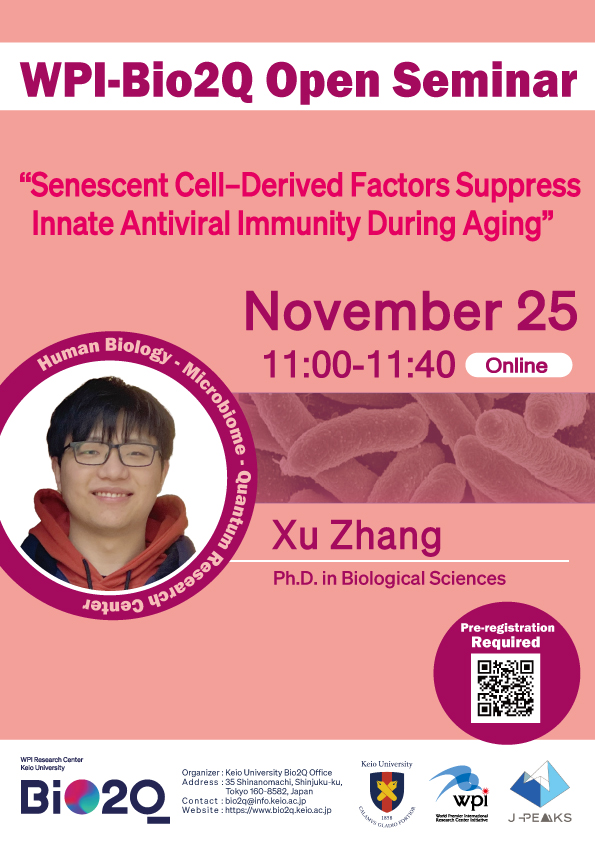
【Nov. 25 Seminar】 WPI-Bio2Q Open Seminar: Xu Zhang, PhD(for Keio Members)
Keio University Human Biology-Microbiome-Quantum Research Center (WPI-Bio2Q) will hold a seminar as follows. This event is only for faculty, students, and staff of Keio University. Date and Time Wednesday, November 25, 2026, 11:00-11:40 Format Zoom (Online only) Title Senescent Cell–Derived Factors Suppress Innate Antiviral Immunity During Aging Speaker Xu Zha...
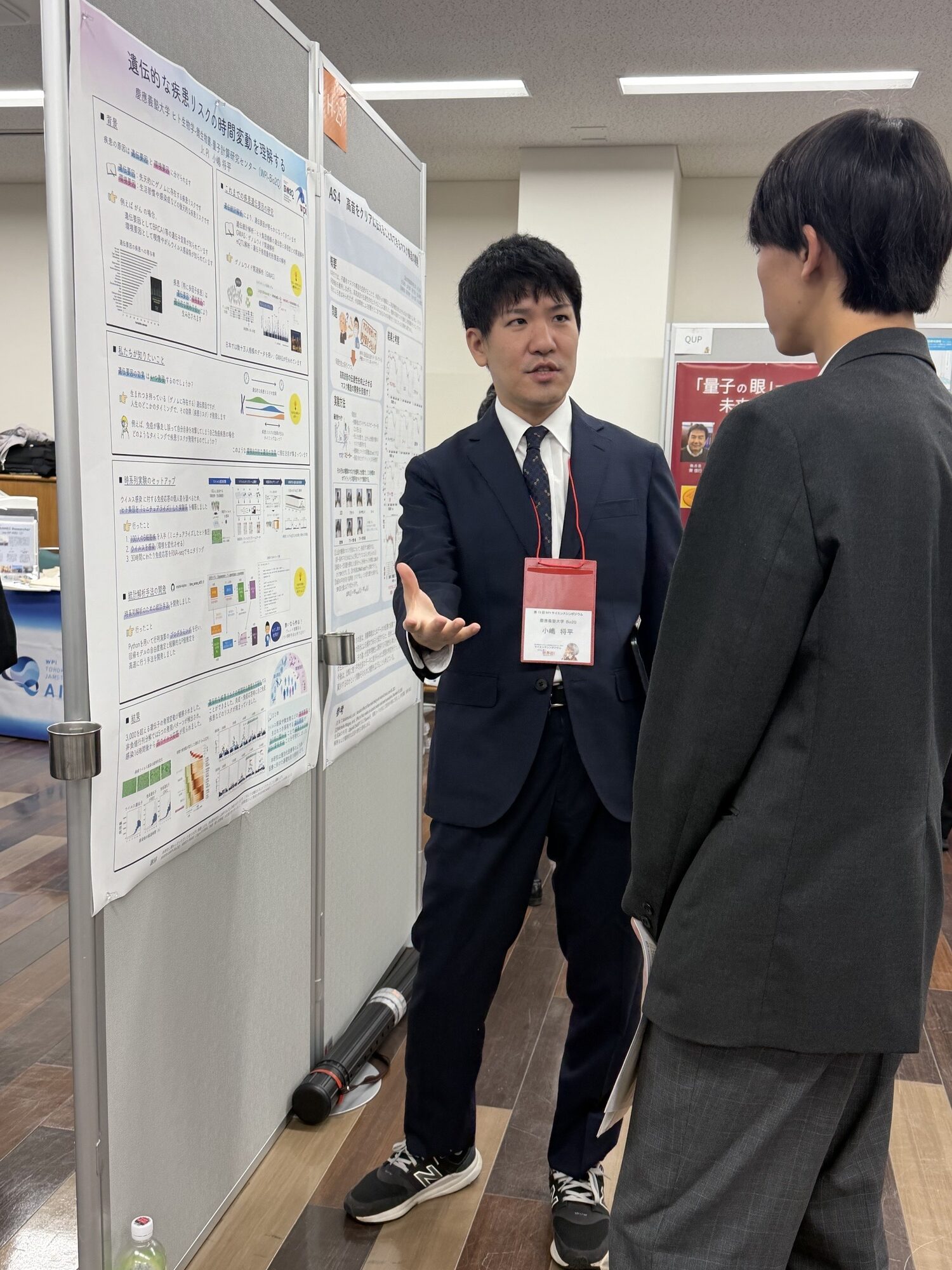
【Event Report】Bio2Q Participates in the 15th WPI Science Symposium, Engaging wit...
On Saturday, November 14, 2026, the 15th WPI Science Symposium, themed “World Premieres Born from Me! ~Science I Want to Share with Someone~,” was held at the Osaka University Convention Center in Suita, Osaka, hosted by the Osaka University Premium Research Institute for Human Metaverse Medicine (WPI-PRIMe). The event featured a special lecture by Prof. Shimon Sakaguchi (Distinguished University ...

WPI-Bio2Q now recruiting administrative staff– Deadline: January 11, 2027
WPI-Bio2Q Administrative Office is currently hiring administrative staff. We look forward to receiving applications from candidates with English proficiency who can support international researchers and anticipate to work at Bio2Q Administrative Office. Application Deadline: January 11, 2027 For more details, please refer to the application information at the link below, Application Info...
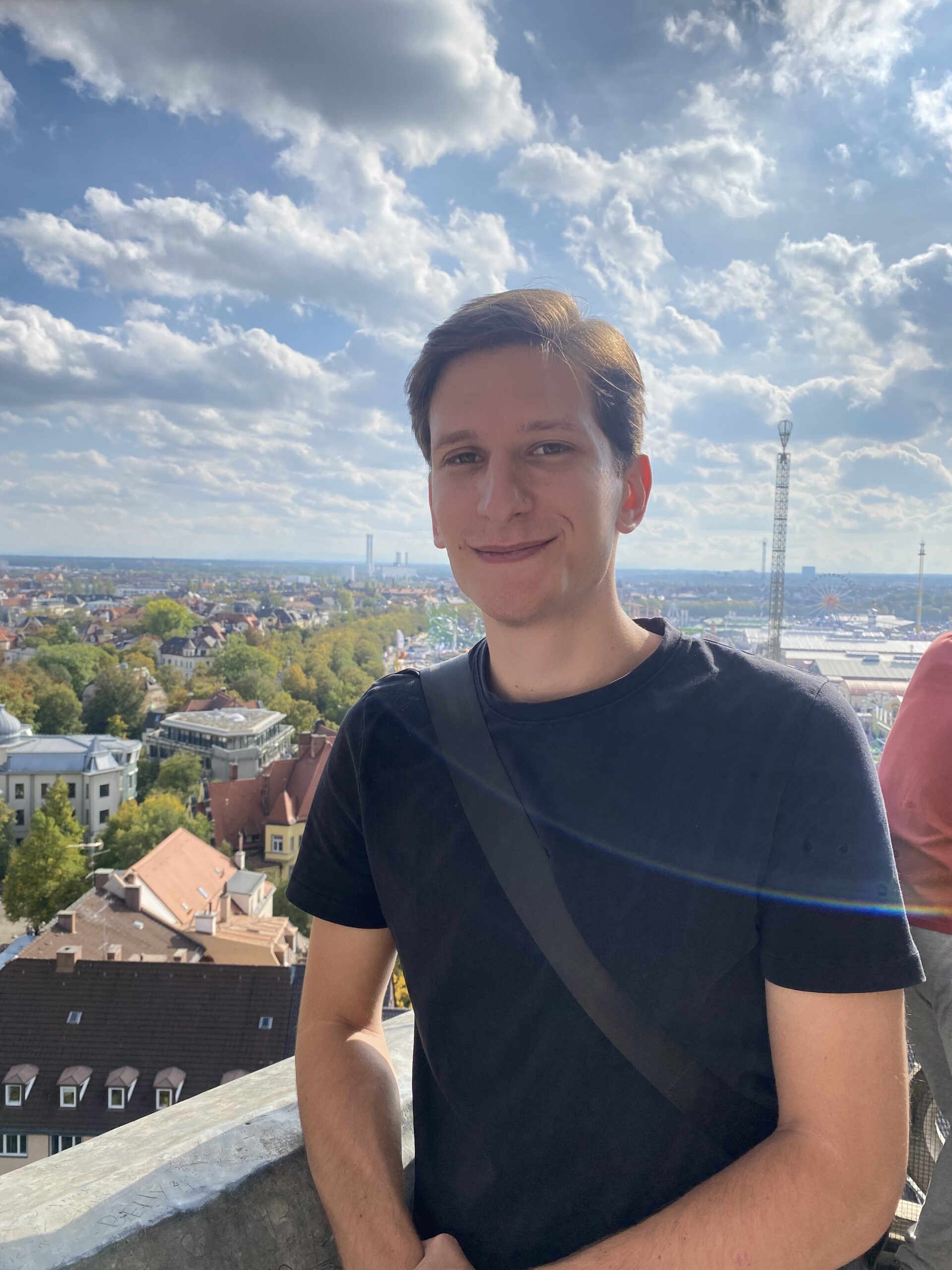
New Long-Term Internship Student-Mr. Kevin Deesy
Introducing a new Long-Term Internship Student of Bio2Q We are delighted to welcome Mr. Kevin Deesy as a new Long-Term Research Internship Student of Bio2Q. "Hello Bio2Q team, My name is Kevin Deesy, and I’m currently completing my Master’s in Sustainable Food at the Technical University of Munich (TUM), specializing in molecular biotechnology and microbiology. My research so far has take...

New Member - Dr. Augustinas Silale
Introducing new member of Bio2Q We are excited to welcome Dr. Augustinas Silale as a Jr. PI at Bio-2 Core of Bio2Q. "Hello, Bio2Q community! My name is Augustinas (August) Silale. I am from Lithuania. I am delighted to join Bio2Q as a Jr. PI. I read Natural Sciences at the University of Cambridge. My BA project was on fragment-based drug discovery in Prof Sir Tom Blundell’s group, where ...
