





RESEARCH
[Publication]Monitoring ferroptosis in vivo: Iron-driven volatile oxidized lipids as breath biomarkers
November 21, 2025
Credits: WPI-Bio2Q
Researchers from Bio2Q and Keio University have developed a noninvasive method to detect ferroptosis by analyzing volatile oxidized lipids in breath. These lipids serve as potential biomarkers for lipid peroxidation and cellular stress.
| Titile | Monitoring ferroptosis in vivo: Iron-driven volatile oxidized lipids as breath biomarkers |
|---|---|
| Authors | Yuta Matsuoka [1], Yoshinori Katsumata [2], Po-Sung Chu [3], Rei Morikawa [3], Nobuhiro Nakamoto [3], Kohta Iguchi [4], Ken Takahashi [5], Tadayuki Kou [6], Ryo Ito [6], Kojiro Taura [4], Shujiro Yazumi [6], Hiroaki Terajima [4], Gen Honjo [7], Genki Ichihara [8], Yuki Muramoto [2], Kazuki Sato [2], Rae Maeda [9], Kazuhiro Hata [10], Naoya Toriu [11], Motoko Yanagita [11], Masaki Tajima [12], Sidonia Fagarasan [13], Ken-Ichi Yamada [14], Yuki Sugiura [15] |
| Short Description | An interdisciplinary team of researchers from Bio2Q, the Keio University School of Medicine, and other collaborating institutions have developed an innovative approach for detecting ferroptosis in vivo through volatile oxidized lipid (VOL) profiling. Ferroptosis, characterized by uncontrolled lipid peroxidation, has been linked to diverse pathologies but is challenging to study in humans due to the need for invasive tissue sampling. To overcome this, these researchers used advanced omics techniques to trace the volatile oxidized lipids produced during ferroptotic lipid breakdown. In mouse models of acetaminophen-induced liver injury and metabolic dysfunction-associated steatohepatitis (MASH), these VOLs were detectable in exhaled breath, including from human patients with MASH. These findings establish a new chemical signature of ferroptosis and suggest that VOLs have important translational potential as noninvasive breath biomarkers of lipid peroxidation and cellular stress. |
| DOI | 10.1016/j.redox.2025.103858. |
| Journal | Redox Biology |
| Vol/Num/Page | Volume 86 |
| Vol/Num/Page | Octber, 2025 |
Affiliations:
[1] Multi-Omics Platform, Center for Cancer Immunotherapy and Immunobiology, Kyoto University Graduate School of Medicine, Kyoto, Japan.
[2] Institute for Integrated Sports Medicine, Keio University School of Medicine, Tokyo, Japan.
[3] Division of Gastroenterology and Hepatology, Department of Internal Medicine, Keio University School of Medicine, Tokyo, Japan.
[4] Department of Gastroenterological Surgery and Oncology, Tazuke Kofukai Medical Research Institute, Kitano Hospital, Osaka, Japan.
[5] Department of Gastroenterology, Tazuke Kofukai Medical Research Institute, Kitano Hospital, Osaka, Japan; Department of Gastroenterology and Hepatology, Kyoto University Graduate School of Medicine, Kyoto, Japan; Division of Cancer Immunotherapy, Center for Cancer Immunotherapy and Immunobiology, Kyoto University Graduate School of Medicine, Kyoto, Japan.
[6] Department of Gastroenterology, Tazuke Kofukai Medical Research Institute, Kitano Hospital, Osaka, Japan.
[7] Department of Pathology, Tazuke Kofukai Medical Research Institute, Kitano Hospital, Osaka, Japan.
[8] Institute for Integrated Sports Medicine, Keio University School of Medicine, Tokyo, Japan; Tokai University, Graduate School of Medicine, Kanagawa, Japan.
[9] Multi-Omics Platform, Center for Cancer Immunotherapy and Immunobiology, Kyoto University Graduate School of Medicine, Kyoto, Japan.
[10] Thermo Fisher Scientific K.K., Tokyo, Japan.
[11] Department of Nephrology, Graduate School of Medicine, Kyoto University, Kyoto, Japan; Institute for the Advanced Study of Human Biology, Kyoto University, Kyoto, Japan.
[12] Division of Integrated High-Order Regulatory Systems, Center for Cancer Immunotherapy and Immunobiology, Kyoto University Graduate School of Medicine, Kyoto, Japan.
[13] Division of Integrated High-Order Regulatory Systems, Center for Cancer Immunotherapy and Immunobiology, Kyoto University Graduate School of Medicine, Kyoto, Japan; Laboratory for Mucosal Immunity, Center for Integrative Medical Sciences, RIKEN Yokohama Institute, Yokohama, Japan.
[14] Department of Molecular Pathobiology, Faculty of Pharmaceutical Sciences, Kyushu University, Fukuoka, Japan.
[15] Multi-Omics Platform, Center for Cancer Immunotherapy and Immunobiology, Kyoto University Graduate School of Medicine, Kyoto, Japan; Human Biology Microbiome Quantum Research Center, Keio University School of Medicine, Tokyo, Japan.
SHARE




More Bio2Q News
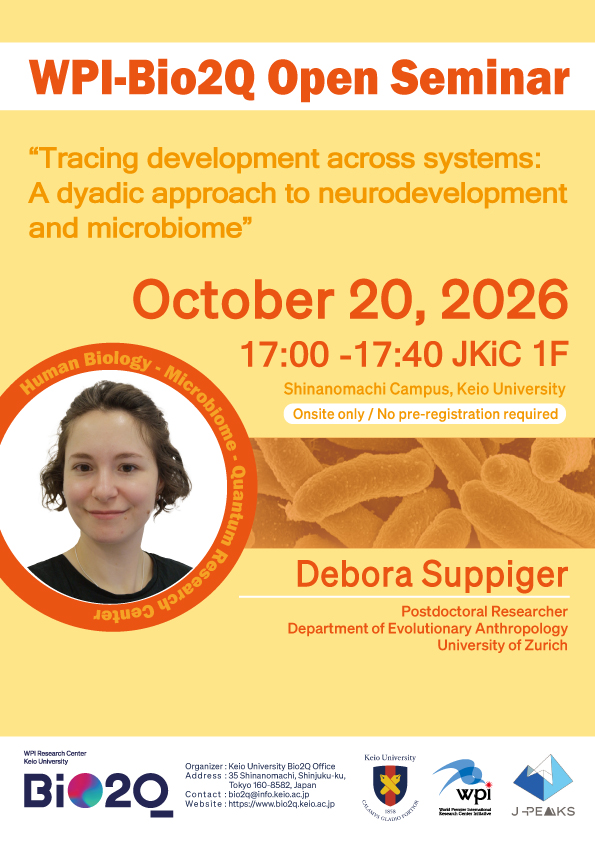
【10/20 Seminar】 WPI-Bio2Q Open Seminar: Debora Suppiger, PhD(for Keio Members)
Keio University Human Biology-Microbiome-Quantum Research Center (WPI-Bio2Q) will hold a seminar as follows. This event is only for faculty, students, and staff of Keio University. Date&Time Tuesday, October 20, 2026, 17:00-17:40 Speaker Debora Suppiger, PhD(Postdoctoral Researcher, Department of Evolutionary Anthropology, University of Zurich) Title Tracing development across...
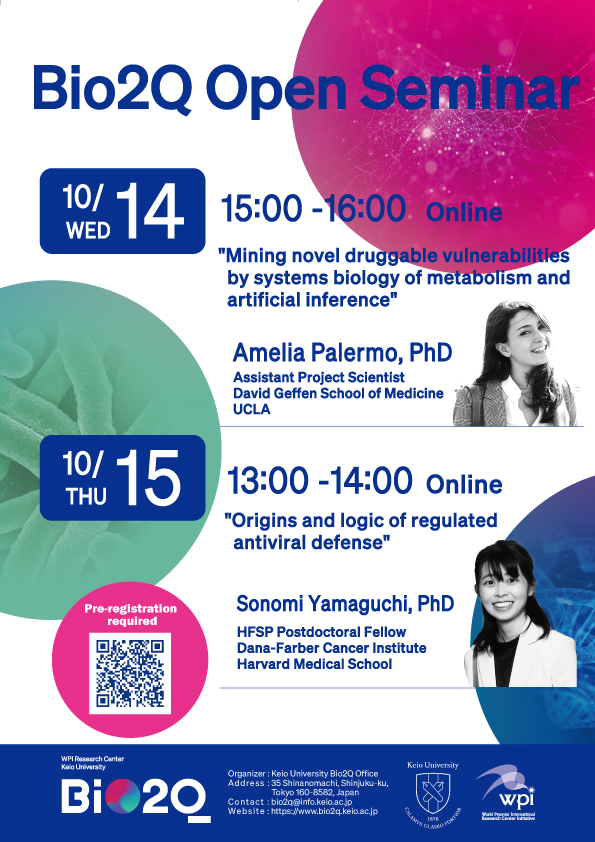
【10/14, 15 Seminar】 WPI-Bio2Q Open Seminar: Amelia Palermo, PhD&Sonomi Yamaguchi...
Keio University Human Biology-Microbiome-Quantum Research Center (WPI-Bio2Q) will hold seminars as follows. These events are only for faculty, students, and staff of Keio University, and pre-registration is required. Session #1 Date and Time Wednesday, October 14, 2026, 15:00-16:00 Title Mining novel druggable vulnerabilities by systems biology of metabolism and artificial inferenc...
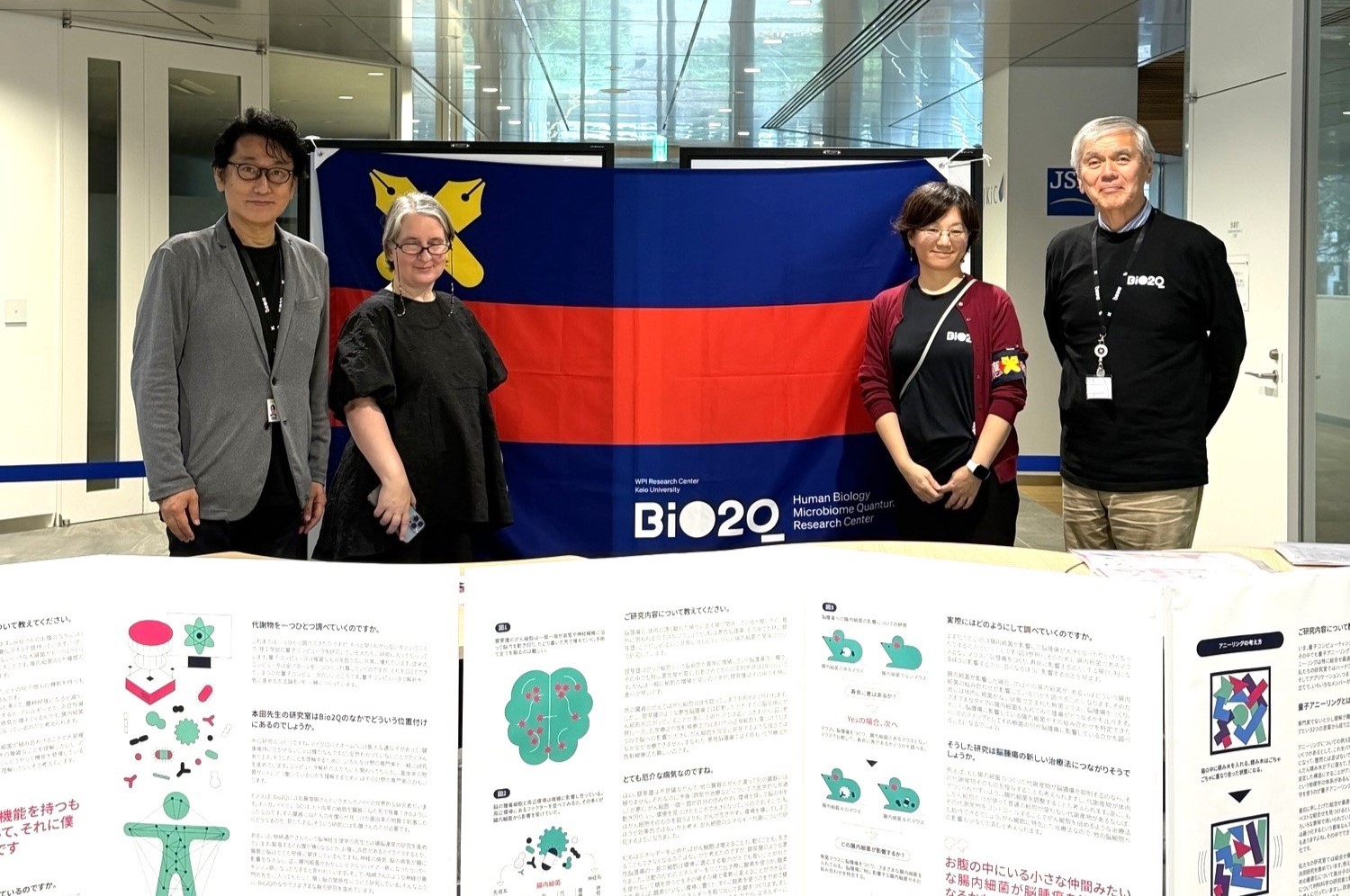
【Event】Participation in Keio University’s “Yotsuya Festival”
Keio University Human Biology-Microbiome-Quantum Research Center (WPI-Bio2Q) participated in the following event. Keio University Shinanomachi Campus “Yotsuya Festival” October 3 (Sat) 11:00 AM – 4:00 PM October 4 (Sun) 10:00 AM – 3:00 PM In addition to introducing Bio2Q’s research activities, we also hosted a Science Art Gallery on the day of the event. We welcomed 278 visitors and estab...
【Seminar Report】WPI-Bio2Q Open Seminar: Chun-Jun Guo, PhD
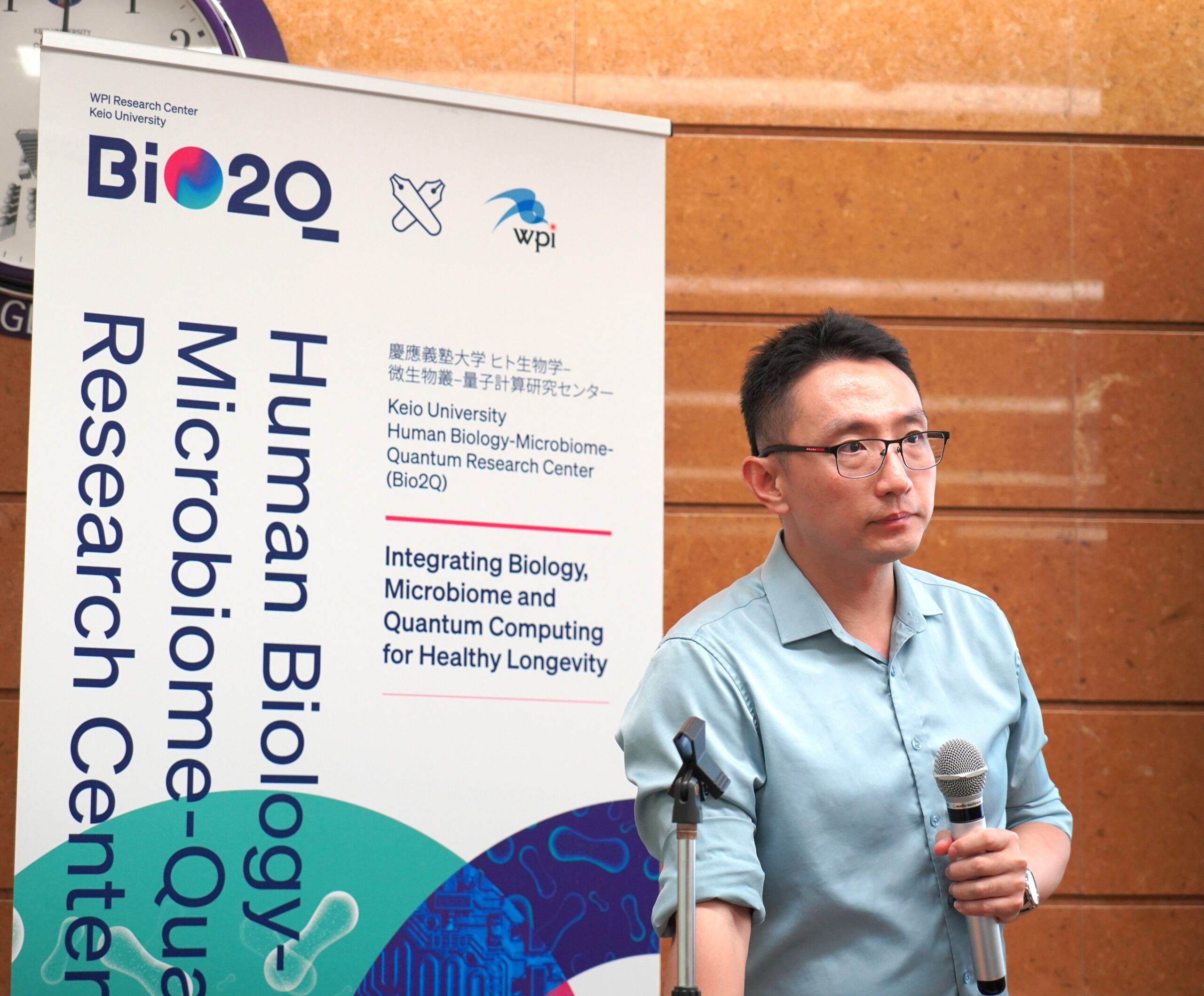
Keio University Human Biology-Microbiome-Quantum Research Center (WPI-Bio2Q) held a seminar as follows. Date:17:00 -18:00, October 6, 2026 Venue:1F Lounge, Center for Integrated Medical Research, Shinanomachi Campus, Keio University Speaker:Chun-Jun Guo, PhD Associate Professor Department of Microbiology &Immunology Weill Cornell Medicine Title:Using Genetics to Explore Microbe-Host...
【Private Activity】Bio2Q Members Take Part in TOKYO ROKUTAI FES 2026
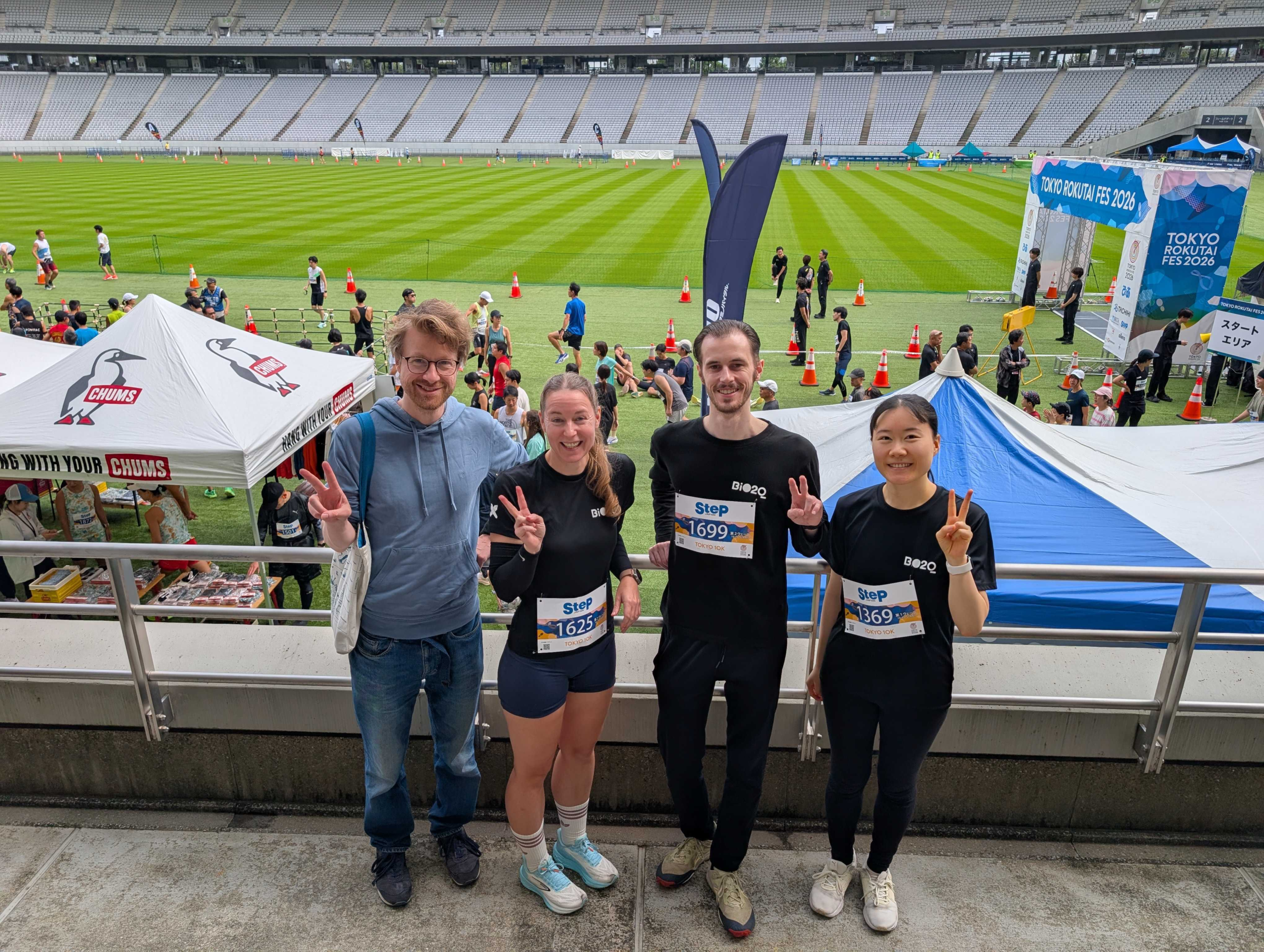
On Sunday, October 4th, members of the Keio University Human Biology-Microbiome-Quantum Computing Research Center (Bio2Q) participated in “TOKYO ROKUTAI FES 2026”, taking on the 10K run together! Researchers were joined by their family and friends, creating a fun and energetic atmosphere throughout the event. It was a great opportunity to stay active, challenge themselves, and strengthen connecti...
